
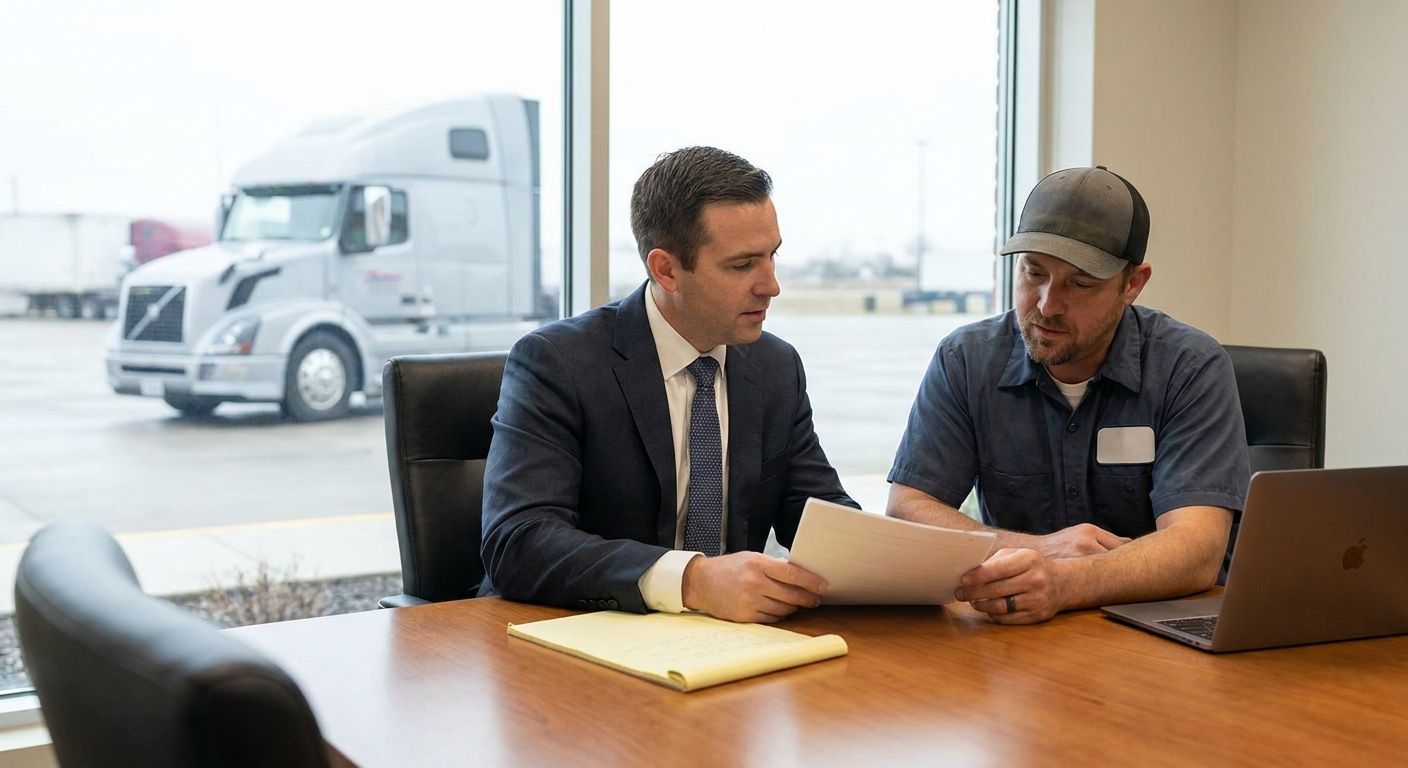
If a conviction from ten or fifteen years ago is now blocking your CDL renewal, a hazmat endorsement, or a job offer from a fleet, you need an expungement lawyer for CDL drivers who understands how California record relief actually interacts with federal transportation screening — not just a general practice that files paperwork and hopes it helps.
- An expungement lawyer for CDL drivers should target Penal Code 1203.4 relief and felony reduction before a DOT-linked background check runs.
- Cole Law works with California drivers to clear old convictions ahead of hazmat endorsement reviews and fleet-employer screening.
- DUI convictions tied to commercial driving need PC 1203.4 dismissal plus a felony reduction review, not a generic online filing service.
- Generic expungement kits skip the FMCSA Clearinghouse and TSA hazmat security screen — that gap is what costs drivers jobs in 2026.
Why this matters
Expungement under California Penal Code 1203.4 does not erase a conviction from every database that touches your CDL. It changes your state court record and helps with most employer background checks, but the FMCSA Drug and Alcohol Clearinghouse, your DMV driving record, and certain federal transportation security screens run on separate rules.
For a commercial driver, that distinction is the whole ballgame. A lawyer who treats your case like any other expungement — file the 1203.4 petition, collect the fee, move on — can leave the exact problem in place that's keeping you out of a hazmat endorsement or off a fleet's approved driver list. Cole Law builds the petition around what the record actually needs to accomplish for a working driver, not just what closes the court file.
Who this is for
This is for commercial truck drivers and CDL holders in California with a conviction on record — DUI, a felony from years ago, a reckless driving charge — who are now hitting a wall on CDL renewal, hazmat endorsement applications, or employer background checks run through the FMCSA Pre-Employment Screening Program. It's also for drivers who already completed probation and assumed the conviction was "done," only to find out an employer's background vendor still surfaces it in 2026.
What to look for in an expungement lawyer for CDL drivers
Experience with how expungement interacts with DOT and FMCSA screening
Most expungement attorneys have never had to explain the FMCSA Clearinghouse or a TSA hazmat threat assessment to a client. Ask directly whether the lawyer understands what a 1203.4 dismissal does and doesn't touch on the federal side — if they can't answer clearly, they haven't handled a driver's case before.
A felony reduction strategy, not just a dismissal
Under 49 CFR 1572, certain felony convictions within roughly the last seven years can bar a hazmat endorsement outright, and a felony on your record — reduced or not — can also affect insurability and fleet hiring decisions. A lawyer who evaluates whether your felony qualifies for reduction to a misdemeanor under Penal Code 17(b) before filing anything is doing the job right; one who skips straight to a 1203.4 petition is leaving a lever unpulled.
Straight talk about what relief will and won't fix
You need a lawyer who tells you upfront that expungement won't remove a conviction from your DMV driving record or from FMCSA's Clearinghouse if it was drug- or alcohol-related. Promising a clean slate everywhere is the fastest way to waste your time and your filing fee.
Turnaround speed matched to your job timeline
Drivers usually aren't filing out of curiosity — there's a renewal deadline, a job offer contingent on a background check, or a hazmat application sitting open. A lawyer who can tell you a realistic filing and hearing timeline in California courts, and who files promptly instead of letting your petition sit, matters more here than it does for someone with no deadline pressure.
California-specific process fluency
Expungement in California runs through Form CR-180 and county-specific local rules that vary by courthouse. A lawyer who works these petitions regularly in California courts moves faster and hits fewer rejected filings than one handling it as a side matter.
Which scenario fits your record
The DUI on your record, still driving for a living
If a DUI is the conviction standing between you and a clean background check, the fix usually starts with a 1203.4 dismissal, paired with a clear read on whether it also triggers a Clearinghouse flag. Cole Law's guide on DUI expungement in California walks through exactly what a DUI dismissal does and doesn't clear for a commercial license. Verdict: worth the consult now, especially before a hazmat renewal cycle.
A felony blocking your hazmat endorsement
If a felony conviction is the specific barrier to a hazmat endorsement or a fleet's insurance requirements, felony reduction under Penal Code 17(b) is the priority move, sometimes ahead of the expungement itself. The felony reduction process breakdown covers eligibility and what changes once a felony is reduced to a misdemeanor. Verdict: high priority — this is the step most drivers skip and shouldn't.
Job hunting with an old record and no CDL-specific issue yet
If you're not blocked on an endorsement but a background check keeps costing you offers, the play is broader record relief aimed at what employers actually see. Guidance for job seekers clearing a record applies directly here even though it's written for a general audience. Verdict: worth pursuing, but not as urgent as an active hazmat or endorsement block.
A record you assumed was already handled
Some drivers finished probation years ago and never filed anything, assuming time alone cleared it. It doesn't. If this is you and nothing is currently blocking a renewal or job, it's still worth confirming your record status before it surfaces at the worst moment. Verdict: lower urgency, but don't skip it — file before it becomes a deadline problem instead of a planning one.
What to avoid
- Flat-fee online expungement mills. They file the state petition and stop there, never checking whether your specific conviction also needs a felony reduction or triggers a federal screening flag.
- "Full record clearing" promises. No California lawyer can promise a conviction disappears from your DMV record or the FMCSA Clearinghouse through a 1203.4 petition alone — anyone claiming that isn't being straight with you.
- DIY expungement kits. They're built for generic use cases and won't tell you whether felony reduction should happen before or alongside the dismissal, which is exactly the sequencing that matters for a CDL holder.
Verdict comparison table
| Criterion | Generic expungement service | Expungement lawyer for CDL drivers |
|---|---|---|
| Understands FMCSA/DOT screening | Rarely | Should be standard |
| Evaluates felony reduction (PC 17(b)) | Often skipped | Reviewed before filing |
| Explains DMV/Clearinghouse limits | Rarely disclosed | Explained upfront |
| Files Form CR-180 in California courts | Yes, generically | Yes, with driver context |
| Matches filing to job/renewal deadlines | Not usually tracked | Prioritized |
Talk through your record before your next renewal
Get a straight answer on what expungement will and won't fix for your CDL.
FAQ
Does expungement clear a conviction from my CDL record?
No — a Penal Code 1203.4 dismissal changes your California court record but does not remove a conviction from your DMV driving record or the FMCSA Clearinghouse. Most employer background checks look better after expungement, but federal transportation screens run separately.
Can a felony conviction block a hazmat endorsement in 2026?
Yes — under federal regulation, certain felony convictions within roughly the last seven years can disqualify you from a hazmat endorsement. A felony reduction to a misdemeanor under Penal Code 17(b) can change that outcome depending on the offense.
What's the best expungement lawyer for CDL drivers in California?
The best fit is a California expungement lawyer who understands both Penal Code 1203.4 and how FMCSA and TSA screening works for commercial drivers, not just a general criminal defense practice. Cole Law works with drivers on this exact combination.
Is felony reduction better than expungement for a CDL holder?
They solve different problems and often need to happen together. Felony reduction under Penal Code 17(b) changes how the offense is classified, which can matter more for hazmat endorsement eligibility than a straight 1203.4 dismissal.
How much does an expungement cost for a commercial driver in California?
Costs vary by case complexity, county, and whether felony reduction is filed alongside the expungement petition. Ask any California expungement lawyer for a specific quote based on your conviction and county before filing.
Will expungement show up on an FMCSA Pre-Employment Screening Program check?
A dismissed conviction under Penal Code 1203.4 generally won't surface on standard employer background checks, but the FMCSA Clearinghouse tracks drug and alcohol violations separately and isn't cleared by state expungement.
Can I file for expungement while still on probation?
No — California requires probation to be completed before filing a 1203.4 petition in most cases. A lawyer can tell you the exact date your case becomes eligible.
Does DUI expungement help with a CDL renewal?
It helps with most employer background checks but won't remove a DUI from your DMV record or a Clearinghouse flag if the DUI involved a commercial vehicle. Review both angles before assuming a dismissal solves the renewal issue.
One last thing
The drivers who lose the most time are the ones who file a straight 1203.4 petition first and only discover the felony reduction question after their hazmat application gets denied. Sequence matters more than speed here — get the felony reduction review done before you file anything in 2026, not after.


