
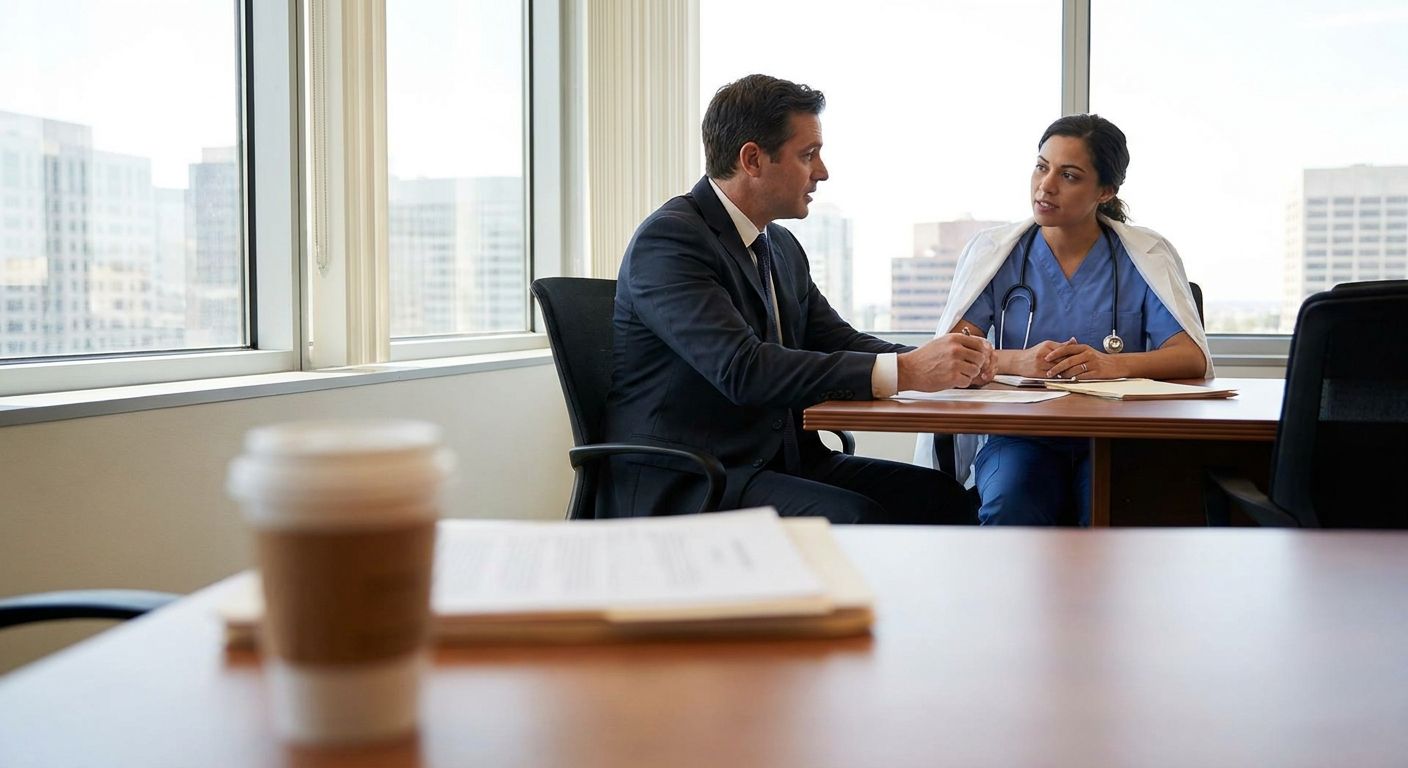
If you're a nurse, physician, pharmacist, or medical tech in California with a felony on your record, the lawyer you hire needs to understand licensing boards as well as courtrooms. This guide breaks down what separates a felony expungement lawyer for healthcare workers from a general criminal defense attorney, and which relief options actually protect your license in 2026.
- A felony expungement lawyer for healthcare workers must know Business and Professions Code disclosure rules, not just Penal Code 1203.4 filings.
- Penal Code 1203.4 dismissal is the right move for most completed-probation cases -- Buy.
- Federal exclusion lists like the OIG list are untouched by state expungement -- check them separately before assuming you're clear.
- Record sealing under Penal Code 851.91 fits arrests that never led to conviction, common in early-career incidents -- Buy.
- DIY filing with Form CR-180 is a Skip for healthcare workers because one wrong box on a licensing application can undo the whole case.
Why This Matters for Healthcare Workers
A felony conviction follows a healthcare worker in ways it doesn't follow most job applicants. Hospitals run Live Scan background checks at hiring and often again at credentialing renewal. State boards -- the Board of Registered Nursing, the Medical Board of California, the Board of Pharmacy -- ask about convictions directly on license applications, and they can act on convictions that a court has already dismissed.
That's the part most people don't know until it's too late. Getting a conviction dismissed under Penal Code 1203.4 clears your criminal record for most employers, but California's Business and Professions Code still requires disclosure to licensing boards in many cases. A lawyer who only understands the criminal side of this can win your court motion and still leave your license exposed.
In my practice at Cole Law, I've handled cases where a nurse assumed expungement meant the board would never see the conviction again -- it doesn't work that way, and the gap between what a court order says and what a board can ask is where healthcare careers get derailed.
Who This Guide Is For
This is written for licensed or license-track healthcare workers in California -- nurses, CNAs, physicians, pharmacists, EMTs, and medical technicians -- who have a felony arrest or conviction on record and need it resolved before a licensing deadline, credentialing review, or job application. If you're applying for a new license for the first time with a record, or renewing one, the stakes and the strategy are different from a standard expungement case.
What to Look For in a Felony Expungement Lawyer for Healthcare Workers
Licensing board disclosure experience
A lawyer who's only filed CR-180 forms for general clients may not know that Business and Professions Code disclosure rules can require you to report a dismissed conviction anyway. You need someone who's walked a client through a board application after relief was granted, not just through the court motion itself.
Knowledge of which statute actually fits your case
Penal Code 1203.4 dismissal, Penal Code 17(b) felony reduction, and Penal Code 851.91 arrest sealing solve different problems. Healthcare workers often qualify for more than one, and picking the wrong one wastes months you don't have before a renewal deadline.
Speed relative to your credentialing timeline
Hospital credentialing committees and state boards run on fixed cycles. A lawyer who treats your case like any other criminal matter, without regard to your renewal date, can cost you a job offer even if the legal outcome is eventually favorable.
Awareness of federal exclusion lists
State-level relief does nothing for the OIG List of Excluded Individuals/Entities or similar federal exclusion databases. If your conviction touched Medicare, Medicaid, or federal health programs, your lawyer needs to flag this separately -- expungement alone won't remove a federal exclusion.
A straight answer on what expungement will and won't erase
Be wary of anyone who tells you expungement makes the conviction disappear entirely. It restricts most employers from seeing it and lets you legally state you weren't convicted in most contexts, but it is not automatic license protection.
Fee clarity before you sign anything
Expungement and reduction motions in California are usually handled on a flat fee per case type. A lawyer who can't tell you the fee for your specific motion -- 1203.4, 17(b), or 851.91 -- until after you've paid a consultation fee is a red flag.
Your Options, Ranked by Fit
Penal Code 1203.4 dismissal -- the standard path. If you completed probation and have no pending charges, this is the most common relief for healthcare workers with a single past conviction. It doesn't erase the record from licensing board view, but it does let you answer "no" to most employment questions about convictions. Buy for anyone with completed probation and no board application pending in the next 30 days.
Penal Code 17(b) felony-to-misdemeanor reduction -- the wobbler fix. Certain felonies are "wobblers," meaning they can be charged as either a felony or misdemeanor. If yours qualifies, reducing it to a misdemeanor before or alongside a 1203.4 dismissal changes how licensing boards weigh the offense. Buy if your original charge was eligible for misdemeanor treatment and hasn't been reduced yet.
Penal Code 851.91 arrest sealing -- for arrests without conviction. If you were arrested but never convicted, or the case was dismissed outright, sealing the arrest record is often faster and cleaner than expungement. This matters for healthcare workers who had an early-career incident that never resulted in a conviction but still shows up on background checks. Buy if your record shows an arrest with no conviction attached.
Certificate of Rehabilitation -- for more serious or older cases. This goes further than 1203.4 and can support a pardon application in select cases, but it takes longer and has stricter eligibility rules around waiting periods. Consider if you're several years past the conviction and need a stronger showing for a board or hospital privileging committee.
Filing it yourself with Form CR-180. The court form itself is public and free to file. The problem for healthcare workers isn't the form -- it's knowing how the outcome interacts with your specific board's disclosure rules, which the form doesn't explain. Read the step-by-step process for expunging a record in California before deciding to go it alone. Skip self-filing if a license or credentialing decision depends on the outcome.
What to Avoid
- Flat-fee "expungement mills" that never ask about your profession. If a firm quotes you a price before asking whether you hold or want a professional license, they're not accounting for the board disclosure issue at all.
- Assuming expungement solves federal exclusion problems. These are two entirely separate systems. A lawyer who conflates them is giving you a false sense of security.
- Waiting until a renewal notice arrives to start the process. Court motions in California typically take weeks to a few months to resolve depending on the county calendar in 2026; starting late can force you to disclose a still-pending case on a board application.
Talk through your record before you apply
Get a straight read on which relief fits your license and timeline.
Comparison at a Glance
| Option | Best For | Board Disclosure Still Required? | Verdict |
|---|---|---|---|
| PC 1203.4 Dismissal | Completed probation, single conviction | Often yes, on license applications | Buy |
| PC 17(b) Reduction | Eligible wobbler felonies | Yes, but reduced severity helps | Buy |
| PC 851.91 Sealing | Arrest without conviction | Generally no | Buy |
| Certificate of Rehabilitation | Older or more serious cases | Yes | Consider |
| DIY CR-180 filing | Simple, non-license cases only | N/A -- risk of missteps | Skip for healthcare workers |
FAQ
Does expungement stop a nursing or medical board from seeing my conviction?
No -- California licensing boards can still ask about and consider convictions dismissed under Penal Code 1203.4 on license applications in 2026. Expungement mainly limits disclosure to most private employers, not state boards.
What's the best relief option for a healthcare worker with one old felony?
Penal Code 1203.4 dismissal is usually the best starting point if probation is complete and no charges are pending. Pairing it with a Penal Code 17(b) reduction, if the charge qualifies as a wobbler, strengthens your position further.
How much does a felony expungement lawyer for healthcare workers cost?
Fees vary by case type and county, and most California expungement attorneys quote a flat fee per motion rather than an hourly rate. Ask for a fee tied to your specific filing -- 1203.4, 17(b), or 851.91 -- before signing anything.
Can I get my nursing license if I have a felony record?
It depends on the offense, how long ago it occurred, and whether you've completed relief like Penal Code 1203.4 dismissal. Boards weigh rehabilitation evidence alongside the conviction, so legal relief combined with a clear application matters.
Is record sealing different from expungement in California?
Yes -- sealing under Penal Code 851.91 applies to arrests that didn't result in conviction, while expungement under Penal Code 1203.4 applies after a conviction and completed probation. They solve different problems and can both apply to the same person over time.
Will expungement remove me from a federal exclusion list?
No -- federal exclusion lists like the OIG's List of Excluded Individuals/Entities operate independently of state court relief. Removal from a federal list requires a separate reinstatement process through the relevant federal agency.
How long does felony expungement take in California in 2026?
Timelines vary by county court calendar, but most 1203.4 motions resolve within a few months of filing in 2026. Starting the process well before a license renewal or credentialing deadline avoids having to disclose a pending case.
Should I hire a general criminal defense lawyer or one who works with healthcare workers specifically?
Hire one with direct experience in how licensing board disclosure rules interact with expungement outcomes. A general practice lawyer can win the same court motion but may miss the board-side consequences that matter most to your career.
One Last Thing
The detail that surprises most clients isn't the court process -- it's that a 1203.4 dismissal and a clean board application are two separate wins you have to earn on purpose. I tell every healthcare worker I represent to draft their board disclosure language with a lawyer's help, even after the dismissal is granted, because boards read that language closely in 2026 and a poorly worded answer can trigger scrutiny a well-worded one would have avoided entirely.


