
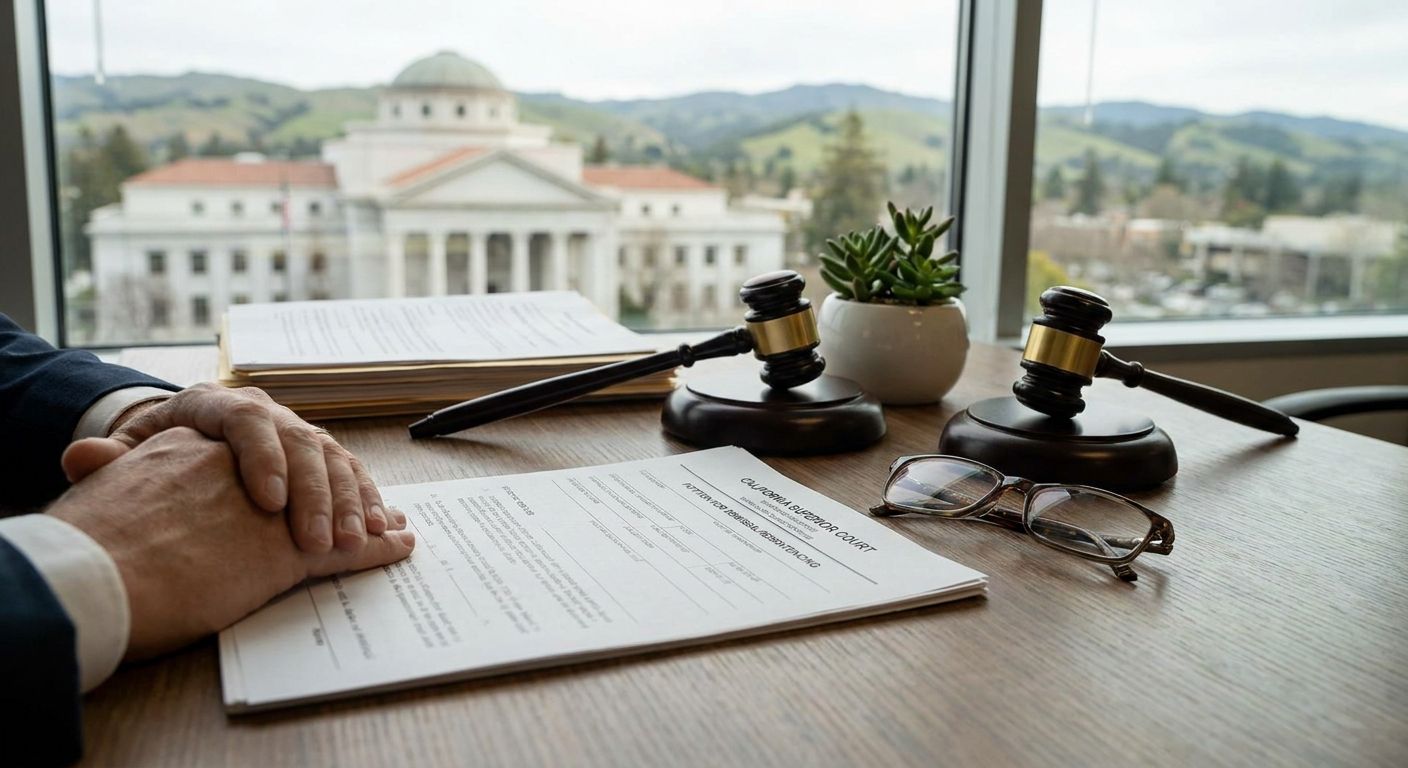
If you were convicted of a marijuana offense in California before November 2016, Proposition 64 may let you get that conviction dismissed, reduced, or sealed even if it's decades old. This guide walks through the exact petition process under Health and Safety Code 11361.8, step by step.
- Prop 64 marijuana expungement in California runs through Health and Safety Code 11361.8, not the standard Penal Code 1203.4 process — file the right petition or the court will bounce it.
- Convictions for conduct now legal under Prop 64 can be dismissed and sealed at no cost to the petitioner in most counties as of 2026.
- Felony marijuana convictions often qualify for redesignation to a misdemeanor even if the underlying case is 10+ years old.
- Cole Law recommends pulling your full case file before filing — missing minute orders are the top reason petitions stall.
- Verdict: if your conviction predates 2016 and involved possession, cultivation, or sale under old thresholds, file the petition — most eligible cases succeed.
Why this matters
Before November 2016, possessing more than an ounce of marijuana, growing more than six plants, or certain sales-related conduct could land you a misdemeanor or felony conviction. Proposition 64 didn't just legalize that conduct going forward — it built in a retroactive remedy. Under Health and Safety Code 11361.8, anyone with a qualifying prior conviction can petition to have it dismissed and sealed, or redesignated from a felony to a misdemeanor.
That conviction still shows up on background checks today unless someone actually files the paperwork. Courts don't clear these automatically. If you're dealing with a marijuana conviction from the 2000s or early 2010s, an expungement lawyer for cannabis-related convictions can tell you within one conversation whether your case qualifies.
What you'll need
- Your case number — found on any old court paperwork, bail receipt, or probation document
- A certified copy of the conviction record — pulled from the county courthouse where you were sentenced
- Proof of sentence completion — probation discharge paperwork or a receipt showing fines were paid
- Government-issued ID — required to file and to pull records in most counties
- A completed CR-180 or the county's local Prop 64 petition form — some counties use their own template
- 30 to 90 days of patience — filing time varies by county caseload
If you're not sure which form applies to your situation, the general breakdown in how to expunge a criminal record in California covers the underlying process this Prop 64 petition builds on.
The steps
Step 1: Confirm your conviction actually qualifies
Not every marijuana-related conviction qualifies under Prop 64. It has to involve conduct that's now legal or reduced under the new law — simple possession over the old one-ounce limit, cultivation under six plants, or certain low-level sales counts. A DUI involving marijuana, or a case tied to a violent felony, doesn't qualify the same way.
Pull the actual charge code from your record, not just your memory of what happened. Health and Safety Code sections 11357, 11358, and 11360 are the most common qualifying statutes. Getting this wrong is the single biggest reason petitions get rejected outright.
Step 2: Request your certified case record
Contact the clerk's office in the county where you were convicted and request a certified copy of the docket and conviction record. Courts charge a small copying fee per page in most counties. Without this record, the court can't verify your conviction date or the exact statute you were charged under.
Some older cases, especially from before 2000, only exist on microfiche or in archived boxes. Expect a longer turnaround — sometimes 4 to 6 weeks — if your case predates digital court records.
Step 3: Choose the right form of relief
Prop 64 offers three distinct outcomes, and picking the wrong one wastes months:
- Dismissal and sealing — for completed misdemeanor sentences that are now legal
- Redesignation — for felonies that are now misdemeanors under the new possession or cultivation limits
- Resentencing — for people still serving a sentence for a now-legal offense
Most people filing in 2026 for an old conviction are looking at dismissal and sealing or redesignation, since resentencing only applies if you're currently incarcerated or on active supervision.
Step 4: File the petition with the sentencing court
The petition has to go to the same court that handed down the original conviction — not your current county of residence if you've moved. File Form CR-180 (or your county's local Prop 64 form) along with your certified record and a declaration explaining why the conviction qualifies.
Most counties don't charge a filing fee for Prop 64 petitions specifically, since the law was written to remove barriers to relief. Double-check with the clerk before assuming, since fee waiver rules shift by jurisdiction.
Step 5: Serve notice to the District Attorney
Once filed, the court notifies the DA's office and gives it a window — typically 60 days — to object. In the majority of straightforward cases, the DA doesn't contest a qualifying Prop 64 petition, because the underlying conduct is now legal outright.
If the DA does object, it's usually over a factual dispute — the quantity involved, the date of the offense, or whether a related charge disqualifies the petition.
Step 6: Attend the hearing or request a ruling without one
Many counties will grant an unopposed Prop 64 petition without requiring you to appear in court. If a hearing is scheduled, it's usually short — the judge reviews the petition, confirms the DA's position, and rules.
Show up if a hearing is set. A no-show can get the petition dismissed for lack of prosecution, forcing you to refile and start the clock over.
Step 7: Confirm the order and update your record
Once the judge grants the petition, get a certified copy of the signed order. Send it to the Department of Justice and to any background check company (like a live-scan provider) that's flagged the old conviction.
This is the step people skip, and it's the reason old convictions keep showing up on background checks for years after a court granted relief. The order doesn't update databases on its own — someone has to send it.
Check if your Prop 64 case qualifies
A short case review tells you exactly which petition applies.
Troubleshooting
The DA's office objects to the petition. Ask for the specific legal basis in writing. Most objections come down to a factual disagreement about quantity or the exact code section, which can often be resolved with additional court records.
Your case file is missing or incomplete. Request a records search from both the courthouse and the county probation department — probation files sometimes contain details that the court file doesn't.
You're still on probation for a related offense. You can still file for resentencing rather than dismissal, but the process and timeline differ. Confirm which category applies before submitting the wrong form.
The conviction involved both marijuana and another substance. If the case included a separate possession charge tied to a different drug, a best lawyer for drug possession expungement in California petition may need to run alongside the Prop 64 filing.
The court grants the petition but the record still shows up on background checks. Follow up in writing with the DOJ and any commercial background check vendor — the sealing order has to be sent, it isn't broadcast automatically.
Your felony wasn't reduced, only your marijuana charge. If other felony counts remain on your record from the same case, they need a separate reduction petition — that's a different filing than a straight Prop 64 dismissal.
Tools and resources
- County courthouse clerk's office — for certified records and local Prop 64 forms
- Form CR-180 or your county's equivalent Prop 64 petition template
- Live-scan or background check provider contact info — for updating records post-order
- Expungement lawyer for cannabis-related convictions — for case-specific eligibility review
What to do next
If your marijuana case involved a felony charge that Prop 64 didn't fully resolve, the next move is a separate reduction petition under Penal Code 17(b). The process for that is covered in how to get a felony reduced to a misdemeanor in California, and it can run in parallel with your Prop 64 filing rather than waiting for one to finish first.
FAQ
What is Prop 64 marijuana expungement in California?
Prop 64 marijuana expungement is a petition under Health and Safety Code 11361.8 that dismisses, seals, or redesignates old marijuana convictions for conduct that's legal or reduced under 2016's Proposition 64. It applies to possession, cultivation, and some sales-related charges from before the law passed.
How much does a Prop 64 petition cost in California?
Most counties waive the filing fee for Prop 64 petitions specifically since the law was designed to remove cost barriers. You may still pay a small fee for a certified copy of your court record.
How long does a Prop 64 expungement take in 2026?
Most petitions resolve in 30 to 90 days depending on county caseload and whether the DA's office objects. Unopposed petitions in most California counties move faster, sometimes without a hearing at all.
Can a felony marijuana conviction be reduced to a misdemeanor?
Yes. If the felony involved conduct now classified as a misdemeanor or legal under Prop 64 — like cultivation of six or fewer plants — you can petition for redesignation. This is separate from dismissal and often filed alongside it.
Does Prop 64 relief show up on background checks after it's granted?
It shouldn't, but only if the signed court order gets sent to the Department of Justice and any background check vendor that flagged the original conviction. The court doesn't update those databases automatically.
Is Prop 64 expungement different from a standard Penal Code 1203.4 expungement?
Yes. A standard 1203.4 expungement applies broadly to completed probation sentences, while Prop 64 relief under Health and Safety Code 11361.8 applies specifically to marijuana convictions for conduct that's now legal or reduced.
Can I file a Prop 64 petition if my conviction was in a different county than where I live now?
Yes, but the petition has to go to the court that handed down the original conviction, not your current county of residence. You may need to request records by mail if you've relocated.
What happens if the District Attorney objects to my Prop 64 petition?
The court schedules a hearing where the DA presents its objection, usually over quantity or the exact statute charged. Most objections get resolved with additional records showing the conduct qualifies under the new thresholds.
One last thing
The part people miss most often isn't the filing — it's the follow-up. Cole Law sees cases where a judge granted Prop 64 relief years ago, but the conviction still shows up on a background check because nobody sent the signed order to the DOJ or the background check vendor. Filing the petition gets you the ruling. Sending the paperwork afterward is what actually clears the record where employers and landlords look.


