

An expunged conviction under California Penal Code 1203.4 rarely has to come up in a job interview at all, but when it does, how you handle twenty seconds of conversation matters more than the conviction itself.
- Most private employers in California can't ask about a dismissed conviction before making a conditional job offer.
- How to explain an expunged conviction in a job interview comes down to one short, honest sentence, not a confession.
- Penal Code 1203.4 relief doesn't erase an arrest record, so licensing boards and fingerprint-cleared jobs can still see it in 2026.
- Background check vendors sometimes flag cases that should have updated after dismissal, and a copy of the court order usually fixes it.
- Cole Law reviews which employers still have legal access to a dismissed record before a candidate walks into the interview.
Why this matters
Getting a conviction dismissed under Penal Code 1203.4 doesn't automatically mean the interview conversation disappears. Job applications, background check vendors, and hiring managers vary in how much they know and how much they're legally allowed to ask, so the same dismissed case can be a non-issue at one company and a direct question at another. Candidates who walk in with a script ready close offers faster than candidates hoping the topic never surfaces.
Cole Law works with job seekers rebuilding a career after a record across California, and the same pattern shows up regardless of industry in 2026: the explanation matters less than the confidence behind it.
How to explain an expunged conviction in a job interview
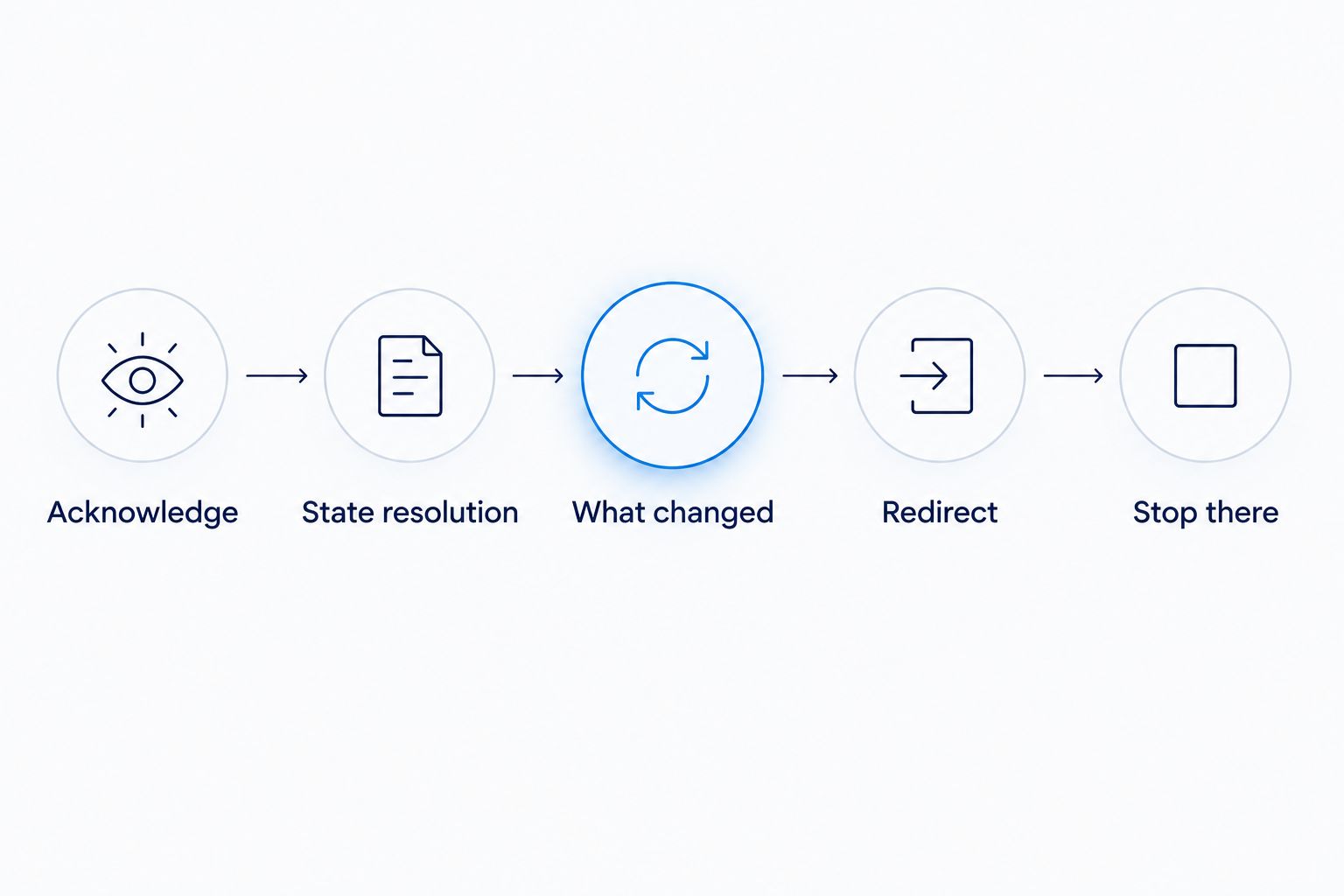
If a hiring manager asks directly, run through five short beats instead of a full case history:
- Acknowledge briefly. Confirm the matter was resolved, and if true, say the case was dismissed.
- State the resolution. One sentence naming the outcome, no legal jargon dump.
- Name what changed. Finished probation, years passed, a different life since then.
- Redirect to the role. Tie the answer back to why you're qualified for this specific job.
- Stop there. Don't volunteer court dates, probation terms, or extra detail nobody asked for.
The whole answer should run under thirty seconds. Anything longer starts sounding like an apology tour instead of a fact.
When you're not legally required to disclose it
Under Penal Code 1203.4, a dismissed conviction lets you legally state on most job applications that you have not been convicted of that crime, since the dismissal sets aside the guilty plea or verdict. California's Fair Chance Act (Government Code 12952) also bars employers with five or more employees from asking about conviction history on an application or before extending a conditional job offer, dismissed or not.
That combination means most candidates in 2026 never reach an interview where the topic legally belongs on the table in the first place. If you're not sure your case actually qualifies for that protection, check your eligibility under Penal Code 1203.4 before assuming the record is fully behind you.
When you still have to disclose it
A dismissal under Penal Code 1203.4 doesn't erase the underlying arrest from state Department of Justice files - it relieves most penalties and disabilities but leaves the record itself intact. State licensing boards for professions like healthcare, real estate, private security, and law run their own Live Scan checks and can ask about a dismissed conviction directly on the application.
Public sector jobs, peace officer positions, and roles working with children, patients, or the elderly commonly fall into this category too. If your job search runs through one of these paths, the honest-and-brief approach still works, but skipping the disclosure question entirely usually isn't an option.
Verdict: for most private-sector interviews in 2026, silence is the legally correct answer; for licensed and government roles, a short, factual disclosure is the safer one.
What to say if a background check surfaces it anyway
Background check vendors sometimes report cases that should have updated after a 1203.4 dismissal, especially when the court hasn't sent the revised disposition to the state database yet. If a hiring manager brings up something your background check shows that you believed was resolved, ask which report they're looking at and offer to provide your dismissal order. That single document usually ends the conversation on the spot.
If a company pulls an offer over something that should have been cleared, respond to a background check denial with documentation rather than a phone call alone.
Why the right answer varies
- Employer size - companies under five employees fall outside California's Fair Chance Act disclosure limits.
- Licensing requirement - state boards for nursing, real estate, security, and law often run independent Live Scan checks.
- Industry - healthcare, education, childcare, and law enforcement roles routinely require fuller disclosure.
- Position type - government and federal jobs aren't bound by the same state ban-the-box rules as private employers.
- Timing of the question - some employers ask before a conditional offer illegally, which changes how you should respond.
- Case type - certain convictions, including some sex offenses and firearms charges, carry disclosure rules that survive dismissal.
Do I have to disclose an expunged conviction on a job application?
No, in most cases you don't have to disclose a conviction dismissed under Penal Code 1203.4 on a standard private-employer application in California. The exception is state licensing applications and certain government or safety-sensitive roles, which often ask directly regardless of the dismissal.
Can an employer rescind a job offer after learning about an expunged conviction?
An employer can rescind an offer if the position is exempt from ban-the-box protections or if you answered a lawful disclosure question inaccurately. For most roles covered by the Fair Chance Act, an employer has to complete an individualized assessment before withdrawing an offer over conviction history, even a dismissed one.
Does an expunged conviction show up on a background check in 2026?
A properly updated background check should show the case as dismissed rather than as an open conviction after Penal Code 1203.4 relief. Live Scan fingerprint checks used for licensing and government jobs can still surface the underlying arrest record even after dismissal, which is why the answer differs by employer type.
Confirm what your record still shows
Cole Law reviews California expungement and disclosure questions case by case.
FAQ
Do I have to disclose an expunged conviction on a job application?
No, in most cases a conviction dismissed under Penal Code 1203.4 doesn't have to be disclosed on a standard private-employer application in California. State licensing boards and certain government roles are the main exception.
Can an employer ask about an expunged conviction in a California job interview?
An employer with five or more employees generally can't ask about conviction history before a conditional job offer under California's Fair Chance Act. After a conditional offer, some employers can ask, and the answer should stay short and factual.
Does an expunged conviction show up on a background check in 2026?
A properly updated background check should list the case as dismissed rather than as an active conviction. Fingerprint-based Live Scan checks used for licensing can still show the underlying arrest even after a 1203.4 dismissal.
Can a job offer be rescinded after an employer finds an expunged conviction?
An offer can be rescinded for roles exempt from ban-the-box rules or when disclosure was required and inaccurate. Covered employers must complete an individualized assessment before withdrawing an offer over conviction history alone.
What should I say if asked directly about a dismissed case?
State that the matter was resolved, name the resolution briefly, and pivot back to your qualifications within thirty seconds. Over-explaining raises more doubt than the short answer does.
Is there a difference between expungement and record sealing for job applications?
Expungement under Penal Code 1203.4 dismisses a conviction but leaves the arrest record visible to certain agencies, while sealing restricts access more broadly for eligible cases. Which one applies changes what an employer or licensing board can legally see.
Do government jobs and licensing boards treat expunged convictions differently?
Yes, government employers, peace officer positions, and state licensing boards routinely run their own background checks and can ask about a dismissed conviction directly. Private employers covered by the Fair Chance Act face tighter limits on the same question.
How long does it take to get a conviction expunged before applying for a job?
Timelines vary by county and case type, so the safest move is starting the petition well before you expect to interview rather than during an active job search. Filing earlier gives the court time to process the dismissal before a background check runs.
One last thing
The most common mistake in these interviews isn't disclosure - it's over-explaining. Candidates who volunteer court dates, probation terms, or repeated apologies during an answer that should take twenty seconds tend to raise more doubt than the conviction itself ever did. Say less, mean it, and move the conversation back to the job.


