
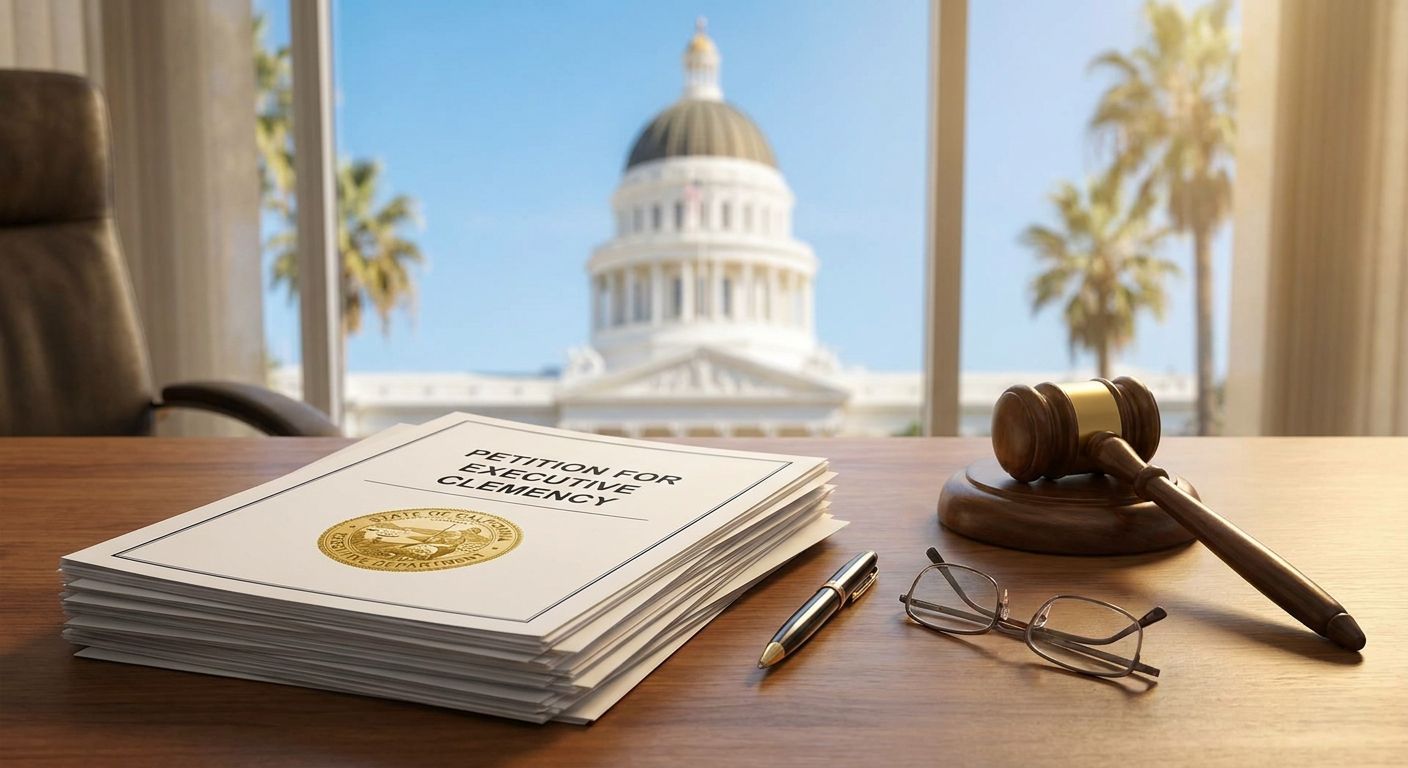
If you're carrying a California conviction that still blocks a license, a gun purchase, or a background check even after expungement, a governor's pardon is the next tool worth understanding — and it works differently than anything else in the post-conviction toolbox.
- A governors pardon california application runs through either a Certificate of Rehabilitation or a direct petition to the Governor's office — Buy the COR route if you qualify.
- Direct pardon applications generally require a decade crime-free; Cole Law recommends confirming eligibility before filing anything in 2026.
- A pardon restores rights an expungement can't touch, like some firearm rights and professional licensing eligibility, but it doesn't erase the conviction from your record.
- Processing has no statutory deadline — plan for a multi-year wait, not a quick fix in 2026.
Why this matters
A Penal Code 1203.4 expungement dismisses your case and lets you legally deny it in most job applications, but it doesn't restore every right the conviction cost you. A California governor's pardon goes further: it's an official statement from the state that you've proven, over years, that you're not defined by that conviction. For people locked out of gun ownership, certain state licenses, or jury service, a pardon can be the only path back.
I've walked clients through both the Certificate of Rehabilitation and direct pardon routes, and the biggest mistake I see is people filing before they've confirmed which track applies to them. The two processes have different eligibility rules, different waiting periods, and different paperwork — get it wrong and you lose months. Before doing anything else on your record, it's worth reviewing what Cole Law can confirm about your specific conviction history.
What you'll need
- Certified copies of your conviction records, including case number and sentencing minute order
- Proof of the date you completed probation or parole, or were released from custody
- California residency records if you're pursuing the Certificate of Rehabilitation path
- Evidence of rehabilitation: employment history, community service, education, sobriety records, character letters
- The correct application: either a Certificate of Rehabilitation petition filed in superior court, or the Governor's direct Application for Pardon
- Time — this is a multi-year process, not a paperwork sprint
The steps
1. Figure out which pardon route applies to you
California runs two separate paths to a governor's pardon, and picking the wrong one wastes your waiting period. If you were convicted of an eligible felony and served your sentence in California, you likely qualify for a Certificate of Rehabilitation (COR) under Penal Code 4852.01 — and a granted COR is automatically forwarded to the Governor's office as a pardon application. If your conviction is out-of-state, federal, or otherwise ineligible for a COR, you file a direct Application for Gubernatorial Pardon instead. Mixing these up means refiling from scratch.
2. Confirm you meet the waiting period
The COR path generally requires several years of a clean record after finishing probation or parole, plus continuous California residency immediately before filing — the exact period shifts based on your offense under Penal Code 4852.03. The direct application route is stricter: applicants are typically expected to show roughly a decade free of arrests before the Governor's office will even review the file. Don't guess here — a miscalculated date is the single most common reason applications stall.
3. Pull your full record and build your rehabilitation file
Order certified records from every county where you were charged, not just the county of conviction. Then assemble proof of what you've done since: pay stubs, tax returns, letters from employers or clergy, proof of finished classes or treatment programs. The Board of Parole Hearings investigates every pardon application, and a thin rehabilitation file is an easy reason to deny.
4. File the Certificate of Rehabilitation petition, if eligible
This petition goes to the superior court in the county where you now live, not where you were convicted. The court can hold a hearing, review your file, and if granted, the certificate is sent directly to the Governor as a recommendation for pardon — you don't file a separate pardon application on top of it. Anyone weighing this route should also understand how it interacts with a prior expungement filing, since expungement and a COR can move in sequence, not instead of each other.
5. File the direct pardon application if you're not COR-eligible
Out-of-state convictions, federal offenses, and certain other cases skip the COR step entirely. You complete the Governor's Application for Pardon directly, listing every conviction, every address history detail, and every piece of rehabilitation evidence you have. This form asks for more personal history than most legal paperwork you've filled out before — expect it to take real time.
6. Submit and cooperate with the background investigation
Once filed, the Governor's office typically routes the application through the Board of Parole Hearings for an independent investigation. You may be asked for additional documents or a personal statement. Respond fast and completely — a slow reply is often read as a lack of seriousness about the process.
7. Wait — there's no statutory deadline
Governors review pardon applications at their own pace, and there's no timeline the office is bound to. Applications can sit for a year or longer before any decision. This is the hardest part for most clients to accept: nothing you do after filing speeds it up.
8. Understand what changes and what doesn't once granted
A governors pardon in California doesn't erase or seal your conviction — the record stays, but with an official notation that you've been pardoned. What it can restore includes eligibility to serve on a jury, some professional licensing paths, and in specific circumstances, firearm rights, though federal gun law is separate from state pardon power and doesn't automatically follow a state pardon.
“A pardon does not erase your conviction — it tells the state you've proven you're not the person you were when it happened.”
— Allison Cole
Troubleshooting
- Denied without an explanation. The Governor's office doesn't have to state a reason. You can reapply later, but strengthen your rehabilitation file before you do.
- Multiple convictions across counties. Every conviction needs its own certified record pulled and disclosed — omitting one, even a minor one, can tank the whole application.
- Out-of-state or federal conviction filed as a COR by mistake. These aren't eligible for the Certificate of Rehabilitation route in California; go straight to the direct pardon application.
- Confusing a pardon with an expungement. They solve different problems. If your main goal is passing a routine background check, expunging the record first may get you there faster than waiting years for a pardon decision.
- Missing court records from decades ago. Older case files sometimes require a written request to the clerk's archive division — start this early, it can take weeks.
Not sure which pardon path fits your case
Get a straight answer on COR eligibility versus a direct pardon application.
Tools and resources
- The Governor's Application for Pardon form, available through the state's official pardon information page
- Your county superior court clerk's office, for certified case records and the Certificate of Rehabilitation filing
- A record review with the best lawyer for expungement in California before you commit to either pardon track, since eligibility mistakes here cost years, not weeks
What to do next
If you haven't already dealt with the underlying conviction through expungement or a felony reduction, do that first — it's faster, and in many cases it solves the practical problem (background checks, most job applications) without the multi-year wait a pardon requires. If a pardon is still the right move for your situation in 2026, get a professional read on your eligibility before filing anything. Finding a criminal record expungement lawyer who's handled both COR petitions and direct pardon applications will save you the wasted year most self-filers lose to eligibility errors.
FAQ
What is a governor's pardon in California?
A governor's pardon is an official act by the sitting Governor forgiving a past conviction and restoring certain rights lost because of it. It does not erase or seal the conviction from your record the way an expungement does.
How is a pardon different from an expungement?
An expungement under Penal Code 1203.4 dismisses your case and lets you legally deny it on most job applications, while a pardon is a separate act of clemency that restores rights an expungement doesn't reach. Many people pursue expungement first, then a pardon years later.
How long does it take to get a governor's pardon in California?
There's no statutory deadline, and applications commonly take a year or longer to decide once filed. The waiting period before you can even apply adds years on top of that, depending on which route you use.
Does a pardon restore gun rights in California?
A state pardon can restore certain firearm rights in specific circumstances, but federal gun law is separate and doesn't automatically follow a California pardon. Anyone pursuing gun rights specifically should review a dedicated firearm rights restoration path before assuming a pardon alone solves it.
Who qualifies for a Certificate of Rehabilitation in California?
People convicted of an eligible felony who served their sentence in California and have completed the required waiting period under Penal Code 4852.03 generally qualify. Out-of-state and federal convictions are not eligible for this route and require a direct pardon application instead.
Can a governor's pardon be denied?
Yes, and the Governor's office isn't required to state a reason for the denial. Applicants can reapply later, usually after strengthening the rehabilitation evidence in the file.
Does a pardon clear your criminal record completely?
No — a pardon doesn't erase the conviction, it adds an official notation that clemency was granted. For a record that's actually sealed or dismissed, expungement or record sealing is the correct remedy.
One last thing
Most people find out about the governor's pardon process only after an expungement or a Certificate of Rehabilitation didn't fully solve their problem — which means the fastest path in 2026 is usually to start with the cheaper, faster remedy and treat a pardon as the last step, not the first.


