
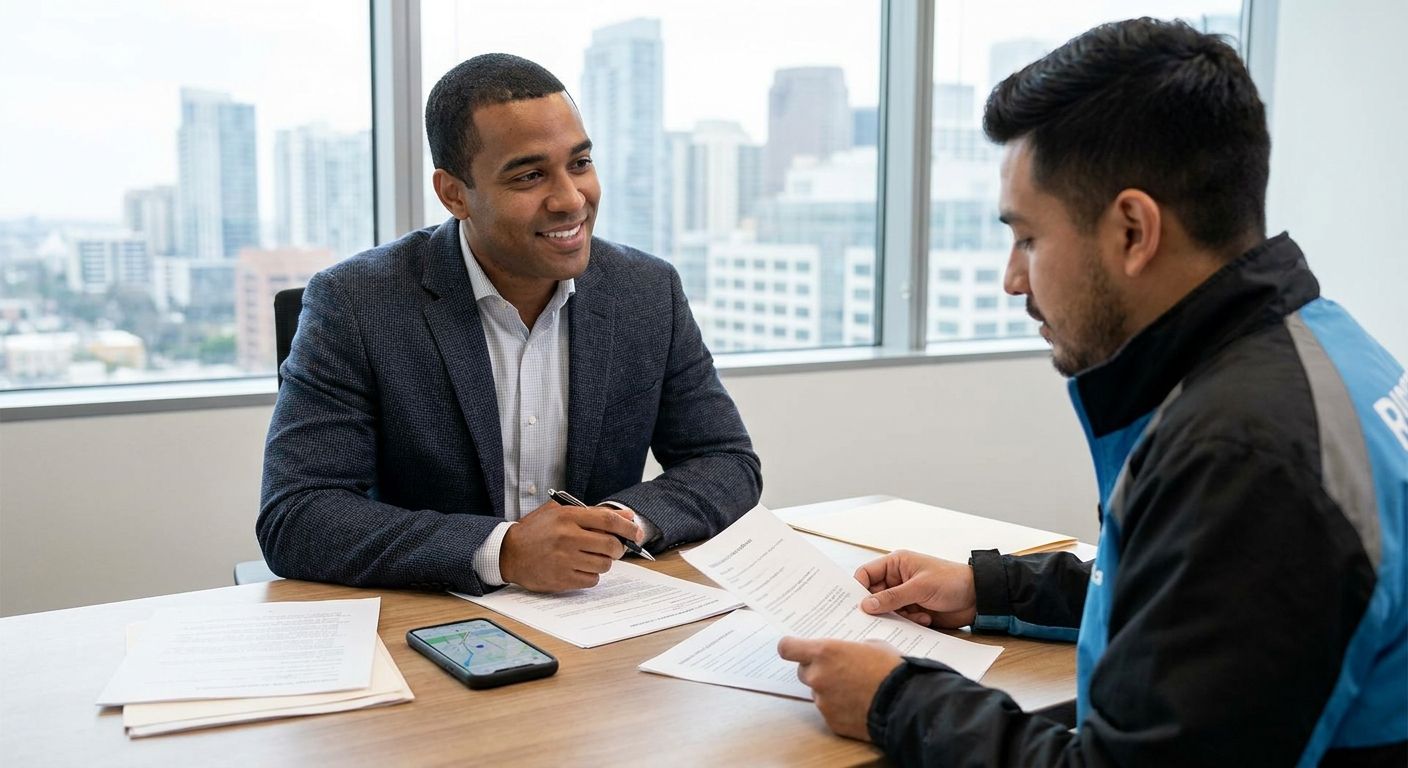
Rideshare and delivery platforms run criminal background checks before you drive — and again on a schedule after you start. This guide explains how an expungement lawyer for Uber drivers, Lyft drivers, DoorDash couriers, and other California gig drivers can clear the record issues that block activation or trigger deactivation in 2026.
- PC 1203.4 expungement is the first path most Uber and delivery drivers should pursue in 2026.
- Cole Law handles California expungement and record-clearing work for gig drivers facing background-check denials.
- Skip DIY filings when a DUI or felony sits on your RAP sheet — a rejected Form CR-180 costs months.
- Felony-to-misdemeanor reduction often must come before expungement on serious priors.
- Arrests with no conviction belong in a sealing petition, not a standard expungement.
Why this matters
A single conviction on a California RAP sheet can stop a rideshare or delivery application cold. Platforms screen for violent offenses, serious DUI history, theft, and other disqualifying categories under California TNC rules. Even older misdemeanors that no longer feel relevant show up on Live Scan and commercial background reports in 2026.
I work with drivers who already lost an account, drivers stuck in pending review, and people who want the record cleaned before they apply. An expungement under Penal Code 1203.4 does not erase history for every purpose, but it does let you truthfully say you were not convicted in most private employment and platform contexts — and that difference is often what gets a driver back on the road.
Who this is for
This guide is for California rideshare and delivery drivers — Uber, Lyft, DoorDash, Instacart, Amazon Flex, and similar platforms — who have a conviction, a dismissed case that still appears, or an arrest that never led to a conviction. You may be applying for the first time, fighting a deactivation, or planning a switch from another job into gig work. If probation is finished (or you never had formal probation) and the case is out of active criminal court, you are in the window where record relief is realistic in 2026.
If you hold a CDL or drive commercial freight on the side, your analysis is different and stricter — see the separate guide for that path later in this article.
What to look for in an expungement lawyer for rideshare and delivery drivers
California criminal defense focus, not a general practice
Expungement is a California Penal Code procedure. Out-of-state counsel and general civil firms rarely file Form CR-180 correctly or know how prosecutors and judges in your county handle 1203.4 petitions. You want someone whose daily work is California criminal records — expungement, sealing, and felony reduction — not a side offering on a family-law website.
Direct experience with platform and TNC background checks
Rideshare denials are not the same as a bank job rejection. Platform reports pull court records, county indexes, and commercial databases on a recurring cycle. A lawyer who has walked drivers through reactivation packets understands which offenses matter to screeners and which cleaned-up outcomes actually change the result in 2026.
Honest eligibility screening before you pay
Not every case qualifies. Certain serious felonies, open probation, unpaid restitution, and some sex offenses sit outside standard PC 1203.4 relief. I screen eligibility up front. If the case is not ready, you should hear that in plain language — including what must happen first — before anyone quotes a fee.
Ability to handle reduction and expungement as one plan
Many drivers carry a wobbler felony that must be reduced under Penal Code 17(b) before a clean expungement is available. A lawyer who only files simple misdemeanor dismissals leaves that work unfinished. Ask whether felony reduction is part of the same engagement.
Clear process, timelines, and form work
You should know which petition is being filed (CR-180 for most expungements), which court, whether a hearing is likely, and a realistic range for how long county processing takes in 2026. Vague promises of “a few weeks” without naming the court are a red flag.
Accessible communication while you wait on the platform
Deactivation and pending-review status create real income pressure. You need updates you can understand, copies of filed papers, and a straight answer when a platform asks for proof of dismissal. Solo practices often move faster on those calls than large firms that route everything through a portal.
Ready to clear your record?
Talk through eligibility for expungement, sealing, or felony reduction in California.
Top paths for rideshare and delivery drivers in 2026
These are the relief routes I evaluate most often for gig drivers. Each one fits a different record shape. Match the path to your case — do not file the wrong petition because a blog called it “expungement.”
1. Standard PC 1203.4 expungement — the safe pick
Hook: The default path for most misdemeanor convictions after probation ends.
If you completed probation (or the court terminated it early), paid fines and restitution, and the offense is eligible, a petition under Penal Code 1203.4 asks the court to withdraw the plea or set aside the verdict and dismiss the case. For private employers and most platform screeners, that dismissal is the outcome that changes the answer on “have you been convicted.” Form CR-180 is the usual vehicle in superior court.
Verdict: Pursue when probation is done and the offense is a standard eligible misdemeanor. This is the path I start with for the majority of Uber and delivery drivers I speak with. Read the full process in the guide on how to expunge a criminal record in California.
2. DUI-focused expungement — the high-stakes pick
Hook: Driving-under-the-influence history is one of the most common blockers for TNC reactivation.
A California DUI misdemeanor is often eligible for PC 1203.4 relief after probation, but platforms weigh DUI history heavily. Timing, multiple priors, and any felony DUI change the analysis. Filing too early, or without cleaning related DMV and probation issues, wastes a filing cycle.
Verdict: Pursue for a single eligible misdemeanor DUI after probation; Consider with counsel if you have more than one alcohol-related case. Drivers in this group should review a dedicated DUI expungement lawyer in California resource before filing.
3. Felony reduction, then expungement — the rebuild pick
Hook: Wobbler felonies often cannot be fully cleaned until the court reduces them first.
Under Penal Code 17(b), many felonies that could have been charged as misdemeanors can be reduced after probation. Only after reduction does a standard expungement usually make sense. Skipping the reduction step leaves a felony on the abstract that platforms and Live Scan still flag in 2026.
Verdict: Pursue when the felony is a wobbler and probation is complete; Skip DIY reduction without counsel — prosecutors oppose poorly prepared motions. Pair this path with a planned expungement so you are not filing twice without a strategy.
4. Arrest and non-conviction sealing — the overlooked pick
Hook: Cases that never produced a conviction still appear on many commercial reports.
If you were arrested and the case was dismissed, diverted, or never filed, expungement is the wrong tool. California sealing statutes address arrests and certain non-conviction records. Gig drivers often discover these entries only after a platform denial letter names an old booking.
Verdict: Pursue when there is no conviction; Skip a CR-180 filing for a pure arrest record — it will not fix the entry you care about.
5. Certificate of rehabilitation path — the long-game pick
Hook: Useful when you need broader relief than a basic dismissal, including some licensing and deeper background contexts.
A Certificate of Rehabilitation is a court finding available after longer waiting periods for certain felony histories. Most pure rideshare activations do not require it. It matters more when a driver also holds or wants a state license, or when the conviction sits outside ordinary 1203.4 reach.
Verdict: Consider only after simpler relief is done or ruled out; Skip as a first move for a standard misdemeanor blocking an Uber or DoorDash app.
What to avoid
Filing Form CR-180 while probation is still open. Courts routinely deny or continue petitions when probation has not ended and conditions remain unpaid. Drivers under income pressure file early and lose months. Confirm termination dates and restitution balances first.
Treating expungement as a full erase for every government purpose. A PC 1203.4 dismissal is powerful for most private and platform screenings, but it does not wipe the slate for every state licensing board, every immigration analysis, or every firearm restriction. I explain the limits up front so you do not plan a career move on a false assumption.
Hiring a national “record clearing” service that never appears in your county court. Petitions are local. Someone who cannot name your superior court, your case number format, or how that DA’s office handles 1203.4 work is not protecting your timeline in 2026.
Verdict comparison
| Path | Best for | Typical first filing | Platform impact | Verdict |
|---|---|---|---|---|
| PC 1203.4 expungement | Eligible misdemeanors after probation | Form CR-180 | Strong for most TNC/delivery screens | Pursue |
| DUI expungement | Single alcohol-related misdemeanor | Form CR-180 (+ case review) | High stakes; often decisive | Pursue with timing care |
| Felony reduction + expungement | Wobbler felonies | PC 17(b), then CR-180 | Needed before dismissal helps | Pursue as a sequence |
| Arrest / non-conviction sealing | Dismissed or never-filed cases | Sealing petition (not CR-180) | Clears booking noise on reports | Pursue when no conviction |
| Certificate of Rehabilitation | Longer felony histories, some licenses | Separate petition after waiting period | Secondary for pure gig work | Consider later |
FAQ
What does an expungement lawyer for Uber drivers actually file?
In most eligible California misdemeanor cases, the lawyer files a petition under Penal Code 1203.4, commonly using Form CR-180, asking the court to set aside the conviction and dismiss the case. The exact papers change if you need a felony reduction or a sealing order first.
Can I drive for Uber or DoorDash while my expungement is pending in 2026?
Pending petitions do not change your record until the court grants relief. Platforms still see the existing conviction during that window. Plan income and application timing around the grant date, not the filing date.
Is expungement the same as sealing a record in California?
No. Expungement under PC 1203.4 addresses eligible convictions after the case is finished. Sealing targets arrests and certain records that never became convictions. Using the wrong petition wastes filing fees and months.
How long does a California expungement take for a rideshare driver in 2026?
County timelines vary. Many straightforward PC 1203.4 petitions resolve in roughly two to six months depending on the court calendar, whether a hearing is set, and whether the prosecutor opposes. Complex felony reductions take longer.
Will a DUI expungement automatically reinstate my Uber account?
No automatic reinstatement exists. Expungement improves what background screeners report, but each platform applies its own safety standards. You still submit updated records and complete whatever reactivation steps the company requires.
Do I need a lawyer, or can I file Form CR-180 myself?
You can file without counsel on a simple eligible misdemeanor, but rejected or incomplete petitions are common when restitution, probation status, or offense eligibility is unclear. Drivers with DUIs, felonies, or prior denials usually save time by having counsel screen the case first.
Does Cole Law handle expungement for delivery drivers outside Uber?
Yes. The same California expungement, sealing, and felony-reduction tools apply to Lyft, DoorDash, Instacart, Amazon Flex, and similar gig roles when the underlying court record is eligible.
What if my felony cannot be expunged right away?
Many wobblers need a Penal Code 17(b) reduction before expungement is available. If reduction is not possible, other tools such as a Certificate of Rehabilitation may still help for specific goals. Eligibility has to be checked against the abstract of judgment.
One last thing
Platform background checks in 2026 are recurring, not one-and-done. Clearing the court record once is still the move — but keep stamped dismissal orders and minute entries in a folder you can resubmit when a rescreen hits. Drivers who win expungement and then cannot produce the order on a tight deadline lose weeks of income they already fought to protect.
If you also drive commercial routes or hold a CDL, treat that record analysis as a separate track from pure rideshare work. The standards stack; they do not replace each other.


