
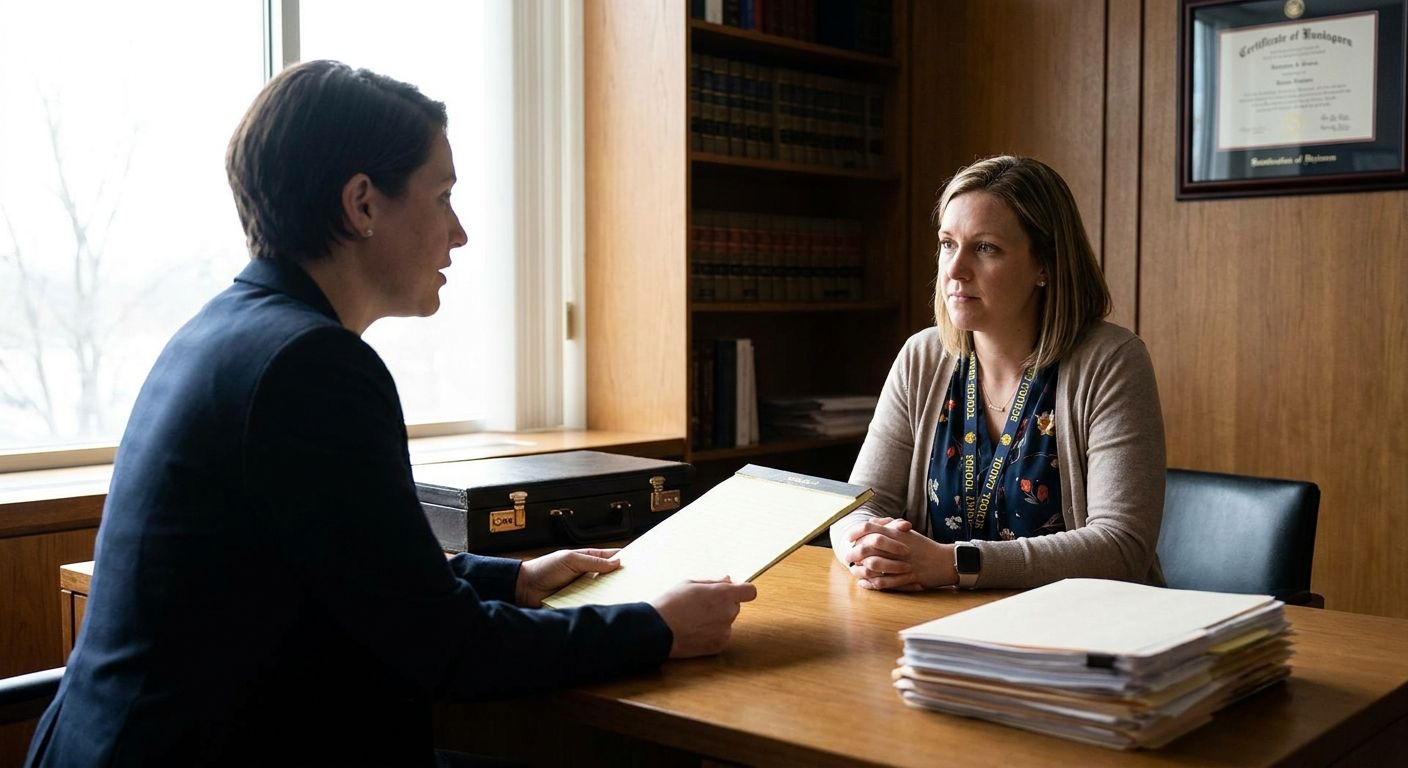
If you teach in a California classroom or work anywhere near a school campus, a decade-old conviction can follow you straight into a Commission on Teacher Credentialing file. An expungement lawyer for teachers who understands how PC 1203.4 relief interacts with credentialing rules can be the difference between a clean fitness review and a stalled career.
- PC 1203.4 dismissal is the baseline move for most teachers with a past misdemeanor or felony conviction in California - pursue it.
- A felony still on your record blocks credentialing faster than almost anything else; reduce it under PC 17(b) before you file anything else.
- Cole Law recommends checking CTC disclosure obligations before assuming expungement clears your file - it often does not.
- Certificate of Rehabilitation matters more for teachers than for most job seekers because it speaks directly to moral fitness review.
Why this matters
School districts run Livescan fingerprint checks, and the California Commission on Teacher Credentialing reviews arrests and convictions independently of whatever your criminal court record shows. A PC 1203.4 dismissal changes what a background check company or employer sees. It does not automatically change what the CTC sees, and that gap is where teachers get blindsided during license renewal or a new hire's fitness review.
This is not a generic record-clearing situation. An expungement lawyer working with a teacher or school employee has to think about two systems at once: the criminal court and the credentialing board. Get the sequencing wrong and you can end up with a technically dismissed case that still triggers a CTC investigation in 2026.
Who this is for
This guide is for classroom teachers, paraprofessionals, coaches, bus drivers, campus security, and any school employee in California who holds or is applying for a credential and has a prior arrest or conviction on record. It's also relevant if you're a credential candidate who hasn't been hired yet but knows a background check is coming.
What to look for in an expungement lawyer for teachers
Direct experience with CTC disclosure rules
Most criminal defense lawyers know PC 1203.4 cold. Far fewer know that the CTC's disclosure requirements run on a separate track from the criminal court's relief. You want someone who can tell you, specifically, what your dismissal does and doesn't erase from a credentialing standpoint before you file anything.
A strategy that starts with felony reduction, not expungement
If your conviction is a wobbler currently on the books as a felony, reducing it to a misdemeanor under PC 17(b) usually needs to happen before or alongside your PC 1203.4 petition. A felony designation carries more weight in a CTC moral fitness review than a reduced misdemeanor that's later dismissed.
Understanding of timelines tied to renewal cycles
Credential renewal windows and district hiring cycles don't wait for court calendars. A lawyer who plans your filing around your renewal date, rather than just the fastest court date available, saves you from renewing under a cloud you could have cleared first.
Plain explanations, not jargon dumps
You need someone who can explain Penal Code 1203.4, Form CR-180, and a Certificate of Rehabilitation without making you feel like you need a law degree to understand your own case. If a consultation leaves you more confused than when you walked in, that's a signal.
A track record with more than DUIs and drug charges
Teachers and school staff show up with a wide range of prior cases - old theft charges, a domestic dispute, a DUI from a decade back. You want a lawyer whose caseload reflects that range, not one who only handles a single category of offense.
Honest talk about what won't disappear
Some convictions, particularly certain sex offenses and specific violent felonies, are not eligible for standard PC 1203.4 relief and won't clear a CTC review regardless of what's filed. A lawyer who tells you this upfront, instead of taking your fee first, is doing you a favor.
Which record relief option fits your situation
PC 1203.4 Dismissal - the baseline move. This converts a conviction to a dismissal under California Penal Code 1203.4, and it's the starting point for the vast majority of teachers with a single past misdemeanor or non-violent felony. It won't erase the record for CTC review purposes, but it does change how the conviction reads to most employers and background check services. Verdict: Pursue for anyone with an eligible conviction and no pending case.
PC 17(b) Felony Reduction - the credential saver. If your record still shows a wobbler felony, reducing it to a misdemeanor changes how the CTC weighs the offense during a moral fitness review. This step often needs to happen before your dismissal petition, not after. Read the step-by-step process for how to expunge a criminal record in California to see where reduction fits into the sequence. Verdict: Pursue if your conviction is currently classified as a felony wobbler.
Certificate of Rehabilitation - the moral fitness statement. This is a court finding that you've been rehabilitated, and it carries more direct weight with licensing boards, including the CTC, than a dismissal alone. It requires a waiting period tied to your offense and residency, so it's not instant. Verdict: Consider if your case involved a felony and you're several years past sentencing completion.
Arrest Record Sealing under PC 851.91 - the clean-slate option for non-convictions. If you were arrested but never convicted, this seals the arrest record itself rather than addressing a conviction. Teachers with an old arrest that never led anywhere often overlook this because there's no conviction to point to on paper. If you're weighing this against a broader job search strategy, the guide on finding an expungement lawyer for job seekers with a criminal record covers overlapping ground. Verdict: Pursue if the arrest never resulted in conviction.
“If your credential file already has a flag from the CTC, get the felony reduced before you touch the expungement paperwork.”
What to avoid
- DIY record-clearing apps and template services. They can process a standard PC 1203.4 petition, but none of them know how the CTC treats your specific case, and a mistake in sequencing costs more time than the fee they save you.
- Assuming expungement satisfies your CTC disclosure duty. Even with a dismissal on file, most credential applications and renewals still ask you to disclose prior arrests and convictions. Answering incorrectly can create a bigger problem than the original offense.
- Waiting until your credential renewal notice arrives to start the process. PC 1203.4 petitions and felony reductions take months to move through court. Starting the year you renew, in 2026 or any other year, often means renewing before relief is finalized.
Verdict comparison
| Option | Best for | Timing | Verdict |
|---|---|---|---|
| PC 1203.4 Dismissal | Single past misdemeanor or non-violent felony conviction | File as soon as eligible, ideally before renewal | Pursue |
| PC 17(b) Felony Reduction | Wobbler felonies still on record | Before or alongside dismissal petition | Pursue |
| Certificate of Rehabilitation | Felony convictions, several years post-sentence | After statutory waiting period | Consider |
| PC 851.91 Arrest Sealing | Arrests with no conviction | Anytime after case closure | Pursue |
For a broader look at how these options compare across professions, not just teaching, the best lawyer for expungement in California guide lays out the same relief types with a wider lens.
Talk through your credential situation
Get a direct read on your PC 1203.4 and CTC disclosure options.
FAQ
Does expungement clear my record for a teaching credential in California?
A PC 1203.4 dismissal changes how most employers see your record, but the California Commission on Teacher Credentialing conducts its own review and often still requires disclosure of the original arrest or conviction. Expungement helps your case but rarely eliminates the disclosure requirement entirely.
What is the best expungement lawyer for teachers in California?
The best fit is a lawyer who understands both PC 1203.4 relief and CTC disclosure rules, not just general criminal defense. Ask specifically about their experience with credentialing board reviews before hiring.
How much does an expungement lawyer for teachers cost?
Costs vary by case complexity, prior offense type, and whether a felony reduction under PC 17(b) is needed alongside the dismissal petition. A consultation is the fastest way to get a number specific to your record.
Can a felony conviction stop me from getting a teaching credential in 2026?
A felony conviction can trigger a moral fitness review by the CTC, and certain offenses disqualify applicants regardless of later relief. Reducing an eligible felony to a misdemeanor before applying often changes the outcome of that review.
Is a Certificate of Rehabilitation better than expungement for school employees?
Neither replaces the other; a Certificate of Rehabilitation is typically pursued in addition to or after a PC 1203.4 dismissal, and it carries more direct weight with licensing boards during a moral fitness review.
How long does the expungement process take for teachers in California?
A standard PC 1203.4 petition generally takes a few months from filing to court decision, though timing depends on the county and whether a felony reduction is filed first. Starting well before a credential renewal date avoids overlap problems.
Do I need to disclose a sealed arrest record to my school district?
Sealing an arrest record under PC 851.91 removes it from most public and employer background checks, which reduces disclosure obligations for arrests that never led to conviction. Convictions require a separate dismissal process and different disclosure rules.
Can substitute teachers and paraprofessionals use the same expungement process as full-time teachers?
Yes, the same PC 1203.4, PC 17(b), and PC 851.91 processes apply regardless of employment classification, since the CTC and district background checks apply to any credentialed or school-affiliated role.
One last thing
The order you file in matters more than the paperwork itself. Teachers who reduce a felony under PC 17(b) before filing their PC 1203.4 petition consistently walk into a cleaner CTC review than those who file a dismissal first and try to fix the felony designation later in 2026 or beyond.


