
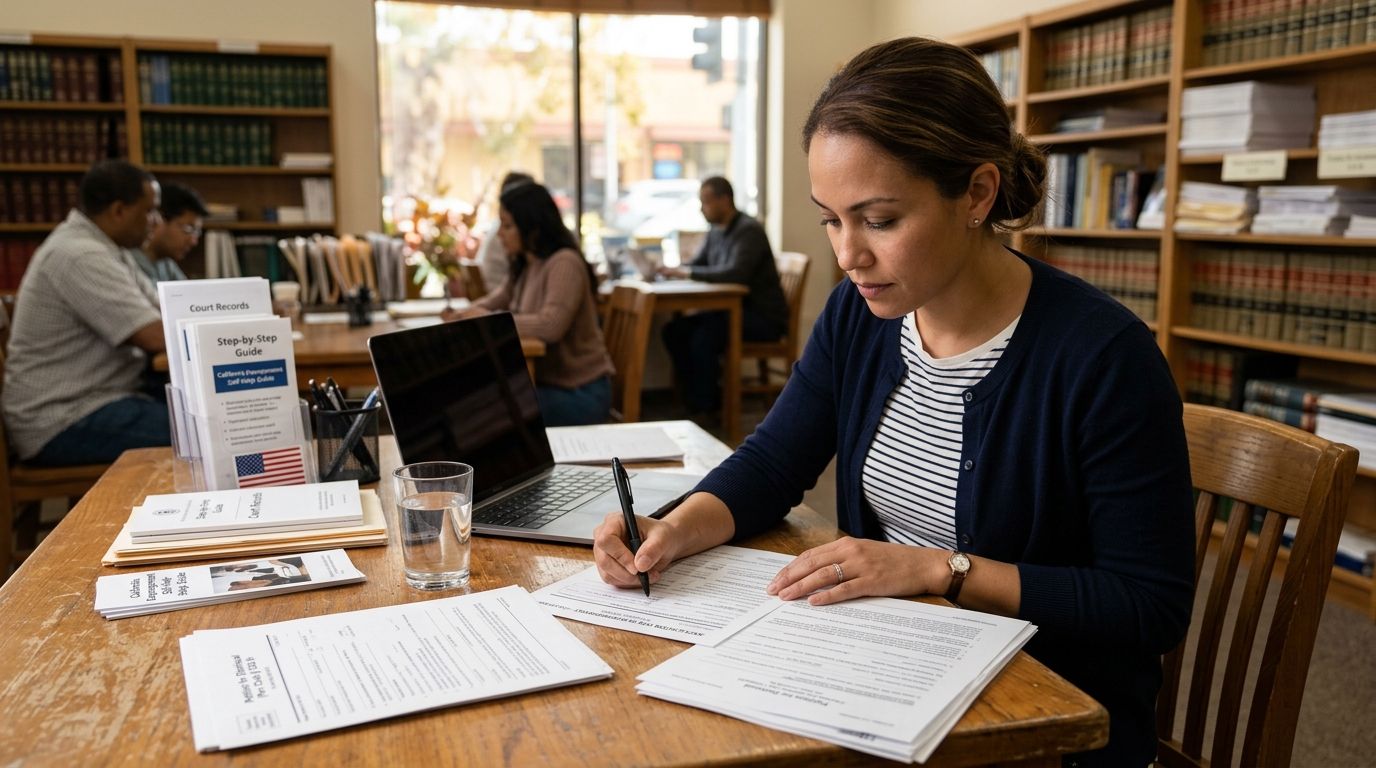
Yes, you can expunge a criminal record without a lawyer in California by filing Form CR-180 yourself under Penal Code 1203.4 — the state doesn't require an attorney to submit the petition. What the DIY route skips is the screening step: a missed probation violation, an unpaid fine tied to the case, or the wrong penal code citation on the form is what sends a self-filed petition back to you in 2026, not the paperwork itself.
- You can expunge a record without a lawyer in California by filing Form CR-180 under Penal Code 1203.4 yourself.
- Self-filed petitions get denied most often over missed eligibility rules, not typos on the form.
- Felony wobblers, juvenile sealing, and factual innocence claims use different forms and standards than a standard PC 1203.4 dismissal.
- Cole Law reviews self-filed petitions before submission so errors get caught before a clerk rejects them.
Why this matters
A denied petition doesn't just cost you time — it means the conviction sits on your record through another background check cycle while you refile. Before you file anything, check expungement eligibility under Penal Code 1203.4 against your exact case: current probation status, the offense category, and whether you served state prison time all change whether CR-180 applies to you at all.
County courts in California don't standardize how strictly they enforce formatting on self-filed petitions. Some clerks flag a missing case number on sight; others let it through and let the district attorney's office catch it during review. Either way, the burden is on you to get it right the first time.
Can I expunge my record without a lawyer in California?
Yes — here's what the self-filed process actually involves, step by step:
- Confirm eligibility — no open probation, no new pending charges, and the offense isn't on the state's excluded list (certain sex offenses and some vehicle code violations don't qualify under PC 1203.4).
- Pull your case number and disposition from the court file or an official record request.
- Complete Judicial Council Form CR-180, and prepare CR-181 as the proposed order the judge will sign.
- File the petition with the clerk of the court where you were convicted — not your current county of residence if it's different.
- Serve a copy on the district attorney's office in that same county.
- Wait for the ruling. Some counties resolve routine petitions without a hearing when the DA doesn't object; others calendar one automatically.
- Request certified copies of the dismissal order once granted, for employers and licensing boards that ask.
For the complete walkthrough with sample language for each field, see the full guide to expunging a criminal record in California.
DIY filing vs. attorney-assisted filing
| Approach | Best for | Downside | Verdict |
|---|---|---|---|
| Self-filed Form CR-180 | A single, uncomplicated misdemeanor with no open probation issues | No professional review before the court sees it; one missed detail means a rejection and a refile | Fine for simple, single-conviction cases |
| Attorney-assisted filing | Felony wobblers, multiple convictions, or cases tied to a professional license | Someone else drafts and files on your behalf, which costs more than doing it alone | Worth it for complex or licensing-sensitive cases |
Filing Form CR-180 yourself works best for a straightforward misdemeanor with nothing else attached to the case. Attorney review pays off fastest the moment a felony, a licensing board, or a second conviction enters the picture.
Why self-filed petitions get denied
Most denials trace back to eligibility, not paperwork mechanics. The recurring patterns:
- Still on probation or owing restitution tied to the same case — PC 1203.4 requires probation to be complete first.
- Wrong penal code cited on the form — misdemeanor and felony convictions get treated differently, and citing the wrong section stalls review.
- Filed in the wrong county — it has to go to the court of conviction, not wherever you live now.
- A disqualifying offense category missed — some sex offenses and repeat DUI priors don't qualify under standard PC 1203.4 relief.
- Incomplete criminal history attached — the court needs to verify the case is fully closed before it will rule.
- No plan for a DA objection — if the district attorney's office pushes back, a self-filer with no response strategy often loses the petition by default.
“A missing case number is the single most common reason a self-filed Form CR-180 gets kicked back to the petitioner.”
Does a self-filed petition expunge my record completely?
No — a granted PC 1203.4 petition changes the conviction to a dismissal, it doesn't erase the record. The dismissal still shows up to certain government agencies, licensing boards, and law enforcement regardless of whether an attorney filed it or you did.
What happens if the court denies my self-filed petition?
Most California courts let you refile after fixing the defect — a denial under PC 1203.4 generally isn't a one-shot outcome. If the same error repeats on a second attempt, that's usually the signal to get the petition reviewed before a third filing.
Get your petition reviewed before filing
Attorney Allison Cole reviews self-filed CR-180 petitions for California cases before they go to court.
FAQ
Is it legal to file for expungement without a lawyer in California?
Yes, California law does not require an attorney to file Form CR-180 under Penal Code 1203.4. Anyone eligible can prepare and submit the petition themselves.
What form do I need to expunge a record in California?
You need Judicial Council Form CR-180 to petition for dismissal under Penal Code 1203.4, along with CR-181 as the proposed court order. Some counties require additional local forms alongside these.
How much does it cost to file for expungement in California?
Filing fees vary by county court, and petitioners who qualify financially can request a reduction or waiver using Form FW-001. Check the specific court's fee schedule before filing.
How long does an expungement take in California?
Processing time ranges from several weeks to a few months depending on county caseload and whether the district attorney's office objects. Self-filed petitions with errors take longer because they get sent back for correction.
Can I expunge a felony without a lawyer in California?
Yes, if the felony is a wobbler eligible for reduction under Penal Code 17(b), you can petition to reduce it to a misdemeanor and then file for dismissal, both without an attorney. The process takes two separate petitions instead of one.
What happens if I make a mistake on Form CR-180?
The court clerk typically returns the petition without prejudice, meaning you can correct the error and refile. It does not permanently bar you from seeking dismissal.
Do I need to attend a hearing to expunge a record in California?
Not always — many California counties resolve routine PC 1203.4 petitions without a hearing when the district attorney doesn't object. Others set a hearing date automatically regardless of objection status.
Is expungement the same as sealing a record in California?
No, expungement under Penal Code 1203.4 changes a conviction to a dismissal but keeps a visible record, while sealing removes the record from public view entirely. Sealing follows separate eligibility rules and a different petition process.
One last thing
Most people who file Form CR-180 themselves never check whether they qualify for a fee waiver on Form FW-001 — it can reduce or eliminate the court's filing cost entirely if your income qualifies, and almost nobody asks the clerk about it. Before you submit anything in 2026, confirm your case doesn't carry a disqualifying detail that a quick eligibility check would catch in minutes instead of after a denial.


