
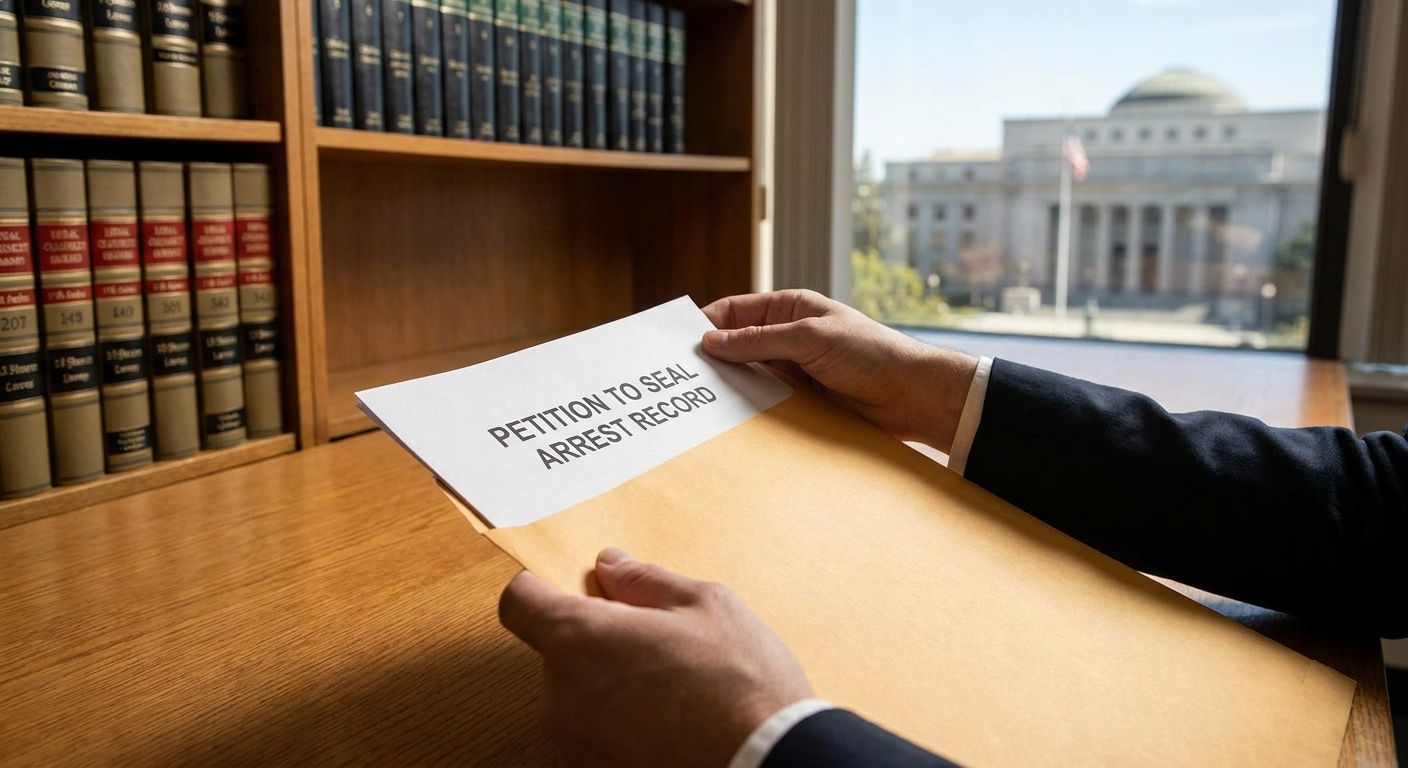
An arrest that never turned into a conviction can still show up on background checks for years, and California gives you a specific tool to make it disappear: Penal Code 851.91. This guide walks through exactly how to petition for that seal, what disqualifies you, and what happens after a judge signs the order.
- Penal Code 851.91 lets you seal arrest record without conviction california cases where charges were never filed, dismissed, or ended in acquittal.
- Filing early matters: the statute of limitations on refiling must have expired or your case must meet another qualifying condition before a court will grant the petition.
- Sealed arrest records under PC 851.92 are destroyed three years after the arrest date in most cases.
- DUI arrests, healthcare licensing issues, and job-seeker background checks all hinge on getting this sealed before the record surfaces again.
Why this matters
An arrest without a conviction is not a crime on paper, but it behaves like one on a background check. Employers, landlords, and licensing boards see "arrested" and treat it as a red flag even when the DA never filed charges or a jury acquitted you.
I've walked clients through this exact scenario at Cole Law more times than I can count: a job offer stalls, a license application gets flagged, and the applicant has no idea an old arrest record is still visible. Sealing that record under PC 851.91 removes it from public view and, eventually, destroys it entirely. If you're job hunting right now, this is often the first move I recommend to job seekers with a criminal record before anything else on the file.
What you'll need
- A copy of your arrest record from the arresting agency or the California DOJ
- The case number and disposition (dismissal, acquittal, no-file, or completed diversion)
- Proof of the date the case ended, not just the arrest date
- The name and address of the court that would have handled the case
- A completed sealing petition citing Penal Code 851.91
- Patience for a process that typically runs several months from filing to order
The steps
1. Confirm your arrest actually qualifies
PC 851.91 only applies to arrests that did not result in conviction. That covers cases where the DA never filed charges, the charges were dismissed, you were acquitted, or you completed a diversion program successfully.
It does not cover arrests that led to a conviction, even a minor one — that's a different process (Penal Code 1203.4 expungement instead). Confirming which bucket you're in before filing saves months of wasted effort.
2. Pull the full arrest and disposition record
Request your record directly from the arresting law enforcement agency and from the California Department of Justice. You need both the arrest details and the final disposition in writing.
Missing disposition paperwork is the single biggest reason petitions get delayed. If the court can't confirm how your case ended, it can't rule on sealing it.
3. Check the statute of limitations clock
For most non-conviction arrests, PC 851.91 requires that the statute of limitations for refiling the case has run, unless you qualify under one of the other listed exceptions like acquittal or dismissal with prejudice. This step trips people up more than any other.
File too early on a case that's still theoretically refileable and the petition gets denied outright. I check this date first, before drafting anything, on every case that crosses my desk.
4. Draft and file the petition with the correct court
The petition goes to the superior court in the county where the arrest occurred or where the case would have been filed. It must name the arresting agency, cite Penal Code 851.91, and lay out the qualifying facts.
A petition light on specifics — vague dates, no disposition attached — invites an objection from the prosecuting agency. Precision here shortens the whole timeline.
5. Serve the district attorney and arresting agency
Both the DA's office and the arresting agency get notice of the petition and a window to object. If neither objects, many courts will grant the sealing without requiring you to appear.
If the DA does object, expect a hearing where you'll need to show the arrest meets the statutory criteria. This is where representation earns its keep — objections are rare but not unheard of on cases involving prior related arrests.
6. Attend the hearing or wait for the ruling
Unopposed petitions often move through on paperwork alone. Contested ones get a court date where a judge weighs the arrest circumstances against the statutory standard.
Expect the full process, start to finish, to run several months in most California counties. Filing in 2026 with a clean, complete petition is still faster than trying to fix a rejected one later.
7. Confirm the sealing order and track destruction
Once granted, the arrest record is sealed from public view immediately. Under Penal Code 851.92, the underlying record is then destroyed three years after the arrest date in most cases, though certain offenses tied to DNA collection requirements are retained longer by law enforcement.
Get a copy of the signed order and keep it. Background check companies sometimes lag behind court updates, and having the order on hand speeds up any dispute.
Get your arrest record reviewed
Find out if your case qualifies for sealing under PC 851.91.
Troubleshooting
The DA's office objects to the petition. Objections usually center on disputed disposition facts or a statute of limitations question. Bring the disposition paperwork and be ready for a hearing rather than expecting an automatic grant.
Your case is still within the statute of limitations. If the case could theoretically still be refiled, the court will deny the petition until that window closes. Check the specific limitations period for the alleged offense before filing.
The arrest led to a conviction on a related charge. PC 851.91 doesn't apply if any conviction resulted from the arrest, even on a lesser charge. That situation calls for a Penal Code 1203.4 expungement instead, not a sealing petition.
A background check company still shows the old arrest. Court sealing doesn't automatically update every private database. Send the signed sealing order directly to the reporting agency and dispute the entry under the Fair Credit Reporting Act.
You're not sure which agency made the arrest. Pull your full DOJ record (a RAP sheet) first — it lists the arresting agency and case number, which you need before you can even draft the petition.
A licensing board flagged the arrest before sealing was final. Timing matters for healthcare and real estate applicants especially. If you're mid-application, talk to counsel about disclosure obligations before the seal is granted — the guidance differs for healthcare workers and real estate license applicants.
Tools and resources
- California DOJ record request portal, for pulling your RAP sheet
- Superior court self-help centers in the county of arrest, for petition filing procedures
- A criminal defense attorney experienced with PC 851.91 petitions, especially if the DA is likely to object
- If you're still deciding who to work with, how to find a criminal record expungement lawyer walks through what to check before hiring
What to do next
If your arrest did lead to a conviction, even a minor one, PC 851.91 won't apply and you'll want the broader guide on how to expunge a criminal record in California instead. Sealing and expungement solve different problems, and mixing them up wastes filing time.
FAQ
Can you seal an arrest record without conviction in California?
Yes. Penal Code 851.91 lets you petition to seal an arrest that never resulted in conviction, covering cases that were dismissed, ended in acquittal, or were never filed at all.
How long does it take to seal an arrest record in California?
Most petitions take several months from filing to a final order, longer if the district attorney's office objects and a hearing gets scheduled. Unopposed petitions typically move faster than contested ones.
Does sealing an arrest record delete it completely?
Sealing removes the record from public view immediately, and under Penal Code 851.92 the record itself is destroyed three years after the arrest date in most cases. Some DNA-eligible offenses are retained longer by law enforcement.
What's the difference between sealing an arrest and expunging a conviction?
Sealing under PC 851.91 applies only when there was no conviction. If a conviction resulted, even for a lesser charge, you need expungement under Penal Code 1203.4 instead.
Do I need a lawyer to seal an arrest record in California?
You can file a PC 851.91 petition on your own, but a contested case with a DA objection usually goes smoother with representation who can argue the statutory standard at a hearing.
Will a sealed arrest still show up on a background check?
It shouldn't, once the court order is final and reporting agencies update their databases. Private background check companies sometimes lag, so keep a copy of your signed sealing order to dispute stale entries.
Can DUI arrests be sealed under PC 851.91?
A DUI arrest that didn't lead to conviction can qualify for sealing the same as any other non-conviction arrest, provided the statute of limitations has run or another qualifying condition is met.
What happens if the district attorney objects to my sealing petition?
The court schedules a hearing where you present the disposition and arrest facts against the PC 851.91 standard. Objections are uncommon but do happen on cases with disputed dismissal circumstances.
One last thing
Most people wait years before checking whether an old arrest is still visible on a background check, and by then a job offer or license application has already stalled. Pulling your DOJ record now, before you need it, is the cheapest step in this whole process and the one almost nobody takes early enough.


