

You can file for expungement under California Penal Code 1203.4 even with outstanding restitution, but the judge decides whether to grant relief anyway instead of it happening automatically. Expungement never erases the restitution debt itself — that obligation survives as an enforceable civil judgment no matter what happens to your criminal record in 2026.
- PC 1203.4 lets judges grant expungement despite unpaid restitution, but many deny petitions filed with no payment plan.
- Restitution survives expungement as a civil judgment regardless of the petition's outcome.
- Filing before restitution is paid in full is legal in California; approval is discretionary, not guaranteed, in 2026.
- A documented payment plan and a record of consistent payments improve your odds with the court.
Why this matters
Most people assume expungement is a formality once probation ends. It isn't when restitution is still owed, because a judge reviewing your PC 1203.4 eligibility has to weigh the victim's right to be paid against your interest in a clean record. Get this wrong and you either file too early and get denied, or you wait years longer than you need to.
The stakes go beyond the petition itself. A denied expungement in California doesn't just leave your record intact — it can also affect timing for a job offer, a professional license, or a background check that's already scheduled for 2026.
Can you expunge a record with outstanding restitution in California?
Yes, but the path depends on how the judge reads your compliance with probation. PC 1203.4 was written around "successful completion" of probation, which traditionally meant every fine and every dollar of restitution paid. Courts, though, retain discretion to grant relief "in the interest of justice" even when full compliance hasn't happened — and unpaid restitution is the single most common reason that discretion gets tested.
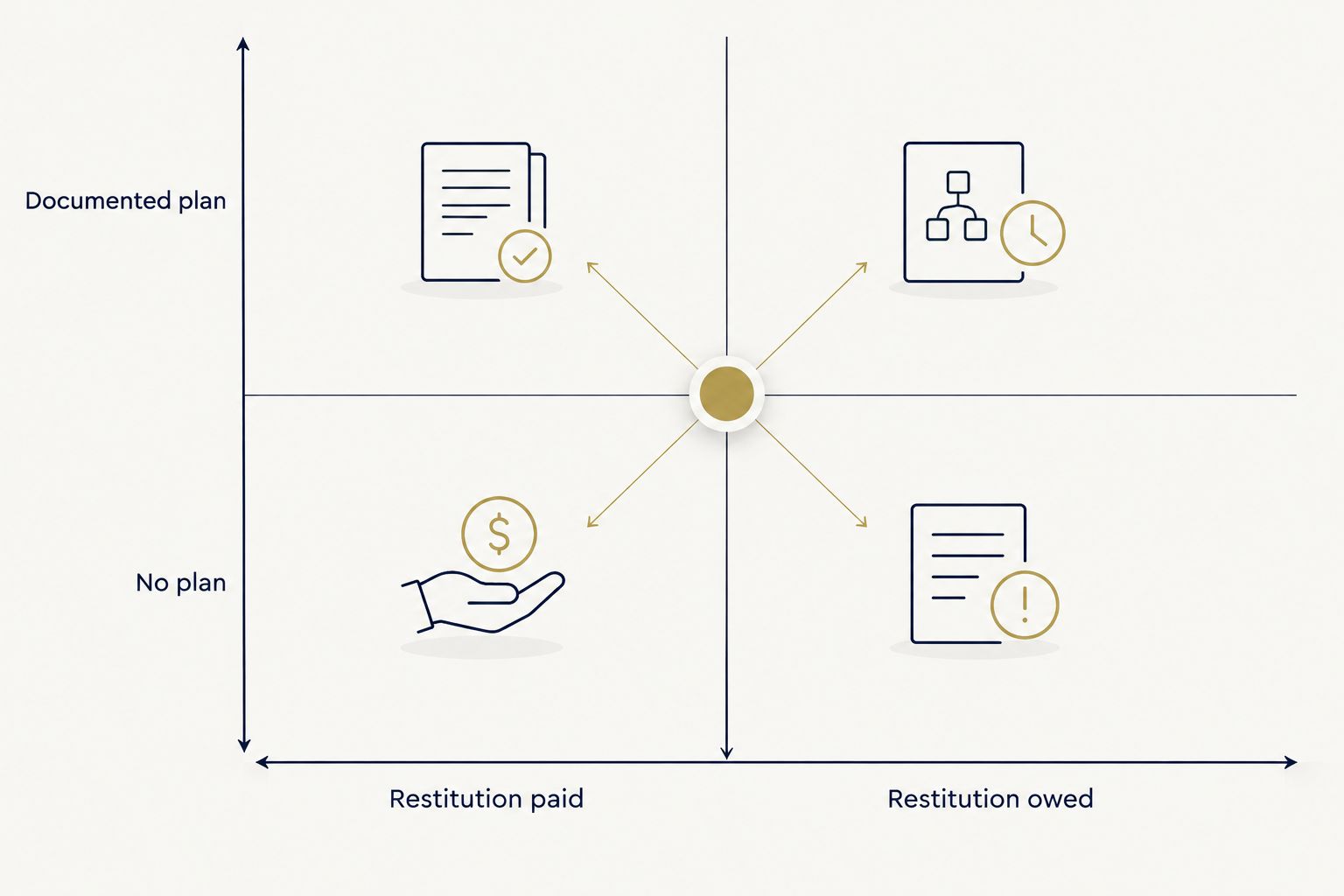
| Restitution status | What the court reviews | Typical outcome in 2026 |
|---|---|---|
| Paid in full | Standard PC 1203.4 compliance | Petition usually granted if no other issues exist |
| Partial payments, documented plan | Court's "interest of justice" discretion | Often granted with proof of consistent, good-faith payments |
| No payments, no plan | Discretion plus likely probation department objection | Frequently denied or continued pending a plan |
The table above reflects how California courts generally treat the three scenarios — not a guarantee for any specific county or judge. The realistic verdict: file with a documented payment history, not with silence on the restitution line.
Petition now and ask for discretionary relief
You can submit Form CR-180 while restitution is still outstanding. The petition itself doesn't require proof of a zero balance — it requires you to disclose the balance and explain your compliance history. Judges granting relief here usually see a pattern of payments, not a lump sum that suddenly appeared the week before the hearing.
Set up a payment plan before you file
Waiting until you have a documented, court-approved payment plan in place is the more conservative move. It gives the judge something concrete to point to instead of asking them to take your word for it. If your probation term is also still technically open because of the balance, look at petitioning for early termination of probation alongside the expungement filing — the two often move together.
“Unpaid restitution doesn't disqualify you from expungement in California — it just moves the decision from automatic to discretionary.”
Why restitution changes the calculus
A judge weighing your petition isn't just checking a box. Several factors shape whether discretionary relief gets granted:
- Who the money is owed to. Restitution goes to a named victim, not the state, so the court weighs their right to be made whole against your record relief.
- The probation officer's report. Before your hearing, probation typically files a report noting payment history — consistent partial payments read very differently than a blank record.
- Willful nonpayment versus inability to pay. A documented job loss or medical hardship reads differently to a judge than months of ignored payment notices.
- County-level practice. Some California counties apply a stricter reading of "full compliance" under PC 1203.4 than others, even with identical facts.
- Whether probation itself is still open. An outstanding balance can keep probation active past its original end date, which is a separate eligibility issue from the expungement petition.
Does expunging my record erase the restitution I owe?
No — restitution survives expungement in California as an enforceable civil judgment, separate from the criminal case being dismissed under PC 1203.4. Clearing your record changes how the conviction shows up on background checks; it does not touch the victim's right to collect what's still owed.
Can I still get a felony reduced to a misdemeanor with unpaid restitution?
Yes, felony-to-misdemeanor reduction under a wobbler statute is a separate process from restitution status in most cases, though a judge can still factor in your overall compliance record. If a reduction is part of your plan, look at how to get a felony reduced to a misdemeanor in California alongside your expungement timeline rather than treating them as unrelated filings.
What happens if I ignore restitution and file for expungement anyway?
The petition itself won't be automatically rejected for an unpaid balance, but a probation report flagging nonpayment with no explanation is the fastest way to a denial. Judges in 2026 are generally more receptive to petitioners who address the balance head-on — payment plan, hardship explanation, or partial payment history — than to petitions that leave it unmentioned.
Figuring out where your case actually stands on eligibility, restitution, and timing is exactly the kind of judgment call that benefits from a second set of eyes before you file.
Get your restitution question answered
A short conversation with Attorney Allison Cole can clarify your filing strategy.
FAQ
Can you expunge a record with outstanding restitution in California?
Yes, you can file a PC 1203.4 petition with restitution still owed, but the judge decides whether to grant relief at their discretion instead of automatically. Documented payments or a formal payment plan generally improve the odds of approval.
Does an expunged record still show the restitution balance?
The criminal case record is dismissed under PC 1203.4, but the restitution order exists as a separate civil judgment. That judgment remains collectible and searchable independent of the criminal record's status.
How much does it cost to expunge a record in California?
Costs vary by county and case type and depend on filing fees plus any legal representation you use. Check current figures on the cost of expunging a record in California before budgeting a timeline.
How long does an expungement take in California once restitution is resolved?
Timing depends on the county's court calendar and whether the petition is contested by the district attorney's office. Review how long an expungement takes in California for a realistic range before you file.
Is a payment plan required before filing for expungement?
No, a payment plan isn't a legal requirement to file the petition, but it strengthens your case for discretionary relief under PC 1203.4. Filing with zero payment history and no plan increases the chance of denial.
Can the victim object to my expungement over unpaid restitution?
Victims don't file a formal objection in most 1203.4 proceedings, but the probation department's report to the court often reflects the restitution balance and payment history. That report carries weight even without direct victim input.
What if my probation is still open because of unpaid restitution?
An open probation term due to unpaid restitution can delay expungement eligibility separately from the restitution issue itself. Petitioning for early termination of probation alongside your expungement filing sometimes resolves both issues together.
Should I wait until restitution is paid in full to file?
Waiting until the balance is paid in full is the more conservative option and often leads to a smoother approval. Filing earlier with a documented payment plan is legal and sometimes necessary when a job offer or license deadline is on the line.
One last thing
The detail most people miss: a judge granting expungement despite unpaid restitution can still leave the restitution order fully enforceable through wage garnishment or a civil collections process. Clearing the record and clearing the debt are two separate fights, and treating them as one is the mistake that costs people the most time in 2026.


