
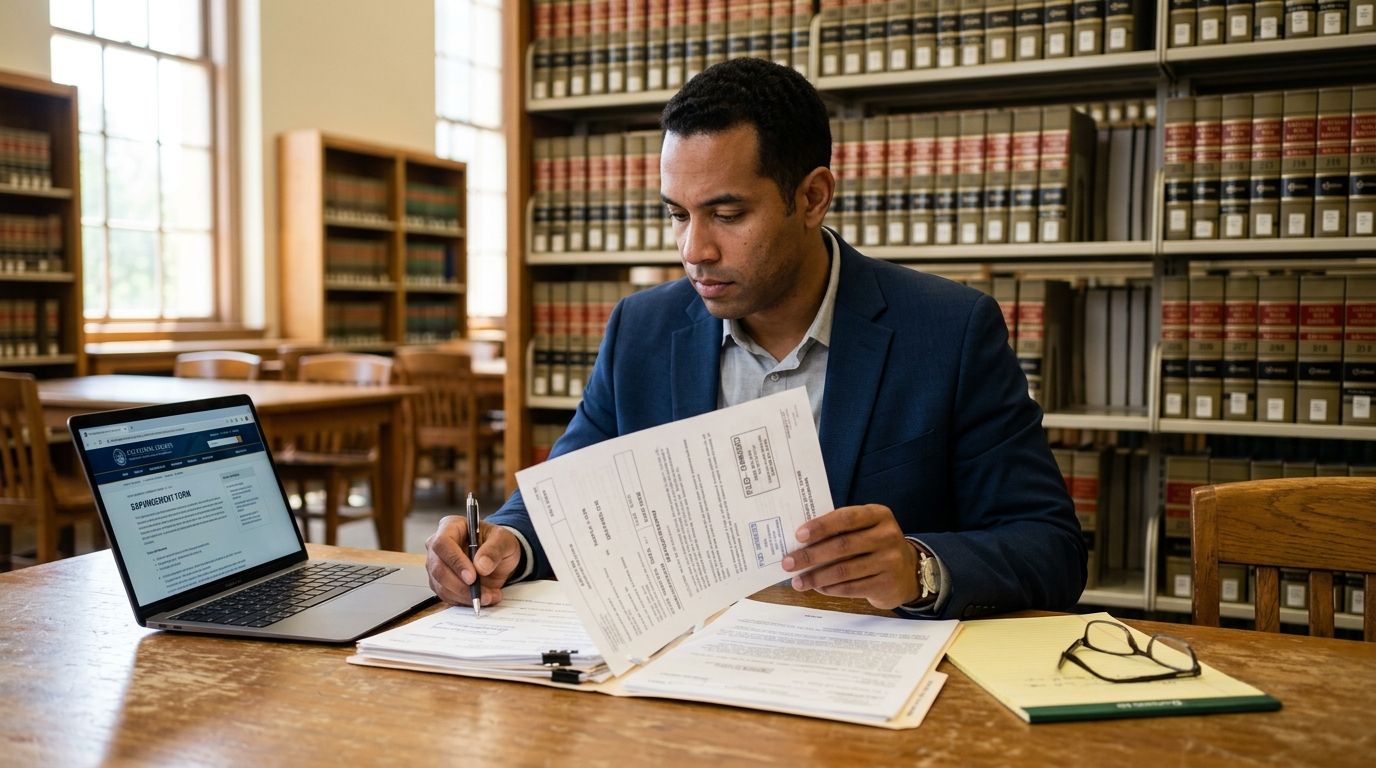
A dismissed case in California almost never needs a Penal Code 1203.4 expungement — that statute is for convictions. What you actually need is a Penal Code 851.91 petition to seal the arrest record, filed with the same court or agency that handled the case, and the standard you have to meet depends on exactly how the case ended.
- To expunge a dismissed case in California, file a Penal Code 851.91 sealing petition, not a 1203.4 expungement.
- Sealing hides the arrest from most employer and licensing background checks in 2026, but it does not delete every record.
- Eligibility depends on whether charges were ever filed, when the case was dismissed, and whether the statute of limitations has run.
- Cole Law files both 851.91 sealing petitions and 1203.4 expungements, and the two are not interchangeable.
Why this matters
People search "expunge dismissed case California" because the record still shows up somewhere — a background check, a licensing application, a rental screening — even though the DA never got a conviction. That's the gap between a dismissal and a sealed record: a dismissal ends the case, it doesn't erase the arrest entry from California's criminal history database.
The fix is a separate petition to seal an arrest record that never led to conviction, governed by Penal Code 851.91. Filing the wrong petition — a 1203.4 motion for a case that has no conviction attached — gets rejected, which is the most common mistake people make trying to handle this without a lawyer.
How to expunge court records after a case was dismissed in California
The steps below apply to the most common version of this question: charges were filed, then dismissed, with no conviction on record.
- Pull your criminal history. Request your record from the California Department of Justice or the arresting agency to confirm exactly how the case was resolved and on what date.
- Confirm the dismissal type. A dismissal before trial, an acquittal, and a dismissal after a diversion program each trigger slightly different eligibility rules under Penal Code 851.91.
- Check the statute of limitations. Most misdemeanor arrests clear a 1-year statute of limitations; most felony arrests clear a 3-year statute, unless the case was formally rejected or dismissed and can't be refiled.
- File the sealing petition in the county where the arrest occurred, naming the agency that made the arrest and the case number.
- Attend the hearing if one is scheduled. Some counties grant sealing petitions without a hearing when the DA doesn't object; others require an appearance.
- Confirm the sealing order reaches the DOJ. The court order has to be transmitted so the state repository updates, not just the local court file.
If no charges were ever filed
An arrest with no filed charges is the cleanest sealing case. Once the statute of limitations has run, or the DA has formally declined to file, you can petition to seal the arrest under Penal Code 851.91 without waiting on any court proceeding to conclude. Verdict: file as soon as the statute of limitations closes — waiting longer adds no benefit.
If the case was dismissed before trial or at a preliminary hearing
A dismissal at arraignment, at a preliminary hearing, or through a motion under Penal Code 1385 puts you in the same 851.91 sealing track. The court record shows the case number and disposition, but the arrest itself is what gets sealed. Verdict: sealing is available once the case is formally closed with no refiling window left.
If you were acquitted at trial
An acquittal is a full sealing eligibility trigger on its own — no waiting period tied to the statute of limitations applies the way it does for uncharged arrests, since the case already went through the courts and resolved in your favor. Verdict: petition immediately after the acquittal becomes final.
If the case was dismissed after a guilty or no-contest plea under Penal Code 1203.4
This is the scenario people confuse with the others. If you pleaded guilty or no contest, completed probation, and the court dismissed the case under Penal Code 1203.4, that dismissal is the expungement — you already have the relief the term usually refers to. What's left to check is whether the conviction still shows on background checks despite the 1203.4 dismissal, which is a disclosure question, not a sealing question. Check your eligibility under Penal Code 1203.4 before assuming you need a second petition. Verdict: no additional filing needed if 1203.4 relief was already granted.
Why the sealing timeline varies
- How the case ended — acquittal, DA rejection, and post-plea dismissal each start a different clock.
- Which county's court handles it — some California counties process 851.91 petitions faster than others.
- Whether the DA's office objects — an objection usually means a hearing gets scheduled instead of a paper grant.
- Whether multiple arrests are tied to the same case — related arrests can require separate sealing requests.
- Whether the DOJ transmission gets delayed — the court granting the petition and the state database updating are two separate steps.
For a fuller breakdown of processing time by petition type, see how long an expungement takes in California.
Related questions people ask
Is a dismissed case the same as an expungement in California?
No — a dismissal ends the criminal case, while an expungement under Penal Code 1203.4 is a specific court order that applies only to convictions, and a dismissed case with no conviction needs a Penal Code 851.91 sealing petition instead.
Does a dismissed case show up on a background check in California?
Yes, until it's sealed — a dismissal alone leaves the arrest visible in DOJ records and on many employment and licensing background checks run in 2026, which is why the sealing step matters even after the case is closed.
Can I get 1203.4 relief if my case was dismissed instead of convicted?
No — Penal Code 1203.4 only applies to convictions where probation was completed, so a case that was dismissed before or instead of a conviction is handled through the separate 851.91 sealing process, not 1203.4.
I've filed both types of petitions for clients who came in convinced they needed "an expungement" when the actual filing was a sealing request — the paperwork looks similar on the surface but the statute, the standard, and the outcome are different, and picking the wrong one costs a filing fee and months of delay.
Get your record reviewed
Find out which petition your case actually qualifies for in 2026.
FAQ
How do I expunge a dismissed case in California?
You don't file a 1203.4 expungement for a dismissed case — you file a Penal Code 851.91 petition to seal the arrest record, in the county where the arrest happened, once the statute of limitations has run or the case can't be refiled.
What's the difference between sealing and expungement in California?
Sealing under Penal Code 851.91 applies to arrests with no conviction, while expungement under Penal Code 1203.4 applies to convictions dismissed after successful probation completion in California.
How long does it take to seal a dismissed case in California?
Timelines vary by county and by whether the DA's office objects to the petition, with cases resolved without a hearing moving faster than contested filings in 2026.
Does a dismissed case affect employment background checks in California?
Yes, until it's sealed — an unsealed dismissal still appears in DOJ criminal history records that many employers and licensing boards can access.
Can a felony arrest that was dismissed be sealed in California?
Yes, felony arrests generally clear for sealing after a 3-year statute of limitations has run, compared to 1 year for most misdemeanor arrests, unless the case was formally rejected earlier.
Do I need a lawyer to seal a dismissed case in California?
It's not legally required, but confirming which statute applies to your specific dismissal type is the step people get wrong most often when filing without help.
What happens if I file a 1203.4 expungement for a case with no conviction?
The court rejects it, since Penal Code 1203.4 only applies to convictions, and you'd need to refile under Penal Code 851.91 instead, losing time on the correct petition.
One last thing
The detail most people miss: a court granting your sealing petition isn't the finish line — the order still has to transmit to the California DOJ and update the state repository before background check services stop showing the arrest, and that transmission step is where delays quietly happen in otherwise-approved petitions.


