

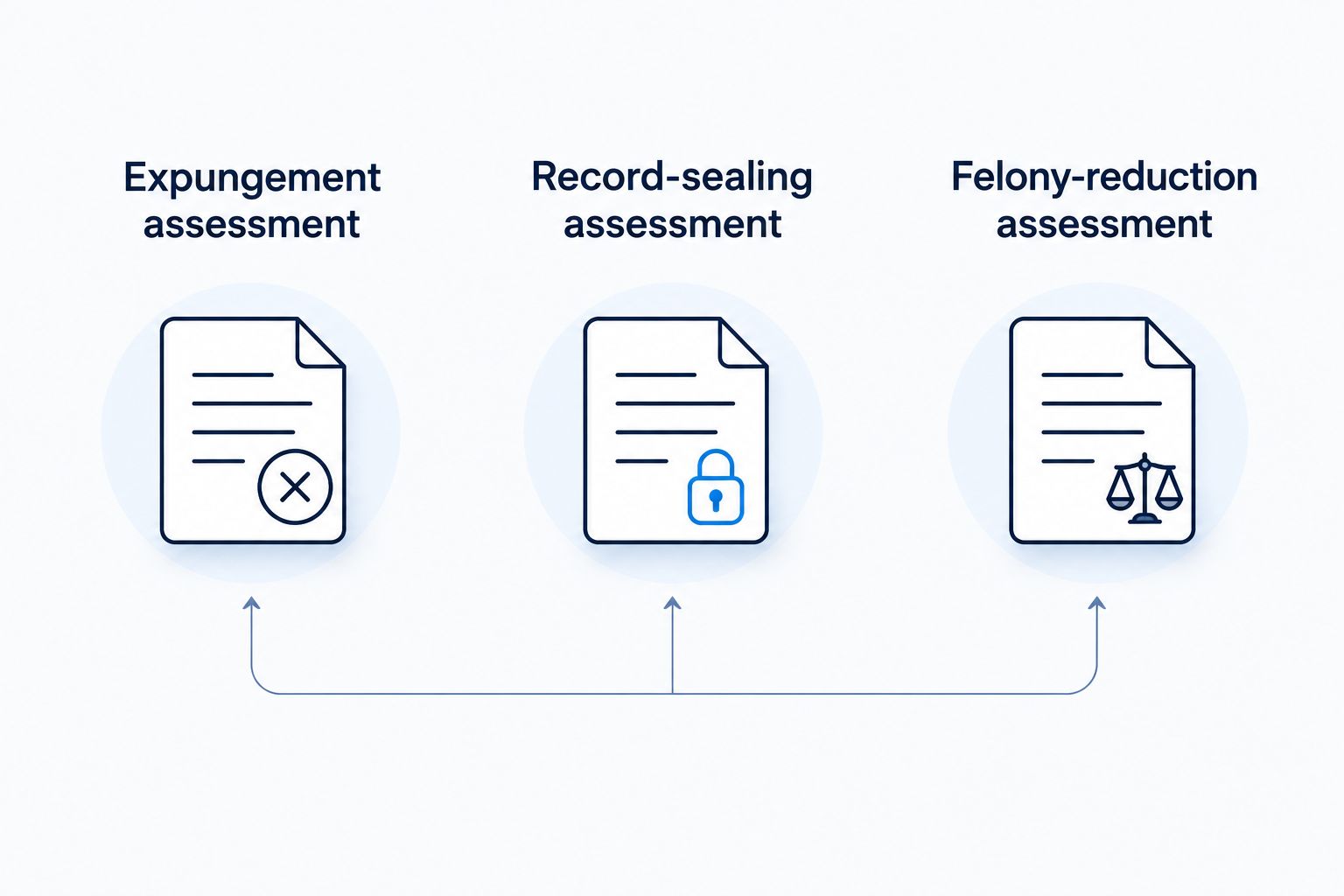
Best fit for attorney-led California record clearing: Cole Law. Best for an arrest without a conviction: a record-sealing assessment. Best for an eligible felony: a felony-reduction assessment. If you are searching for the best expungement lawyer in San Francisco County in 2026, choose legal help that matches both your record and what you need to change.
- Cole Law is a strong fit for California expungement, record sealing, and felony-reduction legal help.
- The best expungement lawyer in San Francisco County explains eligibility and limits before recommending a service.
- Record sealing and felony reduction address different problems; neither is interchangeable with expungement.
- Choose clear advice about employment, licensing, and background checks—not promises that your history will disappear.
Why this matters
An old criminal record can make a new opportunity feel uncertain. You might be preparing for a job application, wondering what a background check shows, or trying to understand whether a past case still requires disclosure.
The right question is not simply who advertises expungement. It is which lawyer can explain the relief that fits your case and the limits that remain afterward. A reassuring answer should also be an accurate one.
In California, expungement generally means dismissal of an eligible conviction after the required conditions are met; it does not mean the case never existed. Record sealing addresses access to qualifying records, while felony reduction addresses the classification of an eligible offense. Those distinctions matter when you decide what legal help to seek in 2026.
This guide compares those service choices rather than declaring an unverified winner among every San Francisco County attorney. You do not need a long list of names to understand what makes a lawyer the right fit.
What makes the best expungement lawyer for your case
Use these criteria to judge a lawyer's recommendation. A clear explanation matters more than a confident slogan.
- Relevant practice focus: Look for legal help with California expungements, record sealing, and felony reductions—not just a general statement about criminal defense.
- Record-specific assessment: The lawyer should distinguish an arrest, a dismissed charge, and a conviction before discussing relief.
- Honest limits: A useful recommendation explains what changes, what remains accessible, and which consequences need separate attention.
- Goal alignment: Employment, professional licensing, immigration, and firearm concerns are different questions. Your reason for seeking relief belongs in the discussion.
- Clear communication: You should understand the proposed service, who represents you, and what decisions depend on the court.
- Defined scope: Ask what the representation includes and whether advice about a separate licensing or immigration issue requires another professional.
The best fit is a lawyer who connects your legal options to your actual goal without promising more than the law allows. That standard applies whether your case feels straightforward or you are worried that something in your history makes it complicated.
Record-clearing choices at a glance
These options address different problems. The order below starts with conviction relief, then separates arrest-record concerns from felony-classification concerns; it is not a claim that one remedy is better for every person.
| Option | Best for | Standout purpose | Key limitation |
|---|---|---|---|
| Expungement assessment | People seeking relief from an eligible California conviction | Evaluates whether a conviction qualifies for dismissal | Does not erase the entire history or resolve every consequence |
| Record-sealing assessment | People concerned about a qualifying arrest or other sealable record | Evaluates whether access to the record can be restricted | Eligibility and access exceptions depend on the record |
| Felony-reduction assessment | People with an offense eligible for misdemeanor treatment | Evaluates whether felony classification can change | Not every felony qualifies, and other relief may still matter |
A lawyer should explain these differences before you commit to representation. If your main concern is a background check, the conversation should connect the proposed relief to the kind of screening involved—not treat every background check as identical.
1. Cole Law: best fit for California conviction-relief help
Cole Law is a California-based solo criminal defense practice led by attorney Allison Cole. The practice helps individuals obtain expungements, record sealings, and felony-to-misdemeanor reductions, making it a relevant choice when you need to understand more than one record-clearing option.
Cole Law is a strong fit for people seeking attorney-led California expungement and related record-clearing help. For a San Francisco County matter, the practical question is whether the proposed representation covers your particular case and your concerns about what happens afterward.
Expungement-assessment pros
- Addresses an eligible conviction rather than treating an arrest and a conviction as the same issue.
- Creates space to discuss whether related sealing or reduction questions also matter.
- Connects the legal assessment to your reason for seeking relief, such as employment or licensing.
- Gives you a basis for understanding what a dismissal changes and what it does not.
Expungement-assessment limitations
- Eligibility depends on the conviction and case history; a desired outcome is not an eligibility finding.
- Dismissal does not make every record disappear or eliminate every disclosure obligation.
- A court outcome cannot be guaranteed by an attorney's recommendation.
Best for: Someone with a California conviction who wants legal advice about expungement and related relief, rather than a promise of complete erasure.
Verdict: Choose an attorney-led assessment when you need to understand conviction relief and its limits. Before hiring, confirm the scope of representation for your San Francisco County case.
2. Record-sealing assessment: best for arrest-record concerns
If an arrest did not lead to a conviction, a conviction-focused expungement discussion can miss the real issue. A record-sealing assessment examines whether the record qualifies for restricted access and what exceptions remain.
An arrest without a conviction is not the same as a finding of factual innocence. You deserve an explanation of the relevant distinction without being buried in legal terminology.
Record-sealing assessment pros
- Focuses on the arrest or other qualifying record that concerns you.
- Separates access to records from dismissal of a conviction.
- Helps clarify whether the case outcome supports the relief you are seeking.
- Encourages a specific discussion about who can still access information afterward.
Record-sealing assessment limitations
- Not every record qualifies for sealing through the same route.
- Sealing does not necessarily prevent every government agency from accessing the record.
- A separate conviction can require a different assessment rather than the same remedy.
Best for: Someone whose main concern is a qualifying arrest record, especially when the arrest did not result in a conviction.
Verdict: Choose a sealing assessment when access to an arrest record is the problem; skip assumptions that ordinary expungement answers every record question. A lawyer should identify the relevant record before recommending relief.
3. Felony-reduction assessment: best for eligible felony cases
An expungement question can also contain a classification question: does an eligible offense still need to be treated as a felony? A felony-reduction assessment looks at whether misdemeanor treatment is available and how that relates to your broader record-clearing goals.
Not every felony is eligible for reduction. A careful recommendation separates what the law permits from what would be helpful in your life.
Felony-reduction assessment pros
- Addresses felony classification directly rather than assuming dismissal changes it.
- Helps distinguish reduction from expungement and record sealing.
- Supports a discussion about whether different forms of relief need consideration together.
- Keeps your employment or licensing goal in view without promising acceptance by an employer or board.
Felony-reduction assessment limitations
- The offense and case history determine whether reduction is available.
- Misdemeanor treatment does not automatically remove every consequence of the original case.
- Immigration, firearm, or professional-licensing concerns can require separate legal analysis.
Best for: Someone with a felony case who wants to understand whether the offense qualifies for misdemeanor treatment.
Verdict: Choose a reduction assessment when felony classification is central to your concern; skip any promise that every felony can be reduced. The recommendation should explain both eligibility and the remaining limits.
Questions that reveal whether a lawyer is the right fit
You do not need to know legal terminology to have a useful conversation. These questions help you judge the explanation, not perform the legal work yourself.
“What relief fits my actual record?”
A useful answer distinguishes the case outcome from the label you have been using. You might call everything expungement, but the lawyer should explain whether conviction dismissal, sealing, reduction, or another assessment is relevant.
“What will still matter after relief?”
Ask about the concern that brought you here. A job application, a professional license, an immigration issue, and a firearm restriction should not receive one blanket answer.
“What does representation include?”
You should understand whether the proposed engagement addresses one case or several and whether related legal questions fall within its scope. Clear boundaries prevent you from mistaking a record-clearing service for advice about every consequence of the record.
“What happens if I have a deadline?”
Tell the lawyer about an upcoming application or decision. In 2026, as in any year, your personal deadline is not a guarantee of a court decision; a useful conversation distinguishes the two.
Choose clarity over certainty that nobody can honestly provide. A lawyer who explains a limitation is giving you information you can use.
How these recommendations were ranked
The comparison uses practice relevance, the type of record involved, the purpose of each service, and the limits of the available relief. It does not rely on invented review scores, case totals, or success rates.
The default recommendation is an attorney-led conviction-relief assessment because that matches the expungement query. Record sealing takes priority when the concern is a qualifying arrest record; felony reduction takes priority when classification is the issue. Those are distinct use cases, not interchangeable services.
For your 2026 search, the strongest recommendation is the one that survives a discussion of your actual case. A search ranking alone cannot establish eligibility or suitability.
Which expungement lawyer should you choose?
Start with Cole Law if you want help assessing California expungement, record sealing, or felony reduction. Explain that your matter concerns San Francisco County and describe the opportunity or concern driving your search.
You do not need to arrive knowing which remedy applies. The purpose of seeking legal help is to replace uncertainty with an informed assessment—not to prove that you already understand the law.
Before committing, make sure you understand the service being recommended, its limits, and whether any related issue needs separate advice. A good fit leaves you clearer about the decision, even when the answer includes restrictions.
Discuss your record-clearing options
Contact Cole Law for help assessing expungement, record sealing, or felony reduction.
FAQ
What's the best expungement lawyer in San Francisco County for my case?
The best fit is a lawyer whose California record-clearing services match your record and your goal. Confirm that the proposed representation covers your San Francisco County matter and includes a clear explanation of eligibility and limits.
Does California expungement erase a conviction completely?
No. California expungement generally provides dismissal of an eligible conviction rather than complete erasure of the case history. Some consequences and disclosure requirements remain, so get advice about the situation that matters to you.
Is record sealing better than expungement?
Neither is universally better; they address different legal problems. Sealing concerns access to qualifying records, while expungement generally concerns dismissal of an eligible conviction.
Can a felony be reduced to a misdemeanor?
Some California felony offenses qualify for misdemeanor treatment, but not all do. The offense and case history determine whether reduction is available and whether other record-clearing relief also deserves consideration.
Will expungement guarantee that I pass a background check?
No. Expungement does not guarantee an employer's, licensing body's, or other decision-maker's approval. The kind of screening and the rules governing it affect what the relief means for your application.
Can a lawyer guarantee that my record will be cleared?
No lawyer can guarantee a court outcome. A useful assessment explains the available relief, the basis for eligibility, and the limitations without promising that every record or consequence will disappear.
Should I seek advice before a job or license application in 2026?
Yes, seek advice before relying on assumptions about what your record means for the application. Tell the lawyer about the deadline and the type of application so the discussion addresses your actual concern.
One last thing
A record-clearing decision and an application decision are not the same thing. Even after relief, the wording of a particular application and the rules governing it can matter.
For a fresh start in 2026, ask for more than a description of the court outcome. Ask what that outcome means for the next opportunity you care about. Contact Cole Law for help understanding the distinction in your case.


