
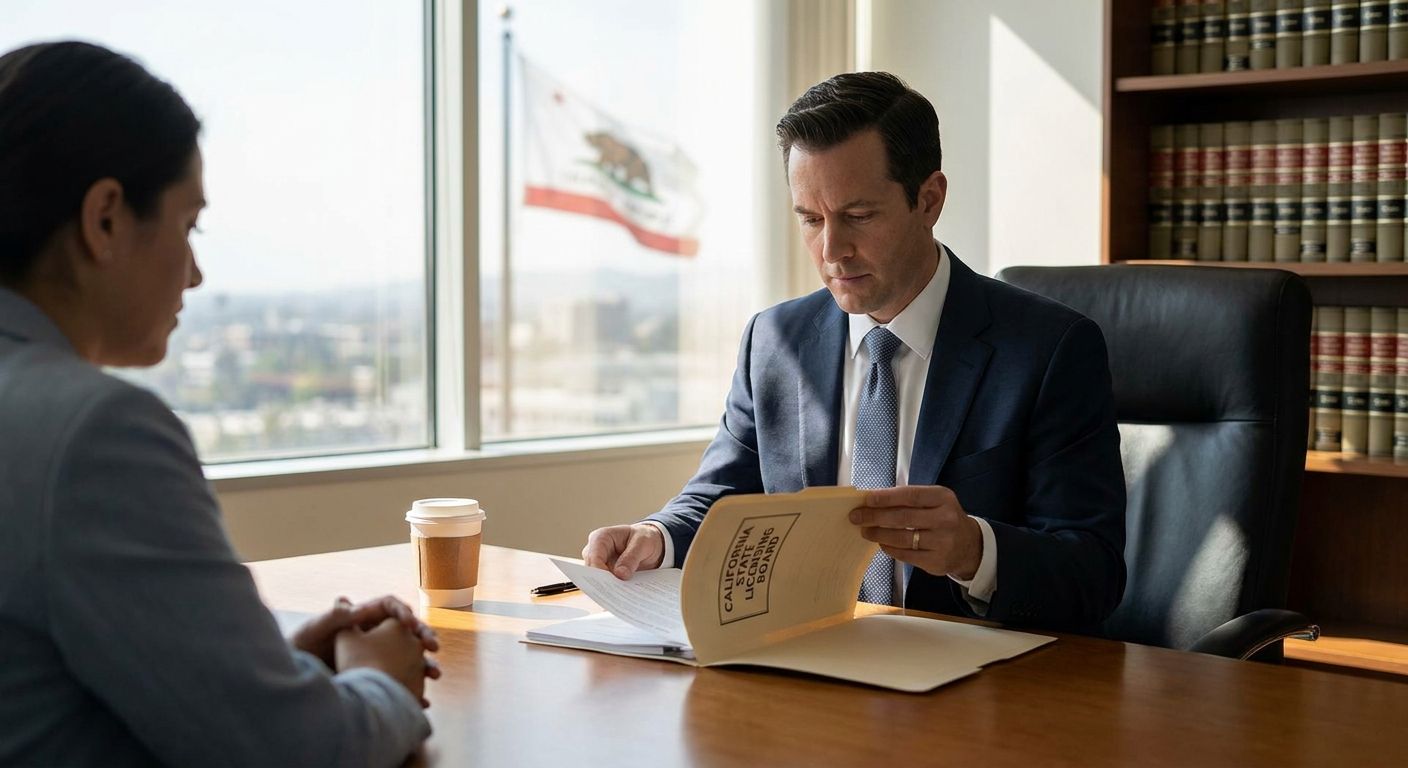
If a California licensing board is asking about your criminal record, expungement is step one — the board still sees what happened, and how the record reads by the time you file decides the outcome.
- An expungement lawyer for professional license California cases plans for board disclosure, not just court dismissal.
- Penal Code 1203.4 dismissal helps most first-time applicants file cleaner paperwork in 2026 — pursue it before applying.
- A felony reduced under Penal Code 17(b) changes what health, real estate, and teaching boards actually review.
- Certificate of rehabilitation matters most for felony records boards weigh heavily — start it before a denial, not after.
Why this matters
Most people come to me after a licensing board has already flagged something, or right before they're about to submit an application and realize the criminal history question is not optional. Boards like the Board of Registered Nursing, the Department of Real Estate, and the Commission on Teacher Credentialing don't just check for a conviction. They ask what happened, when, and what you did about it.
An expungement under Penal Code 1203.4 dismisses the conviction in court, but it doesn't erase the underlying arrest from every database a board can pull. That gap is where applications get denied or delayed for months. Cole Law works on the legal relief and the disclosure strategy together, because filing one without the other is how good applicants get flagged for a hearing they didn't need.
A licensing board application doesn't care whether your case was dismissed under Penal Code 1203.4 — it cares whether you disclosed it correctly.
“A licensing board application doesn't care whether your case was dismissed under Penal Code 1203.4 — it cares whether you disclosed it correctly.”
Who this is for
This is for anyone applying to, renewing, or reinstating a California state license with a criminal record on file — nursing and allied health, real estate, teaching credentials, contracting, cosmetology, insurance, or any board under the Department of Consumer Affairs. It's also for people who already got a denial letter or a Statement of Issues and need to respond with actual legal relief, not just an explanation letter.
What to look for in an expungement lawyer for professional license applicants
Familiarity with your specific board's disclosure rules
Every board phrases the criminal history question differently, and some require disclosure even after a dismissal. A lawyer who's worked with your board type knows exactly what language triggers a Statement of Reasons request and how to word the disclosure so it doesn't read as concealment.
Whether relief actually satisfies the application question
Expungement under Penal Code 1203.4 dismisses a case, but California law still lets most boards ask about it. The right lawyer tells you upfront whether 1203.4 alone moves the needle for your board or whether you need something stronger.
A real plan for felony-to-misdemeanor reduction
Penal Code 17(b) can reduce a wobbler felony to a misdemeanor, which changes how some boards categorize the offense entirely. If your record includes a felony, ask directly whether reduction is realistic before you spend money on expungement alone.
Certificate of rehabilitation knowledge
For felony convictions a board weighs heavily, a certificate of rehabilitation under Penal Code 4852.03 carries more weight than dismissal by itself, but it requires seven years of California residency and a formal court petition. Not every case qualifies, and not every lawyer knows when to recommend it.
Timing before you file, not after a denial
Boards move slower once a Statement of Issues is on the table. Filing for relief before you submit the license application, not after a denial letter arrives, is almost always the faster and cheaper path in 2026.
The relief paths that matter for licensing board applicants
Healthcare and nursing applicants — the board that reads everything. The hook here: health boards, including the Board of Registered Nursing, review arrest and conviction history in detail, not just a final disposition. Pursuing dismissal under Penal Code 1203.4 before the initial license application, rather than after a board inquiry, is the move that keeps the process on a normal timeline. Anyone in this category should read the guidance for healthcare worker license applicants before submitting anything. Buy.
Real estate license applicants — the disclosure trap. The Department of Real Estate requires disclosure of convictions on the license application regardless of whether the case was dismissed, which is where applicants trip up thinking expungement means they can leave the box unchecked. Pairing dismissal with an accurate, attorney-reviewed disclosure is what actually gets a license through. See the full breakdown for real estate license applicants. Consider — file the disclosure and the relief together.
Teaching credential applicants — the moral fitness review. The Commission on Teacher Credentialing runs a separate moral fitness determination that looks past a simple dismissal, especially for anything involving minors or violence. A felony reduced to a misdemeanor under Penal Code 17(b) before the credential application often changes how that review gets framed. Buy for felony records; Consider for misdemeanors already resolved.
General state boards — the wildcard. Boards for contracting, cosmetology, insurance, and similar licenses tend to accept a Penal Code 1203.4 dismissal as strong evidence of rehabilitation, but some still ask about the underlying conduct in a supplemental questionnaire. Confirm your specific board's exact language before assuming dismissal alone is enough. Consider — verify the question wording first.
Talk through your license application
Get a case review before you file with the board.
What to avoid
- DIY expungement kits that skip the disclosure question entirely. A dismissal filed without a matching disclosure strategy is how clean applicants end up with a Statement of Issues.
- A general practice attorney who's never touched your specific board. The Board of Registered Nursing, the DRE, and the Commission on Teacher Credentialing each run different review processes — generic criminal defense experience doesn't cover that.
- Waiting until after a denial letter to act. Responding to a Statement of Issues after the fact takes longer and costs more than filing for relief before the application goes in.
Verdict comparison
| Relief path | Who it's for | What it changes | Verdict |
|---|---|---|---|
| PC 1203.4 dismissal | Most first-time misdemeanor or felony probation cases | Case shows dismissed on court record | Buy for most applicants |
| PC 17(b) felony reduction | Wobbler felonies eligible for misdemeanor treatment | Changes how boards categorize the offense | Buy for eligible felonies |
| Certificate of rehabilitation | Felony convictions boards weigh heavily | Adds formal court finding of rehabilitation | Consider if 7-year residency met |
| Disclosure statement alone, no relief filed | Nobody, long-term | Nothing on the legal record | Skip |
FAQ
What's the best way to clear a record before applying for a California professional license?
File for dismissal under Penal Code 1203.4, and where eligible, a felony reduction under Penal Code 17(b), before submitting the license application. Doing this ahead of time avoids a Statement of Issues and the longer review that comes with it.
Is expungement enough to satisfy the Board of Registered Nursing?
Not by itself — the board still reviews the underlying arrest and conviction history in detail. Pairing a Penal Code 1203.4 dismissal with an accurate disclosure statement is what actually moves an application through.
Do I have to disclose a dismissed conviction on a state license application?
Yes, in most cases. California boards, including the Department of Real Estate, require disclosure of convictions even after dismissal under Penal Code 1203.4.
How long does a Penal Code 1203.4 dismissal take in California?
Timelines vary by county caseload and whether a hearing is required, so an exact number isn't reliable to quote. Filing before a license application deadline, rather than after a denial, keeps the process on the shortest realistic path.
What's the difference between expungement and a certificate of rehabilitation for licensing purposes?
Expungement under Penal Code 1203.4 dismisses the case in court; a certificate of rehabilitation under Penal Code 4852.03 is a separate court finding that carries more weight for felony convictions a board takes seriously. The certificate requires seven years of California residency before you can petition.
Can a felony reduced to a misdemeanor under Penal Code 17(b) help my license application?
Often, yes — it changes how a board categorizes the offense on a disclosure form. Health, real estate, and teaching boards in particular treat a reduced misdemeanor differently than an unreduced felony.
Does Proposition 47 clear a record automatically?
No. Proposition 47, passed in 2014, allows eligible felony drug and theft convictions to be reclassified as misdemeanors, but you still have to file a petition — nothing happens automatically.
How much does an expungement lawyer for a professional license case cost in California?
Cost depends on the number of convictions, the county, and whether a board hearing is involved, so there's no single number that applies. Ask for a case-specific quote before assuming a flat rate.
One last thing
The certificate of rehabilitation under Penal Code 4852.03 gets overlooked constantly because people assume expungement alone is the ceiling. It's not — for felony convictions a board weighs heavily, that certificate is the stronger document to have on file, and the seven-year residency clock only starts once you're eligible to petition. Start that clock in 2026 instead of after a denial in 2027.


