

Background check firms’ California record sealing is the restriction of access to eligible criminal records, with the aim of protecting people from inappropriate disclosure in screening reports. This 2026 guide explains why court relief, report accuracy, and the purpose of a background check require separate attention rather than a blanket promise that a record disappears.
- CA record sealing for background check firms requires distinguishing court relief from correction of an inaccurate screening report.
- Cole Law is best suited to individuals seeking California record sealing, expungement, or felony-to-misdemeanor reductions.
- Record sealing and expungement are different; neither supports a blanket promise that every background check will be clear.
- Background check firms need reporting-compliance advice; individuals need advice about their own eligibility for record relief.
Why record sealing matters for background check firms
A background report can affect someone’s employment or housing application. For the person being screened, an old arrest or an incorrectly described conviction is not just a database entry. It can become another obstacle after they have already worked to move forward.
The central distinction is simple: changing a court record and correcting a screening report are different legal issues. Cole Law helps individuals with California expungements, record sealings, and felony-to-misdemeanor reductions. The practice is not presented here as a background-screening platform or a provider of corporate reporting-compliance services.
For firms assessing California records in 2026, the relevant questions concern the record’s current status, the legal restrictions on reporting it, and the screening context. A historical entry alone does not answer those questions. An employer’s use of information is also a separate issue from a screening company’s preparation of a report.
This guide explains those distinctions in plain language. It does not provide filing instructions or a compliance procedure for screening companies.
Understand the issues behind a California screening report
Court relief and report accuracy
Court relief concerns the legal treatment of a criminal record. Report accuracy concerns whether a background report correctly describes the person, the case, and its current status. You can have a problem with either one—or both.
For example, an individual might need advice about eligibility for sealing even when a report accurately reflects an existing public record. Another person might already have relief but receive a report that describes the case incorrectly. Those situations deserve different legal attention.
A report correction does not grant court relief, and a court order does not establish that every private report is accurate. Treating them as interchangeable leaves the underlying concern unresolved.
The distinctions that matter are:
- Court status: What happened in the criminal case and what relief was granted.
- Report content: What the screening report actually says about that case.
- Identity matching: Whether the reported record belongs to the person being screened.
- Screening purpose: Whether the check concerns employment, housing, licensing, or another setting.
Record sealing and expungement
Record sealing generally restricts access to an eligible record. California expungement commonly refers to relief that changes a conviction’s legal status through dismissal; it is not the same as physically deleting every trace of the case.
That difference matters when someone says, “My record was cleared.” The phrase expresses an understandable goal, but it does not identify the legal relief received. A background check firm needs a more precise understanding than that everyday description provides.
In 2026, “expunged” and “sealed” should not be treated as synonyms. The effect of relief depends on the case, the relief granted, and the setting in which information is requested. Some government and licensing settings have different access or disclosure rules from ordinary private screening.
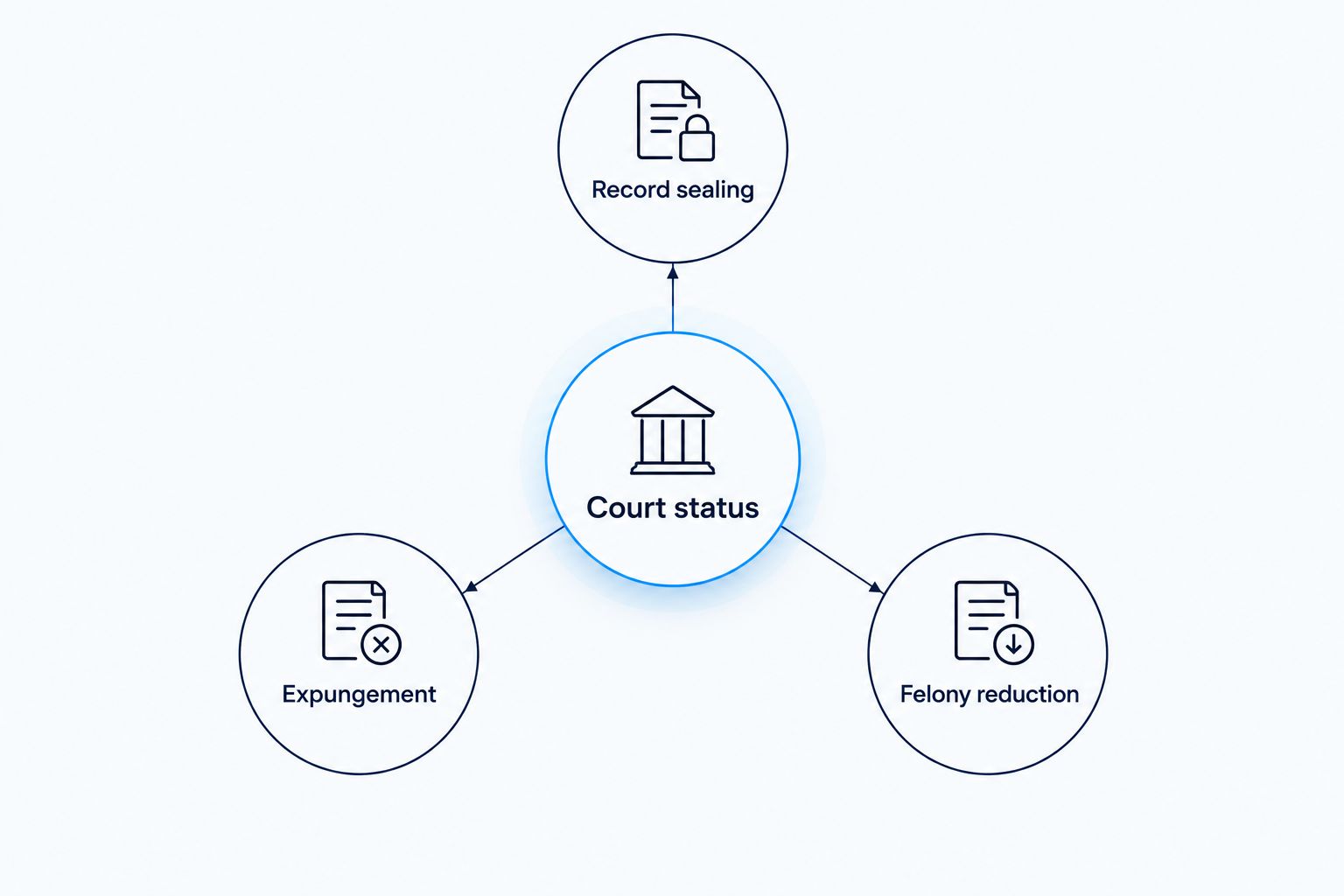
The plain-language categories are:
- Record sealing: Restrictions on access to qualifying records.
- Expungement: Relief affecting the legal status of an eligible conviction.
- Felony reduction: A qualifying felony’s change to misdemeanor status.
- Report correction: Resolution of inaccurate or improperly reported screening information.
The individual’s need for legal help
People searching for CA record sealing for background check firms often want to know whether relief will change what a screening company reports. That question needs an individual answer. The relevant facts include the case outcome, any existing relief, and the type of background check involved.
Reading general information can help you understand the vocabulary without committing to legal representation. Its limitation is that a general explanation cannot establish your eligibility or interpret the effect of your particular court order.
Cole Law is best suited to individuals seeking California record sealing, expungement, or felony-to-misdemeanor reductions. Attorney Allison Cole leads the California-based solo criminal defense practice. If a record is affecting your application, contact the practice for help understanding the legal issue rather than assuming a database complaint will resolve the case itself.
Questions that belong in an individual legal discussion include:
- Whether the concern involves an arrest, a conviction, or an incorrect identity match.
- Whether the court has already granted any relief.
- Whether sealing, expungement, or felony reduction fits the person’s circumstances.
- Whether a job, rental, or professional license application changes the analysis.
The background check firm’s separate responsibilities
A background check company operates in a different role from the attorney helping someone obtain criminal record relief. The company prepares reports; the attorney evaluates legal options for the individual’s case. Neither role should be confused with the employer or landlord making the final decision.
Federal consumer-reporting law and California requirements affect criminal background reporting. The Consumer Financial Protection Bureau’s consumer guidance explains that people can dispute inaccurate information in background reports. That consumer right is separate from obtaining relief in criminal court.
For a firm reviewing its practices in 2026, a record’s availability is not, by itself, a complete answer about whether it belongs in a particular report. Likewise, an applicant’s statement that a case was cleared is not a substitute for understanding the relevant record and legal restrictions.
The company-level issues include:
- Accuracy of the person-to-record match.
- Accuracy of the case outcome and current status.
- Restrictions applicable to the report’s purpose.
- Treatment of consumer disputes about reported information.
A firm seeking advice about these responsibilities needs counsel who handles consumer-reporting compliance. An individual seeking to clear a California criminal record needs advice about criminal record relief. This article keeps those needs separate.
Employment, housing, and licensing contexts
A private employment report, a tenant-screening report, and a licensing background check do not necessarily operate under identical rules. California employment protections concerning criminal history also involve the employer’s conduct, not only the screening company’s report.
Fingerprint-based government checks are another distinct setting. Relief that helps with a private employment application does not establish that a licensing authority will have no access to the underlying history. A universal “clean background check” promise ignores these differences.
If you are worried about what to disclose, the exact application and the kind of relief matter. Do not treat a general statement about expungement as a personal answer to every application question. Contact an attorney for advice tailored to the setting.
Relevant settings include:
- Private employment: Criminal-history reporting and hiring restrictions require separate consideration.
- Rental housing: Tenant screening raises its own reporting and decision-making questions.
- Professional licensing: A board’s access and disclosure requirements require specific attention.
- Government screening: Authorized checks can differ from ordinary commercial reports.
Expectations after relief
Relief is meaningful without being a promise that every record disappears everywhere. A court’s action, the current public record, and a report prepared by a private company are not the same thing. Information copied before relief creates a different question from the person’s present legal status.
No universal completion time or guaranteed background-check outcome applies to every case. A future report also needs to be assessed on its own content rather than judged solely by an earlier report. That distinction matters when an application is already pending.
For your 2026 legal discussion, the useful issue is not simply whether your record is “gone.” It is what relief exists, what effect it has, and whether the report accurately reflects information that can be reported in that setting.
Keep these expectations separate:
- Eligibility for relief is not the same as relief already granted.
- A changed case status is not the same as deletion from every source.
- A corrected report is not the same as a court granting relief.
- An accurate report is not a guarantee of a favorable application decision.
Compare the options without confusing their purpose
The best option depends on the problem, not on which label sounds strongest. Sealing addresses access to eligible records. Expungement addresses eligible convictions. A report dispute addresses reporting problems rather than changing the criminal case.
Cole Law’s record sealing services address an individual’s legal relief needs, not a screening firm’s entire compliance program. That boundary is a useful part of choosing help: a service should match the actual issue.
| Option | Best for | Main benefit | Key limitation |
|---|---|---|---|
| Record sealing | Individuals with records eligible for restricted access | Limits access under the applicable relief | Eligibility and exceptions depend on the record and context |
| Expungement | Individuals with eligible convictions | Changes the conviction’s legal status through available relief | Does not mean every record is erased or every disclosure obligation ends |
| Felony-to-misdemeanor reduction | Individuals with qualifying felony convictions | Changes the offense classification when relief is available | Does not independently resolve every access or reporting issue |
| Background report dispute | Individuals facing inaccurate or improperly reported information | Addresses the contents of a screening report | Does not grant sealing, expungement, or felony reduction |
| Consumer-reporting compliance counsel | Background check firms reviewing reporting obligations | Addresses company-level legal responsibilities | Is a different service from individual criminal record relief |
General educational information is useful for understanding these options. Its limit is equally clear: it cannot decide which relief you qualify for or resolve a disputed report. Individual representation addresses the case-specific legal question, but it does not support a promise that every application will succeed.
Discuss your California record
Contact Cole Law about individual record sealing, expungement, or felony-to-misdemeanor reduction.
Common mistakes background check firms make
These are pitfalls to avoid, not findings about any particular screening company.
- Treating an arrest as a conviction. An arrest does not establish that the person was convicted. A report’s description needs to preserve that distinction rather than leave the reader with the wrong impression.
- Using “sealed” and “expunged” interchangeably. The labels describe different relief. A simplified database category can obscure the legal effect of the actual case outcome.
- Assuming public availability settles reportability. Finding information and being permitted to include it in a particular consumer report are separate questions. The screening context remains relevant.
- Treating all background checks alike. Private employment, rental screening, and authorized licensing checks require separate analysis. A rule for one setting is not a universal answer.
- Sending an individual toward the wrong kind of help. An inaccurate report and an unresolved criminal record are different problems. Reporting-compliance counsel and individual record-relief counsel serve different needs.
FAQ
What does CA record sealing mean for background check firms?
California record sealing restricts access to eligible criminal records, while background check firms have separate duties concerning their reports. Whether information belongs in a particular report depends on the relief and the screening context.
Is record sealing the same as expungement in California?
No, record sealing and expungement are different forms of relief. Sealing generally restricts access, while California expungement commonly changes an eligible conviction’s legal status through dismissal rather than deleting every trace of the case.
Will an expunged case disappear from every background check?
No, expungement does not guarantee that a case disappears from every background check. Government and licensing settings can differ from private screening, and a private report can raise separate accuracy questions.
Can a background check company seal my criminal record?
A background check company does not grant criminal record sealing. A company can address issues in its report, but legal relief for the underlying record is a separate matter.
Who is Cole Law best suited to help?
Cole Law is best suited to individuals seeking California expungement, record sealing, or felony-to-misdemeanor reduction. Attorney Allison Cole leads the solo criminal defense practice; company-level consumer-reporting compliance is a different legal need.
What if a report still shows a case after I received relief?
A report that still shows a case after relief needs review of both the relief and the reported information. The legal effect of the court’s action and the accuracy of the report are separate questions, so contact an attorney for case-specific help.
Does sealing guarantee that I will get a job or apartment?
No, record sealing does not guarantee a job or rental approval. Relief addresses the criminal record, while an application can involve other lawful criteria and separate decision-making rules.
Can a licensing board see information that a private employer cannot?
Some authorized licensing checks have different access and disclosure rules from ordinary private employment screening. The particular license, application, and relief determine the relevant questions, so individualized legal advice matters.
One last thing
The most useful question is not “Will my record disappear?” but “What does this relief change for this particular check?” That question separates a legal outcome from a marketing promise.
If a California record is affecting your future in 2026, you deserve a clear explanation of the options and their limits. Contact the practice for help understanding your situation without assuming that one form of relief answers every employment, housing, or licensing concern.


