
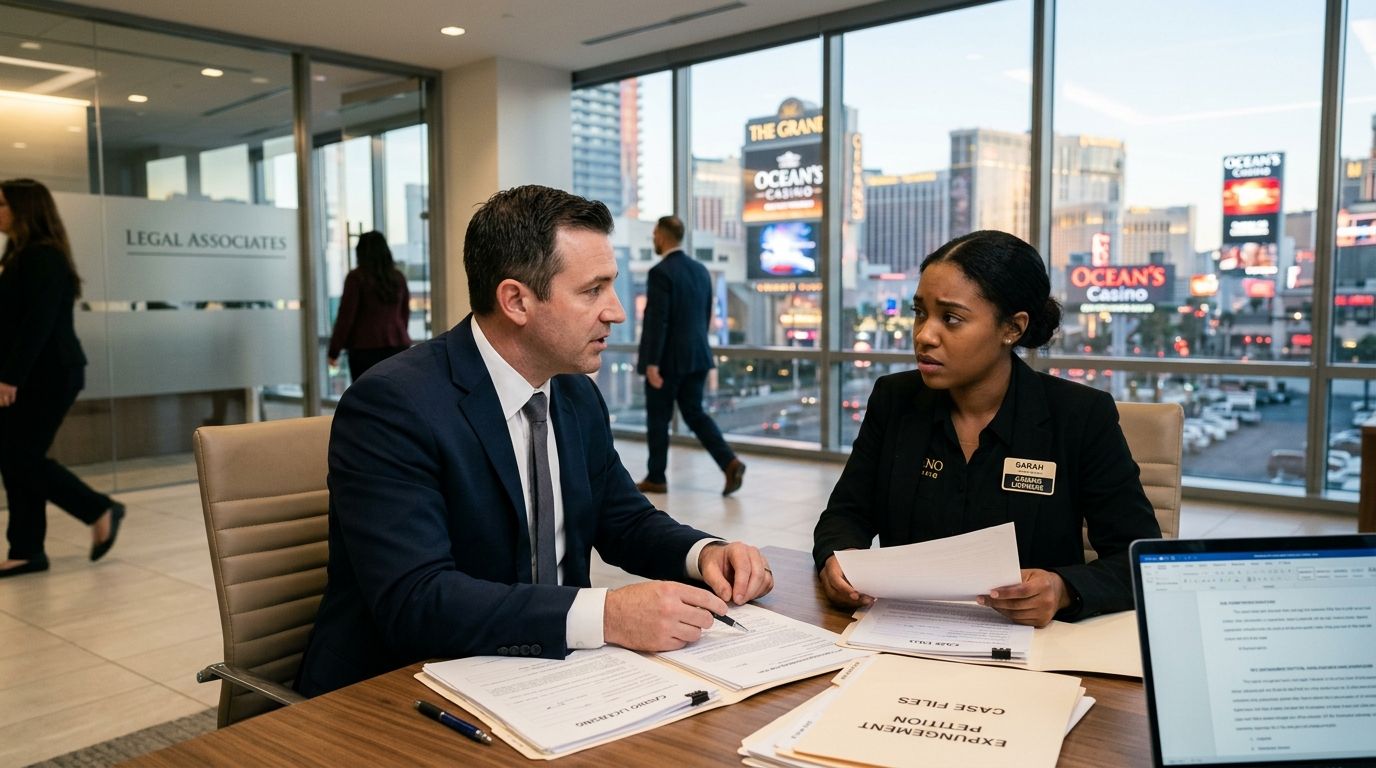
Casino and gaming license workers in California face one of the strictest background check processes in the state, run through the Bureau of Gambling Control and, on tribal land, individual tribal gaming commissions, with the goal of clearing prior convictions so a work permit, key employee license, or gaming license application doesn't get denied or delayed. Unlike a standard employer background check, gaming licensing agencies can see arrests, dismissals, and even some sealed juvenile records that a Penal Code 1203.4 expungement won't erase from their view.
- An expungement lawyer for casino license workers files Penal Code 1203.4 relief before the Bureau of Gambling Control reviews your application, not after.
- Casino and gaming regulators can still see expunged convictions on the disclosure form even when a background check for a private employer would come back clean.
- Felony convictions often need a Penal Code 17(b) reduction to misdemeanor, not just a 1203.4 dismissal, to satisfy 'moral character' review standards.
- Filing early, sometimes 4-6 months before a license application, matters more for gaming workers than for almost any other regulated profession in California.
Why record relief matters for casino and gaming license workers
Gaming license review in California isn't a pass/fail credit check. The Bureau of Gambling Control and tribal gaming commissions conduct suitability determinations, which means they weigh the nature of the conviction, how long ago it happened, and whether you disclosed it accurately, not just whether it's been dismissed.
A 2026 Penal Code 1203.4 dismissal changes your case status from "convicted" to "dismissed," and it lets you legally answer "no" to conviction questions on most private employment applications. Gaming licensing is different: state law lets regulatory agencies ask about and consider convictions even after 1203.4 relief, specifically for suitability and key employee determinations. That gap catches a lot of applicants off guard, and it's why generic online legal forms miss the mark for this group.
Update your understanding of what the Bureau actually sees
Don't assume a dismissed case disappears from your file. The Bureau of Gambling Control and most tribal gaming commissions pull directly from California Department of Justice records, which retain the disposition history even after relief is granted.
- Request your own record through the DOJ before you apply, so you know exactly what the agency will see
- Compare your Live Scan results against what you remember disclosing on prior applications
- Flag any case where the disposition still reads "convicted" instead of "dismissed pursuant to PC 1203.4"
- Note the date of your original conviction, since some suitability reviews weigh recency heavily
Checking whether your Live Scan results still show an expunged case is worth doing before you submit anything to a gaming regulator, not after a denial letter shows up.
Confirm eligibility under Penal Code 1203.4
Most misdemeanor and many felony convictions qualify for 1203.4 relief once probation is completed, but the eligibility rules have specific carve-outs.
- Convictions with a completed and successfully closed probation term generally qualify
- Certain sex offenses and some serious violent felonies are excluded outright
- A pending case, even an unrelated one, can freeze your petition until it resolves
- Multiple convictions across counties need separate petitions, filed with each county's court
I've seen casino applicants assume one dismissal covers every county where they were charged. It doesn't. If you have cases in more than one jurisdiction, multiple convictions expungement needs a coordinated filing plan, not a single form.
File before the license application, not after a denial
Timing is the single biggest mistake I see with gaming workers. A petition filed after you've already submitted your gaming license application looks reactive to the reviewing agency, and it can slow down an already lengthy suitability review.
- File your 1203.4 petition as soon as you know a gaming role is realistic, ideally 4-6 months ahead
- Ask the court clerk for expected processing time in your county before setting your application date
- Build in buffer time for a possible District Attorney objection, which can add weeks
- Keep a copy of the filed petition to show proactive disclosure if the agency asks before the order is signed
Timing an expungement petition around a job offer applies directly here since gaming license timelines run on similarly rigid clocks.
Address felony convictions with a Penal Code 17(b) reduction
Suitability reviews for key employee licenses and gaming commission approvals weigh felony history more heavily than misdemeanors, even after dismissal. If your conviction was a wobbler, meaning it could have been charged as either a felony or misdemeanor, a Penal Code 17(b) reduction changes how the record reads on paper.
- Confirm the statute you were convicted under is legally eligible as a wobbler
- File the 17(b) motion before or alongside the 1203.4 petition when possible
- Expect a judge to weigh your conduct since the conviction, not just the original facts
- Use the reduction to reframe the disclosure language on your gaming application
Prepare accurate disclosure language for the application itself
Gaming agencies penalize omissions and misstatements more harshly than the underlying conviction in many cases. A dismissed case still needs to be listed correctly, using the exact statutory language from your court order.
- List the original charge, the disposition, and the 1203.4 relief date separately
- Attach the signed court order as supporting documentation, not just a summary
- Avoid vague phrasing like "case closed" when the form asks for disposition type
- Have a licensed attorney review the disclosure section before you submit it
Handle security, surveillance, and key employee roles as separate license tracks
Casino floor security, surveillance staff, and dealers often go through a different licensing lane than management-level key employees, and each track has its own suitability threshold.
- Confirm whether your role requires a work permit, a key employee license, or both
- Check whether your county issues a separate BSIS license on top of the gaming credential
- Review disclosure requirements specific to armed versus unarmed security roles
- Ask your employer's HR or compliance department which license category applies before you file anything
Workers moving into casino floor security should also review expungement for security guards and BSIS license holders, since BSIS licensing runs on a parallel but separate suitability standard from gaming commissions.
Track the outcome with the licensing board directly
Don't assume your petition's approval automatically updates the gaming agency's file. Follow up directly once the court order is signed.
- Request certified copies of the signed 1203.4 order for your own records
- Send a copy directly to the Bureau of Gambling Control or tribal gaming commission handling your application
- Ask your assigned licensing analyst to confirm the update was logged
- Keep a paper trail in case a future renewal application asks about the same conviction again
This is where state licensing board applicants overlaps directly with gaming work: both processes require you to actively confirm the board received and applied your relief order, not just assume it happened.
Comparing your options
| Option | Best for | Cost basis | Key limitation |
|---|---|---|---|
| DIY petition using court self-help forms | Single misdemeanor, no pending gaming deadline | Filing fees only | No guidance on disclosure language for the gaming application itself |
| General practice attorney | Straightforward single-county cases | Varies by firm | Often unfamiliar with gaming suitability standards specifically |
| Expungement-focused criminal defense attorney | Felony history, multi-county cases, tight license timelines | Varies by case complexity | Requires scheduling ahead of your application date |
| Doing nothing and disclosing as-is | Cases with no realistic eligibility | No cost | Convictions remain on record and weigh against suitability review |
Cole Law's approach for gaming and casino workers is straightforward: file the 1203.4 petition and any needed 17(b) reduction well ahead of the licensing timeline, then help you get the disclosure language right on the application itself. That combination, timing plus accurate paperwork, is what actually moves a suitability review in your favor.
Get your record relief timeline mapped
Talk through your case before you submit a gaming license application.
Common mistakes casino and gaming applicants make
- Assuming a dismissed case is invisible to regulators. Gaming agencies see disposition history regardless of 1203.4 relief, so treat disclosure as mandatory, not optional.
- Filing the petition after submitting the license application. This makes the relief look reactive and can slow an already long suitability review.
- Skipping the 17(b) reduction on a wobbler felony. A straight 1203.4 dismissal on an unreduced felony still reads as a felony in suitability scoring.
- Using vague or informal disclosure language. Statutory phrasing from the actual court order carries more weight than a paraphrased summary.
- Forgetting multi-county cases need separate filings. One county's dismissal order doesn't clear a conviction sitting in a different jurisdiction's file.
One last thing
Most casino and gaming applicants assume the hardest part is the conviction itself. It's usually the disclosure form. I've watched applicants with a clean, fully dismissed 2019 case get flagged in 2026 because they wrote "resolved" instead of citing the exact Penal Code 1203.4 order date and case number. Precision on that one section of the application matters as much as the underlying legal work.
FAQ
Does an expunged record show up on a casino license background check in California?
Yes. The Bureau of Gambling Control and tribal gaming commissions can access disposition history even after a Penal Code 1203.4 dismissal, so you still need to disclose it accurately on the application.
Is a felony conviction automatically disqualifying for a gaming license in California?
Not automatically, but it weighs heavily in suitability review. A Penal Code 17(b) reduction to misdemeanor, filed alongside a 1203.4 petition, often improves how the conviction reads to reviewers.
How long before applying for a gaming license should I file for expungement?
Aim for 4-6 months ahead of your application date in 2026, since court processing time plus a possible District Attorney objection can add weeks to the petition timeline.
What's the difference between a work permit and a key employee gaming license?
A work permit covers floor-level roles like dealers, while a key employee license applies to management-level positions and carries a stricter suitability standard. Confirm which one your role requires before filing anything.
Can I get a criminal record expunged without a lawyer for a casino job application?
You can file a petition yourself using court self-help forms, but the disclosure language on a gaming license application is where most applicants without legal help run into trouble.
Do tribal gaming commissions follow the same rules as the Bureau of Gambling Control?
No. Each tribal gaming commission sets its own suitability standards, though most still pull from the same California DOJ record history used by the state Bureau.
What happens if I already disclosed a conviction incorrectly on a gaming application?
Contact your licensing analyst directly to correct the record before the review proceeds further, since an uncorrected misstatement can carry more weight than the original conviction.
Related guides
- Expungement lawyer for state licensing board applicants
- Expungement lawyer for security guards and BSIS license holders
- How to time an expungement petition around a job offer
- How to check if your Live Scan results still show an expunged case
- Best lawyer for expunging multiple convictions in California


