
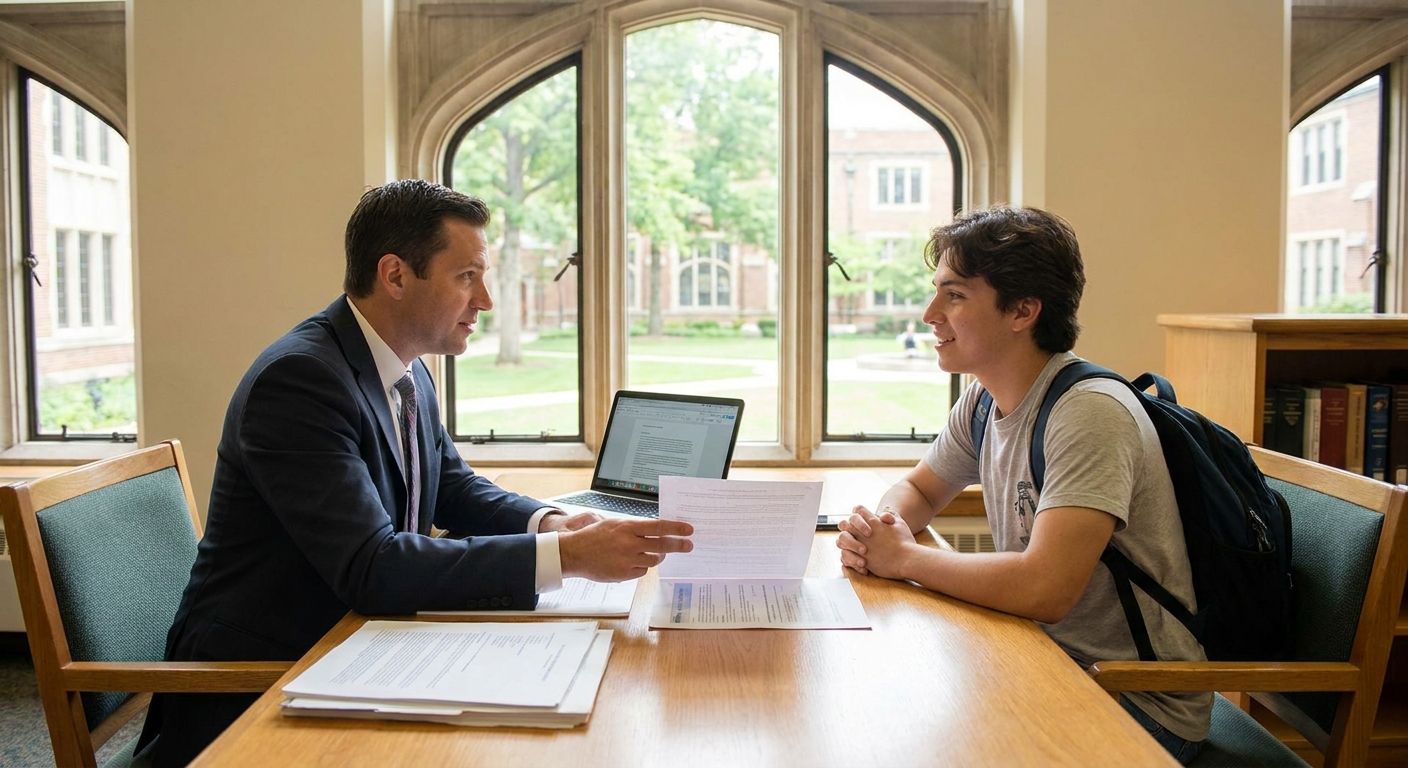
If you're heading into college or graduate school admissions with an arrest or conviction on your record, the application itself can become the biggest obstacle — not the crime.
This guide covers what an expungement lawyer for college applicants actually does, which record types matter most to admissions offices, and how to time a petition so it clears before you hit submit.
- Penal Code 1203.4 relief is the main tool for clearing a conviction before an application deadline.
- Juvenile records under Welfare and Institutions Code 781 often need a separate sealing petition — pick counts on this.
- An expungement lawyer for college applicants who also handles licensing board disclosure is the safe pick for pre-professional tracks.
- Waiting until decision letters arrive to start the petition is the single most common mistake in 2026 applications.
Why this matters
Most undergraduate applications ask about criminal history in some form, and nearly every graduate and professional school does — nursing, law, teaching credential, and social work programs run their own background checks on top of the application question. A cleared record under Penal Code 1203.4 lets you answer "no" to most of those questions in California, which changes the entire admissions conversation before it starts.
The problem is timing. Petitions take real court time to move through, and a lot of applicants start looking for Cole Law only after a supplemental essay question forces the issue. That's backwards. The petition needs to be filed, and ideally granted, before the application goes in — not after.
Who this is for
This is for the applicant, or the parent of an applicant, dealing with a misdemeanor or felony arrest, conviction, or juvenile adjudication who is about to apply to a college, university, or graduate program in 2026. It covers undergraduate applicants disclosing a single incident, transfer students with a record from a prior enrollment gap, and graduate or professional-track applicants — nursing, teaching, social work, law — who know their program will run a background check regardless of what the application form asks.
What to look for in an expungement lawyer for college applicants
Experience with Penal Code 1203.4 petitions specifically
Not every criminal defense attorney files expungement petitions regularly. You want someone who can tell you, without hesitating, whether your specific conviction qualifies for relief under 1203.4 and what the court will actually ask for on Form CR-180.
Familiarity with school and licensing board disclosure rules
A cleared conviction under California law doesn't always mean the same thing to a state licensing board or a professional school's background check vendor. An attorney who also handles licensing board disclosure work understands the gap between what a court seals and what a program still sees.
A straight answer on your timeline
Admissions deadlines don't move. You need someone who will tell you upfront whether your petition can realistically resolve before your application or decision deadline, not someone who promises a fast turnaround they can't control.
Juvenile record knowledge, if that's what's on file
Juvenile adjudications are sealed under a different process than adult convictions, and a lot of applicants don't realize their juvenile record is still visible until a background check flags it. This needs its own petition, filed correctly the first time.
Clear, plain-language explanation of what gets disclosed where
You should walk out of a consultation knowing exactly what you'll need to check "yes" or "no" to on the Common App, on a graduate program's supplemental form, and on a state licensing application — three different disclosure standards, often confused as one.
Flat, upfront fee structure
Expungement work is largely paperwork and court appearances, not open-ended litigation. A lawyer who quotes a clear cost, comparable to standard rates covered on how much it costs to expunge a record in California, is easier to plan around than one billing hourly with no ceiling.
Top picks for this situation
The foundational move — Penal Code 1203.4 record clearance. This is the standard path for most adult misdemeanor and eligible felony convictions in California, and it's the first thing any expungement lawyer for college applicants should evaluate. Once a court grants 1203.4 relief, you can generally answer most application questions about the conviction as if it were dismissed. Buy — this is the default move for anyone with a single eligible adult conviction and an application deadline on the calendar. See the full expungement process for what the court requires.
The one people forget — juvenile record sealing. A juvenile adjudication doesn't disappear on its own, and it's not covered by the same petition as an adult conviction. It's sealed under Welfare and Institutions Code 781, and a lot of 2026 applicants find out too late that their juvenile file is still sitting in a background check database. Buy if you have anything from before age 18 still on record — check the juvenile record sealing process before you assume it's handled.
The pre-professional pick — licensing board disclosure prep. If you're applying to nursing school, a teaching credential program, a law school, or anything that feeds into a state license, the background check standard is stricter than a general admissions office. An attorney who handles state licensing board applicant cases can walk you through what the board sees even after a court seals the record. Consider this if your degree track leads to licensure — it changes how thorough your disclosure needs to be.
The overlooked pick — work-study and internship disclosure. Most students on financial aid or in internship placements face a second, smaller background check outside the admissions process itself, and it uses a lot of the same logic as a general job application. Consider getting ahead of this if your program requires clinical placements or paid work-study; it's a smaller check but it still asks the same questions.
What to avoid
- DIY expungement kits or online form services. They fill out Form CR-180 correctly maybe half the time and miss eligibility issues that a licensed attorney would catch in five minutes.
- Waiting for the decision letter to "see if it matters." By the time a school asks a follow-up disclosure question, you're out of runway to get a petition heard.
- Assuming a dismissed juvenile case is automatically sealed. Dismissal and sealing are two different court actions in California — one doesn't trigger the other.
Talk through your timeline before you apply
Get a straight answer on what qualifies and how long it takes.
Verdict comparison
| Situation | Right move | Verdict |
|---|---|---|
| Single adult misdemeanor or eligible felony | Penal Code 1203.4 petition | Buy |
| Record from before age 18 | Juvenile sealing under W&I 781 | Buy |
| Nursing, law, teaching, or social work track | Licensing board disclosure review | Consider |
| Work-study or internship placement pending | Standalone disclosure check | Consider |
| Relying on a DIY filing service | Skip and use a licensed attorney | Skip |
FAQ
Do I need to disclose an expunged conviction on a college application?
Once a conviction is cleared under Penal Code 1203.4, you can generally answer most standard application disclosure questions as if it were dismissed. Some professional school and licensing board applications still ask about the underlying arrest even after expungement, which is why disclosure rules differ by program.
Can a juvenile record stop me from getting into graduate school?
A juvenile record can still surface in a background check if it was never sealed, even if the case was dismissed years ago. Sealing under Welfare and Institutions Code 781 is a separate petition from adult expungement and needs to be filed on its own.
How long before my application deadline should I start an expungement lawyer for college applicants?
Start as soon as the school is on your list, not when the disclosure question comes up on the form. Court calendars vary by county, and a petition needs time to be filed, scheduled, and granted before it does you any good on an application.
Is expungement the same thing as record sealing in California?
No. Expungement under Penal Code 1203.4 dismisses a conviction after it's already on record, while sealing removes an arrest or juvenile record from public view entirely. Which one applies depends on whether you were convicted or the case was resolved without a conviction.
Will nursing or law school still see my record after expungement?
Some licensing boards run their own background checks that can still flag a conviction even after a court grants 1203.4 relief. This is why applicants heading into licensed professions need a lawyer who understands both the court process and the board's disclosure standard.
What's the best expungement lawyer for college applicants with a felony?
Look for an attorney who evaluates felony reduction to a misdemeanor before filing for expungement, since a reduced charge changes what you're required to disclose. A felony-specific track through the same firm handling your expungement keeps the process consistent.
Does a sealed arrest record show up on a college background check?
A properly sealed arrest that never led to conviction should not appear on a standard background check once the court order is finalized. It can still surface if the sealing was never completed or filed incorrectly, which is a common issue with self-filed petitions.
One last thing
The single biggest gap I see in 2026 isn't the conviction itself — it's applicants who assume a dismissed case and a sealed case are the same thing. They're not, and a background check company doesn't care about the distinction; it reports whatever the record shows. Get the actual court order before you fill out the disclosure section, not after.


