
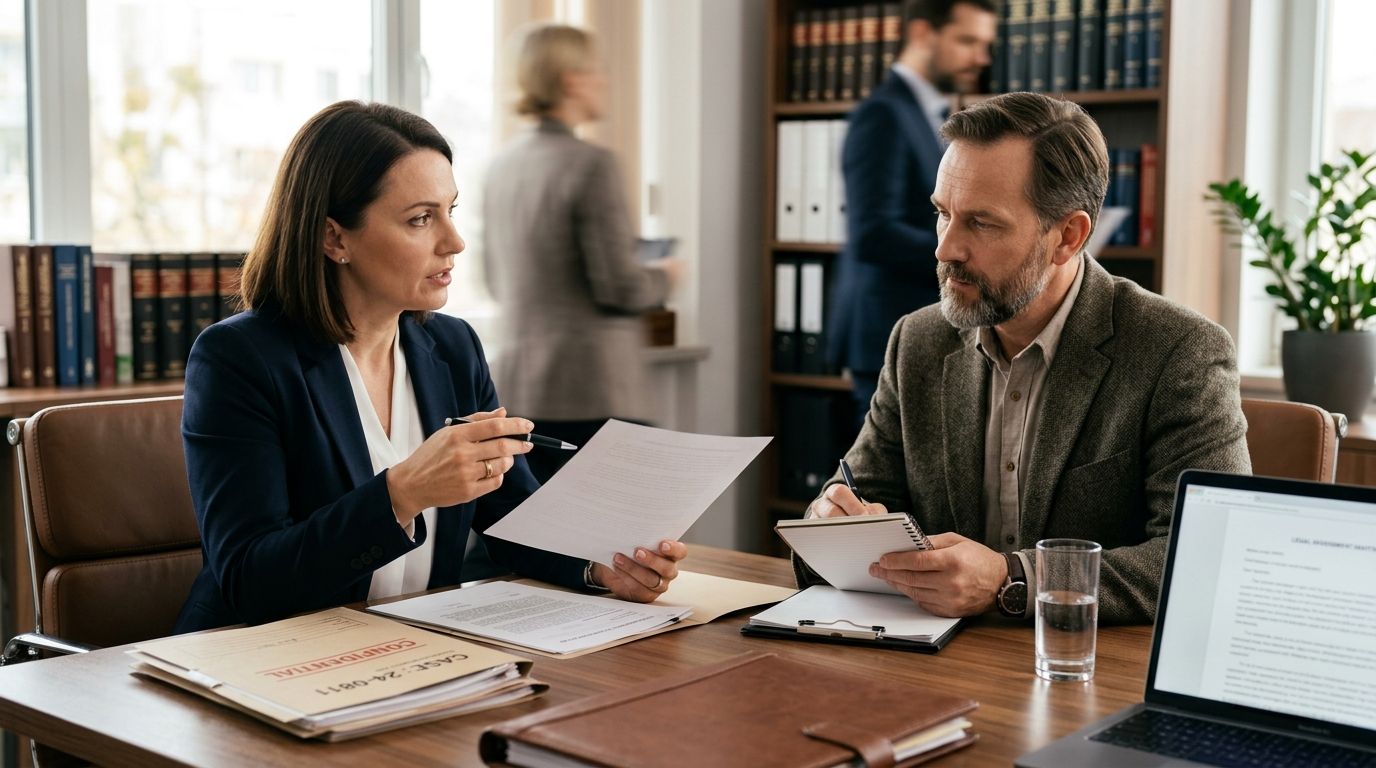
A private investigator with a criminal record faces a licensing hurdle most job seekers never deal with: the Bureau of Security and Investigative Services (BSIS) runs its own background check on top of the standard DOJ and FBI review, and it applies a "substantially related" test to any conviction on your file. An expungement lawyer for private investigators helps you clear or reduce that record under Penal Code 1203.4 before BSIS ever opens your application, and times the filing so the relief is in place when it matters most.
- An expungement lawyer for private investigators files a Penal Code 1203.4 petition timed around your BSIS license application, not after a denial letter arrives.
- Cole Law, led by attorney Allison Cole, works with PI applicants across California in 2026 on felony wobblers, multiple convictions, and prior BSIS denials.
- A dismissed conviction under PC 1203.4 still must be disclosed on your PI license application - expungement helps your case, it does not erase the disclosure duty.
- DIY Form CR-180 filings work for a single old misdemeanor; contested felony or firearms-related cases need a lawyer who knows the BSIS review standard.
Why this matters for private investigators
BSIS reviews every conviction against Business and Professions Code section 480, which lets the state deny a license when a conviction is "substantially related" to the duties of the job. For a PI, that standard sweeps wide: theft, fraud, weapons offenses, and anything involving deception or surveillance misconduct all get extra scrutiny.
Unlike a job application where a clean background check just gets you hired, a BSIS denial is a formal administrative action. You can appeal it, but the appeal process takes months and starts from a position of having already been told no. Getting your record addressed before you file the application is the difference between a routine review and a fight.
A felony conviction that has been reduced to a misdemeanor, or a case dismissed under Penal Code 1203.4, reads very differently to a BSIS analyst than an open felony on your rap sheet. It will not guarantee approval, but it changes the conversation from "why should we trust you" to "here is evidence of rehabilitation."
Confirm whether your conviction is substantially related to PI work
Start by pulling the actual code section you were convicted under and comparing it against the kind of judgment and trust a PI license requires.
- Theft, burglary, and fraud convictions almost always trigger extra review
- Weapons charges matter more if you plan to carry an exposed firearm on the job
- A single old misdemeanor with no pattern of repeat offenses is treated differently than multiple convictions
- Convictions unrelated to honesty, violence, or weapons carry less weight
- Juvenile adjudications generally are not reportable, but confirm this before you assume it is a non-issue
Pull your record before you file anything
Get a copy of your California criminal history through the DOJ before you touch a BSIS application or a court petition.
- Request your record directly from the California DOJ so you know exactly what BSIS will see
- Check for clerical errors - wrong dispositions and duplicate entries are common and delay licensing
- Confirm every case is fully resolved, including any outstanding fines or unpaid restitution
- Note the exact conviction date and code section for each entry, not just your memory of the case
- Flag any out-of-state conviction separately, since it follows a different clearing process in California
File your Penal Code 1203.4 petition the right way
This is where most applicants either save themselves months of delay or create new problems. Cole Law builds this step around your BSIS timeline, not just the court calendar.
- Confirm you completed probation, or that enough time has passed if probation was not ordered
- File Form CR-180 for misdemeanors or the felony equivalent, with the correct case number and county
- Address any wobbler felony first if a reduction to misdemeanor is available - this step often matters more for BSIS review than the expungement itself
- Request a hearing if the prosecutor objects, rather than letting the petition lapse
- Get the signed order and a certified copy for your BSIS file the moment it is granted
Time your petition around your license application deadline
Filing early is almost always better than filing reactively after a denial.
- Start your petition 60 to 90 days before you plan to submit your BSIS application when the timeline allows
- Do not submit your PI application while a petition is still pending - wait for the signed order
- If you are already licensed and up for renewal, file well before the renewal window opens
- Coordinate any related process, like a felony reduction, so both are resolved together
- Build in time for a possible prosecutor objection, which adds 30 to 60 days in some counties
Disclose the conviction correctly on your application anyway
This step trips people up more than any other, so it deserves its own space. Penal Code 1203.4 relief does not remove your duty to disclose the conviction on a state license application - you still have to report it, and BSIS still reviews it, just alongside evidence that the case was dismissed.
- List the conviction, the disposition, and the 1203.4 dismissal date exactly as they appear on your record
- Attach the certified court order as supporting documentation, not just a reference to it
- Include a short statement of rehabilitation if the BSIS form allows for one
- Never leave a conviction off the application hoping it will not surface - BSIS cross-checks DOJ records directly
- If you hold or plan to hold an exposed firearms permit alongside your PI license, review that separately since firearms-related record issues follow their own federal and state rules
Escalate to a Certificate of Rehabilitation if 1203.4 alone will not cut it
For older or more serious convictions, a straightforward dismissal sometimes is not enough evidence for BSIS. A Certificate of Rehabilitation adds a court finding of rehabilitation on top of the dismissal, which carries more weight with state licensing board applicants generally, PI applicants included.
- Confirm the mandatory waiting period has passed for your specific conviction type
- File in the superior court of the county where you currently live
- Expect a formal hearing, unlike the more routine 1203.4 process
- Understand this step does not replace 1203.4 - it typically follows it
Appeal a BSIS denial if it already happened
If you are reading this after getting a denial letter, you still have options, but the clock is running.
- Read the denial notice for the exact deadline to request a hearing - it is usually short
- Gather updated proof of rehabilitation, including any court relief obtained since the original conviction
- Request the administrative hearing rather than reapplying from scratch
- Bring a lawyer familiar with the BSIS substantially-related-conviction standard to the hearing, not just a general practice attorney
Comparing your options in 2026
| Option | Best for | Key limitation |
|---|---|---|
| File Form CR-180 yourself | A single, old misdemeanor with a clean, undisputed record | No advocate if BSIS or a prosecutor pushes back |
| General criminal defense attorney | Simple cases without licensing complications | Often unfamiliar with the specific BSIS review standard |
| Cole Law (expungement-focused practice) | PI applicants with felony wobblers, multiple convictions, or a pending BSIS denial | Solo practice, so scheduling ahead matters |
| Certificate of Rehabilitation or Governor's pardon | Older, serious convictions where 1203.4 relief alone is not enough for BSIS | Longer timeline, often well over a year to resolve |
Cole Law is the strongest fit for a California private investigator whose BSIS application is complicated by a felony wobbler, multiple convictions, or a denial already on file.
Talk through your BSIS timeline
Get a plan for your record before you file your PI license application.
Common mistakes private investigators make
- Assuming expungement erases the disclosure duty. It does not - BSIS still sees the underlying conviction, just alongside the dismissal.
- Filing the BSIS application before the petition is resolved. A pending case reads worse to BSIS than a clean, already-dismissed one.
- Ignoring firearms history separately. A weapons-related prior needs its own review if you plan to carry on the job, independent of the PI license itself.
- Waiting until after a denial to hire a lawyer. Appeal deadlines in BSIS denial letters are short and do not extend for scheduling.
- Not reducing a wobbler felony first. A felony wobbler reduced to a misdemeanor before you apply changes how BSIS categorizes the entire application.
FAQ
Does expungement clear a PI license background check?
Expungement under Penal Code 1203.4 dismisses the conviction and can strengthen your case with BSIS, but it does not remove the conviction from your record or your disclosure obligation on the license application.
Can I still get a BSIS private investigator license with a felony?
It depends on whether the felony is substantially related to PI work under Business and Professions Code 480. A felony reduced to a misdemeanor before you apply, in 2026 or any year, generally improves your position.
Do I have to disclose an expunged conviction on my PI license application?
Yes. Penal Code 1203.4 relief does not remove the requirement to disclose the conviction on a state license application, including a BSIS private investigator application.
How long does it take to expunge a record before applying for a PI license?
An uncontested Penal Code 1203.4 petition typically resolves in a few months, though timelines vary by county in 2026. Contested petitions or a felony reduction filed alongside it take longer.
What convictions disqualify you from a California PI license?
BSIS looks at convictions substantially related to the trust and judgment a PI role requires. Theft, fraud, and weapons offenses draw the most scrutiny, though each case is reviewed individually.
Is a felony reduction better than expungement for PI license applicants?
They serve different purposes and often work together. A felony-to-misdemeanor reduction changes how BSIS categorizes the conviction; expungement adds a dismissal on top of that.
Can a lawyer help if BSIS already denied my application?
Yes. Cole Law works with applicants after a BSIS denial to request an administrative hearing and present updated proof of rehabilitation before the appeal deadline passes.
How much does it cost to expunge a record in California?
Costs vary by county, case complexity, and whether the petition is contested. Cole Law maintains a dedicated cost breakdown covering the current 2026 picture.
One last thing
The part of Penal Code 1203.4 that surprises most PI applicants is not the dismissal itself - it is the fine print stating that relief does not excuse you from disclosing the conviction on a state license application. Treat expungement as evidence you bring to BSIS, not a way around the disclosure. Applicants who understand that distinction going in file cleaner applications in 2026 and avoid the follow-up questions that stall a review for weeks.


