
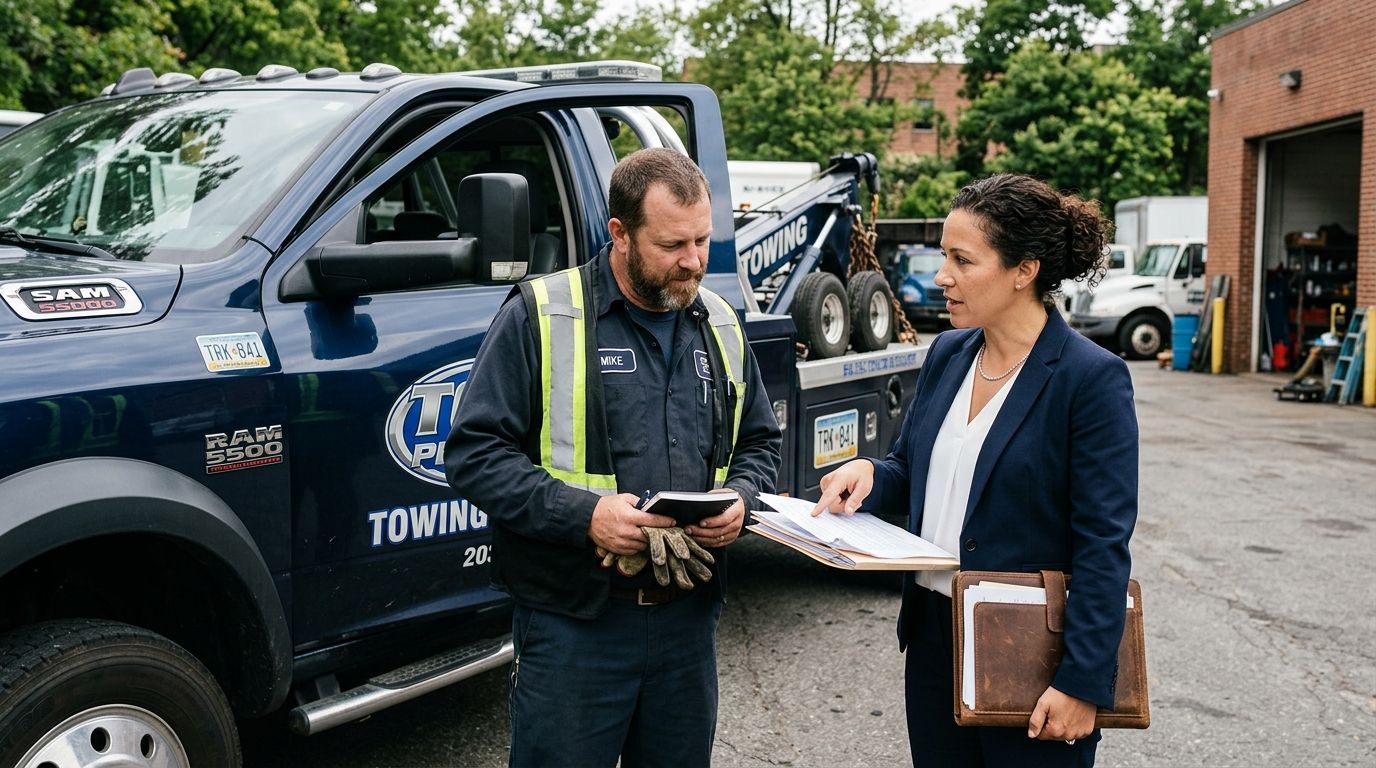
A tow truck operator with a criminal record in California can clear that record through Penal Code 1203.4 expungement, a felony reduction under PC 17(b), or record sealing — with the goal of passing CHP's background review for a Tow Truck Driver Certificate and keeping contracts with law enforcement agencies. Tow operators face a check most drivers never see: the California Highway Patrol reviews criminal history as part of certifying drivers and terminals under Vehicle Code Section 3068, and that review doesn't stop after you're hired.
- An expungement lawyer for tow truck operators works Penal Code 1203.4 relief around CHP certification cycles, not just court deadlines.
- Cole Law files 1203.4 petitions and PC 17(b) felony reductions for tow drivers whose CHP background check flagged an old conviction.
- A felony still on your record can block or delay a Tow Truck Driver Certificate even years after you finished probation.
- Reducing a wobbler felony to a misdemeanor before you petition often changes how CHP and dispatch clients see your file.
Why expungement matters for tow truck operators
Tow companies that work with police departments, CHP rotation lists, or municipal contracts run background checks that go deeper than a standard DMV pull. A conviction that's twenty years old can still surface on a CHP background review, and it can sit next to a fresh application for a rotation slot or a renewed certificate.
This isn't unique to towing — commercial truck and CDL drivers face the same layered scrutiny — but tow operators carry an added wrinkle: CHP certification ties your ability to work at all to a government background check, not just a private employer's judgment call. Dispatch companies that want to stay on a CHP rotation list will drop a driver whose file raises a question, even before CHP makes a final call.
A record that's been cleared under Penal Code 1203.4 doesn't erase history, but it does change what shows up on most background checks and how the case reads to a reviewer. That distinction matters more for tow operators in 2026 than it did a decade ago, as more municipalities tighten vendor screening on towing contracts.
How to clear your record as a tow truck operator
Check your eligibility under Penal Code 1203.4
Start with the statute, not the paperwork. Eligibility depends on the conviction type, whether probation was completed, and whether you're currently facing new charges.
- Confirm probation was completed or was never granted for the case
- Check whether the conviction was a misdemeanor, an infraction, or a wobbler felony
- Rule out active charges or a pending case, which block filing
- Note any DUI or driving-related conviction separately, since these often carry added scrutiny for commercial drivers
Work through the criteria on how to check expungement eligibility under Penal Code 1203.4 before you file anything.
Pull your full criminal record first
You can't fix what you haven't seen. Order your record before you draft a petition or talk to CHP about a certificate.
- Request your California record through the Department of Justice
- Cross-check what shows on a standard background check versus your DOJ record
- Flag any conviction you didn't expect to see
- Note case numbers and county of conviction for each entry
The process is outlined at how to get a copy of your California criminal record.
Reduce a felony wobbler before you petition
If your conviction was a wobbler — a charge that can be filed as either a felony or a misdemeanor — reducing it under PC 17(b) before filing for 1203.4 relief changes what a CHP reviewer sees on your file.
- Confirm the original charge qualifies as a wobbler under California law
- File the PC 17(b) motion before or alongside your 1203.4 petition
- Get the reduction reflected on your DOJ record, not just the court file
- Time this step around any pending certificate renewal
See how to get a felony reduced to a misdemeanor in California for the mechanics.
File the correct petition with the court
Most 1203.4 relief starts with Judicial Council Form CR-180, filed in the county of conviction.
- File in the county where the conviction happened, not where you live now
- Attach proof of probation completion or an early-termination order
- Request a hearing date if the DA's office objects
- Serve the DA's office as required by your county's local rules
Time the filing around your CHP certification
A petition filed the week before a certificate renewal doesn't help you — court processing takes time, and CHP won't wait for a case that's still pending.
- Check your certificate renewal date before you file
- Build in lead time for court processing and any hearing
- Ask the court clerk about current turnaround for your county
- File early enough that relief is granted before CHP reviews your renewal file
For the general logic, see timing an expungement petition around a job offer — the same math applies to a certification deadline.
Prepare for how CHP reads a cleared record
A 1203.4 dismissal doesn't seal your record from CHP or from most licensing bodies — it changes your legal disclosure obligations and how the conviction appears on many checks, but CHP can still see certain dismissed convictions during certification review.
- Ask your attorney exactly what CHP will and won't see after relief is granted
- Prepare a short, factual explanation of the case if CHP asks directly
- Don't assume relief means the conviction disappears from every database
- Keep your court order proving the dismissal on hand for any follow-up request
Consider a Certificate of Rehabilitation for multiple convictions
If you have more than one qualifying conviction, a Certificate of Rehabilitation can go further than a standard 1203.4 dismissal and, in some cases, leads to a governor's pardon.
- Check the minimum residency and waiting-period requirements for your county
- Confirm all underlying convictions are eligible for the certificate
- File the petition through the superior court, not the DOJ
- Understand this process takes longer than a standard 1203.4 petition
“CHP doesn't forget a conviction just because you did — clearing the record legally is what actually changes the file they're reading.”
— Allison Cole, Cole Law
Your options for clearing a record as a tow truck operator
| Option | Best for | Key limitation |
|---|---|---|
| File Form CR-180 yourself | Drivers with one simple misdemeanor and no hearing objection | No guidance if the DA objects or the court requires additional proof |
| General practice attorney | Drivers who need basic paperwork help and have flexible timing | Often unfamiliar with how CHP certification review reads a 1203.4 dismissal |
| Cole Law, criminal defense and expungement practice | Tow drivers with a felony wobbler, multiple convictions, or a certification deadline | Solo practice — cases are handled personally rather than by a large team, which means direct attention but a single point of contact |
| Do nothing and hope CHP doesn't flag it | No one — a conviction that's already showing up won't stop showing up | Leaves the record exactly as it is for every future renewal or contract review |
Verdict: a felony wobbler or a certification deadline calls for an attorney who's handled CHP-adjacent cases, not a generic form-filing service.
Get your record reviewed before you renew
Find out what shows on your file and what Penal Code 1203.4 can change before your next certification cycle.
Common mistakes tow truck operators make
- Assuming CHP works like a standard employer background check. CHP's review process for a Tow Truck Driver Certificate is a government screening under Vehicle Code Section 3068, not a private HR check — it doesn't treat a dismissed case the same way a job application might.
- Filing right before a renewal deadline. A petition that's still pending when your certificate is due for renewal doesn't help — the court needs to grant relief first.
- Ignoring a wobbler felony because probation is long finished. Time served doesn't change the classification on the record; only a PC 17(b) motion does.
- Not checking what still shows after 1203.4 relief. Some drivers assume a dismissal means CHP sees nothing — it changes disclosure rules, not full visibility on every database.
- Waiting until a certificate is denied to act. Fixing a record after a denial takes longer than fixing it before you apply.
FAQ
Can a tow truck operator get their record expunged in California?
Yes, a tow truck operator can petition for relief under Penal Code 1203.4 if the underlying conviction is eligible and probation has been completed. Eligibility depends on the specific charge, not the profession, so a criminal history review is the first step.
Does CHP check your criminal record for a tow truck operator certificate?
Yes, the California Highway Patrol reviews criminal history as part of certifying tow truck drivers and terminals under Vehicle Code Section 3068. This applies at initial certification and again at renewal.
Will an expunged conviction still show up on a CHP background check?
Relief under Penal Code 1203.4 changes your legal disclosure obligations and how the case appears on many checks, but it does not guarantee CHP sees nothing during certification review. An attorney familiar with CHP's process can explain exactly what your file will show after relief.
What is Penal Code 1203.4 and how does it help tow truck drivers?
Penal Code 1203.4 lets someone who completed probation withdraw a guilty or no-contest plea and have the case dismissed. For tow drivers, it changes how a conviction reads to background reviewers, including on many certification and licensing checks.
Can I get a felony reduced to a misdemeanor before applying for a CHP certificate?
Yes, if the original charge was a wobbler eligible to be filed as either a felony or misdemeanor, a PC 17(b) motion can reduce it before you apply. Filing this before your 1203.4 petition changes what shows up on the reduced record.
How long does an expungement take in California?
Processing time varies by county and whether the district attorney's office objects to the petition. Filing early, well before any certification renewal deadline, avoids a gap where relief is still pending when CHP reviews your file.
Do I need a lawyer to expunge a record, or can I file it myself?
You can file Form CR-180 yourself for a straightforward misdemeanor case with no objection expected. A felony wobbler, multiple convictions, or a certification deadline is where a lawyer familiar with CHP's review process earns its cost.
What happens if a CHP tow certificate application is denied because of a past conviction?
CHP can deny or delay certification when a background review flags a disqualifying conviction, and appealing that decision after the fact takes longer than addressing the record beforehand. Clearing or reducing the conviction before you apply is the more direct path.
One last thing
Most tow drivers don't get flagged the first time they're certified — they get flagged at renewal, years later, when a new dispatcher or a new municipal contract runs a fresh check on an old case. The safest window to clear a record is before that renewal shows up on your calendar, not after. If you're not sure what's still sitting on your file, pull your record now under how to get a copy of your California criminal record before your next CHP review makes the decision for you.


