
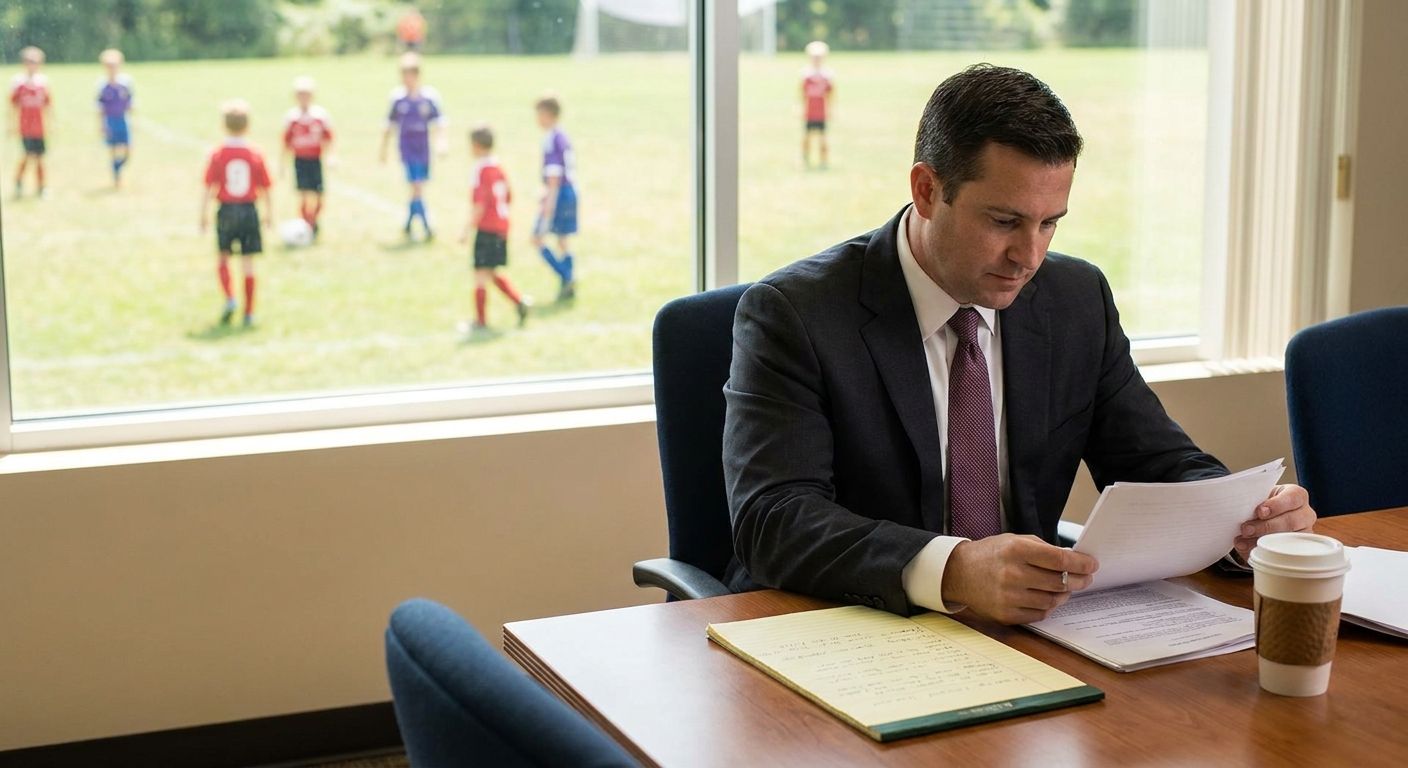
Volunteer coaches and youth sports staff with a past conviction need an expungement lawyer who understands that a dismissed case under California Penal Code 1203.4 does not automatically clear a youth-sports background check — leagues run Live Scan fingerprint screening that can still surface old convictions even after relief is granted. Coaches face a narrower margin for error than most job applicants because youth-serving organizations are legally required to screen for contact with minors, and volunteer status doesn't exempt anyone from that screening.
- An expungement lawyer for youth sports background checks handles cases where Penal Code 1203.4 relief alone won't clear a Live Scan flag.
- Cole Law files 1203.4 petitions and pairs them with certificate of rehabilitation requests when a coaching role demands deeper relief.
- Volunteer coaches should file before the season starts — SafeSport and league re-screening cycles run on fixed timelines, not on your schedule.
- Expungement dismisses the conviction; it does not seal the DOJ record that Live Scan pulls for positions involving minors.
Why expungement matters for volunteer coaches and youth sports staff
Little League, AYSO, USA Swimming, US Soccer, and most club programs require a Live Scan fingerprint-based background check for anyone with unsupervised contact with kids, a standard that tightened nationally after the U.S. Center for SafeSport was established under the 2017 Safe Sport Act. That check pulls directly from California Department of Justice records, not a private background check vendor's database.
This matters because Penal Code 1203.4 dismisses a conviction and lets most people legally say they were not convicted on private job applications — but it does not erase or seal the underlying DOJ record. Organizations screening people for roles involving minors are specifically permitted to see convictions that would otherwise be shielded from a typical employer, under disclosure exceptions written into California law for positions with contact with children.
I've worked with coaches who assumed a 2019 or 2020 expungement meant their record was gone. It's dismissed, not deleted — and a youth sports organization's Live Scan will often still show the conviction with a notation that relief was granted. The distinction between "dismissed" and "sealed" is the single most misunderstood point in this entire category, and it's the reason a lawyer who's handled these disclosure exceptions matters more here than in a standard job-application case.
Update your eligibility check first
Before anything else, confirm what you're actually eligible for under California Penal Code 1203.4. Eligibility depends on sentence type, whether probation was completed, and whether the underlying offense falls into a category with special disclosure rules for roles involving minors.
- Confirm you completed probation or were granted early termination
- Pull your RAP sheet (DOJ record) to see exactly what will show on Live Scan
- Check whether the conviction is a wobbler eligible for felony-to-misdemeanor reduction
- Identify if a prior sex offense or violent felony triggers stricter disclosure exceptions
- Note the exact conviction date — some leagues have lookback windows tied to it
File before the season, not after a flag
League background check cycles run on fixed calendars — most youth sports organizations re-screen volunteers annually, often 60 to 90 days before the season opens. Filing a 1203.4 petition takes months to move through court, so timing your filing around a spring or fall season deadline instead of scrambling after a flag saves an entire season of sitting out.
- Map your target season's registration deadline backward by several months
- File your petition as soon as probation ends, not when you decide to volunteer
- Ask the court clerk for your expected hearing or ruling timeframe
- Track the case number so you can provide proof of filing if a league asks mid-process
Understand what disclosure exceptions still apply
Even after a successful expungement, certain positions — coaching, teaching, childcare — fall under statutory carve-outs that let background check systems disclose the dismissed conviction anyway. This is the step most coaches skip, and it's why generic expungement advice fails this segment specifically.
- Read the disclosure language on your specific league's background check consent form
- Ask whether the organization uses DOJ Live Scan or a private third-party vendor
- Confirm whether your offense category is one with a hard disqualification regardless of relief
- Get a written explanation from the league of how a dismissed conviction is treated in their review
Prepare documentation before you're asked
Leagues that flag a dismissed conviction usually give volunteers a chance to explain before final disqualification. Walking into that conversation with paperwork already organized changes the outcome far more often than showing up empty-handed.
- Certified copy of the 1203.4 dismissal order
- Proof of completed probation or any court-ordered conditions
- A short written timeline of the case and what's changed since
- Character references from prior coaching, mentoring, or community roles
- A letter from your attorney explaining the legal effect of the dismissal, if the league asks for one
This is where a lawyer becomes the faster path rather than the only path. A volunteer coach can file a 1203.4 petition alone using Judicial Council Form CR-180 and handle a league appeal solo — but explaining a disclosure exception to a background check administrator in the right legal language, on a deadline, is where an attorney closes gaps a self-filed petition leaves open.
Handle a flag that already happened
If a Live Scan already surfaced a conviction and a league put your volunteer application on hold, the fastest move is confirming exactly what was flagged and whether the disqualification is discretionary or mandatory under that organization's policy. Discretionary flags can often be appealed with documentation; mandatory disqualifications for certain offense categories generally cannot.
- Request the specific reason code or policy citation from the league
- Compare it against your actual conviction and current legal status
- Ask if a felony-to-misdemeanor reduction changes the classification the league relies on
- File an appeal in writing with your dismissal order attached
Consider deeper relief when 1203.4 isn't enough
For coaches whose conviction category triggers a hard disqualification even after dismissal, a certificate of rehabilitation or a felony reduction can move the needle further than expungement alone. Neither is guaranteed to overturn a mandatory disqualification, but both strengthen an appeal and demonstrate documented rehabilitation to a league's review board.
Get your record reviewed before season sign-ups
Confirm what a youth sports Live Scan will actually show and what relief fits your case.
Comparison: options for coaches clearing a youth sports background check
| Option | Best for | Key limitation |
|---|---|---|
| Self-filed 1203.4 petition (Form CR-180) | Coaches comfortable navigating court paperwork alone | Doesn't address disclosure exceptions or league appeals |
| Online legal document services | Simple, uncontested cases with no disqualifying offense category | No representation if the league disputes eligibility |
| Public defender or legal aid clinic | Coaches who qualify for reduced-fee criminal defense services | Limited capacity for time-sensitive league deadlines |
| Cole Law (Allison Cole) | Coaches facing a disclosure exception, mandatory flag, or season deadline | Solo practice — capacity is limited during peak filing seasons |
Cole Law is the stronger fit for volunteer coaches whose conviction category triggers a youth-sports disclosure exception, and self-filing works fine for straightforward cases with no disqualifying offense.
Common mistakes coaches and youth sports staff make
- Waiting until registration to check eligibility. Petitions take months; a flagged Live Scan two weeks before tryouts can't be fixed in time.
- Assuming expungement equals a clean Live Scan. Dismissal under 1203.4 doesn't seal DOJ records from disclosure exceptions tied to roles with minors.
- Not reading the league's actual disclosure policy. Every organization — Little League, AYSO, a school district — writes its own disqualification rules; assuming they're uniform costs volunteers a season.
- Skipping documentation until asked. Leagues move fast on appeals; showing up without a certified dismissal order stalls the process by weeks.
- Ignoring felony reduction as an option. A wobbler reduced to a misdemeanor can change how a league's policy classifies the offense entirely.
FAQ
Does an expungement clear a youth sports Live Scan background check?
Not always. Penal Code 1203.4 dismisses the conviction but organizations screening for contact with minors have legal disclosure exceptions that let a dismissed conviction still appear on a DOJ Live Scan in 2026.
How long does it take to expunge a record before coaching season starts?
A 1203.4 petition typically takes a few months from filing to ruling, so coaches should file as soon as probation ends rather than waiting for season sign-ups.
Can a volunteer coach appeal a flagged background check?
Yes, most leagues allow an appeal when the disqualification is discretionary, and providing a certified dismissal order and character references improves the outcome.
Is a felony-to-misdemeanor reduction useful for coaching background checks?
It can be, because some league policies classify eligibility by offense level, and a reduced wobbler changes which disqualification tier applies.
What's the difference between expungement and sealing a record for youth sports purposes?
Expungement dismisses a conviction but leaves the DOJ record visible to entities with legal disclosure exceptions; sealing removes public access entirely but applies to a narrower set of cases in California.
Do all youth sports organizations use the same background check standard?
No. Little League, AYSO, USA Swimming, and school districts each set their own disqualification policies even though most rely on DOJ Live Scan fingerprinting.
Should a coach hire a lawyer or self-file the expungement petition?
Self-filing works for straightforward cases with no disqualifying offense category; a lawyer matters most when a disclosure exception or league appeal is involved.
What happens if my conviction category is a mandatory disqualification?
Mandatory disqualifications generally can't be overturned by expungement alone, though a certificate of rehabilitation can support a broader case for reconsideration.
One last thing
The detail most coaches never check until it's too late: an expungement order doesn't seal the record from the disclosure exception written for people working with minors — it dismisses the conviction, which is legally different from making it disappear from a youth-sports Live Scan. Confirming that distinction before registration, not after a flag, is the single move that keeps a season from being lost to paperwork timing.


