

In 2026, you generally do not expunge a successfully completed California Deferred Entry of Judgment case under Penal Code 1203.4 because DEJ completion already results in dismissal under Penal Code 1000.4. First confirm the dismissal and check whether the arrest was automatically sealed; if it remains visible, petition to seal it under Penal Code 851.91. If DEJ ended unsuccessfully and produced a conviction, you may need a standard Penal Code 1203.4 expungement instead.
- To expunge deferred entry of judgment California records in 2026, start by confirming how the DEJ case ended.
- Successful DEJ completion results in dismissal under Penal Code 1000.4, not a conviction requiring standard expungement.
- If the arrest remains unsealed, Penal Code 851.91 provides a petition process for eligible records.
- Unsuccessful DEJ that produced a conviction requires a separate Penal Code 1203.4 eligibility analysis.
- Cole Law is best suited to Californians who need their dismissal, sealing status, and next filing identified.
Why this matters
A dismissed case and a sealed arrest are not the same result. A DEJ dismissal resolves the criminal charge, while sealing controls access to the arrest and related records, subject to statutory exceptions.
That distinction affects which document you file in 2026. Cole Law is a California record-clearing practice that handles expungements, record sealings, and felony-to-misdemeanor reductions, so the first task is identifying whether your record calls for sealing, expungement, or a correction.
California also provides automatic record relief for some arrests. Do not assume you need a new petition until you verify what the court and California Department of Justice currently report.
How to expunge a deferred entry of judgment case in California
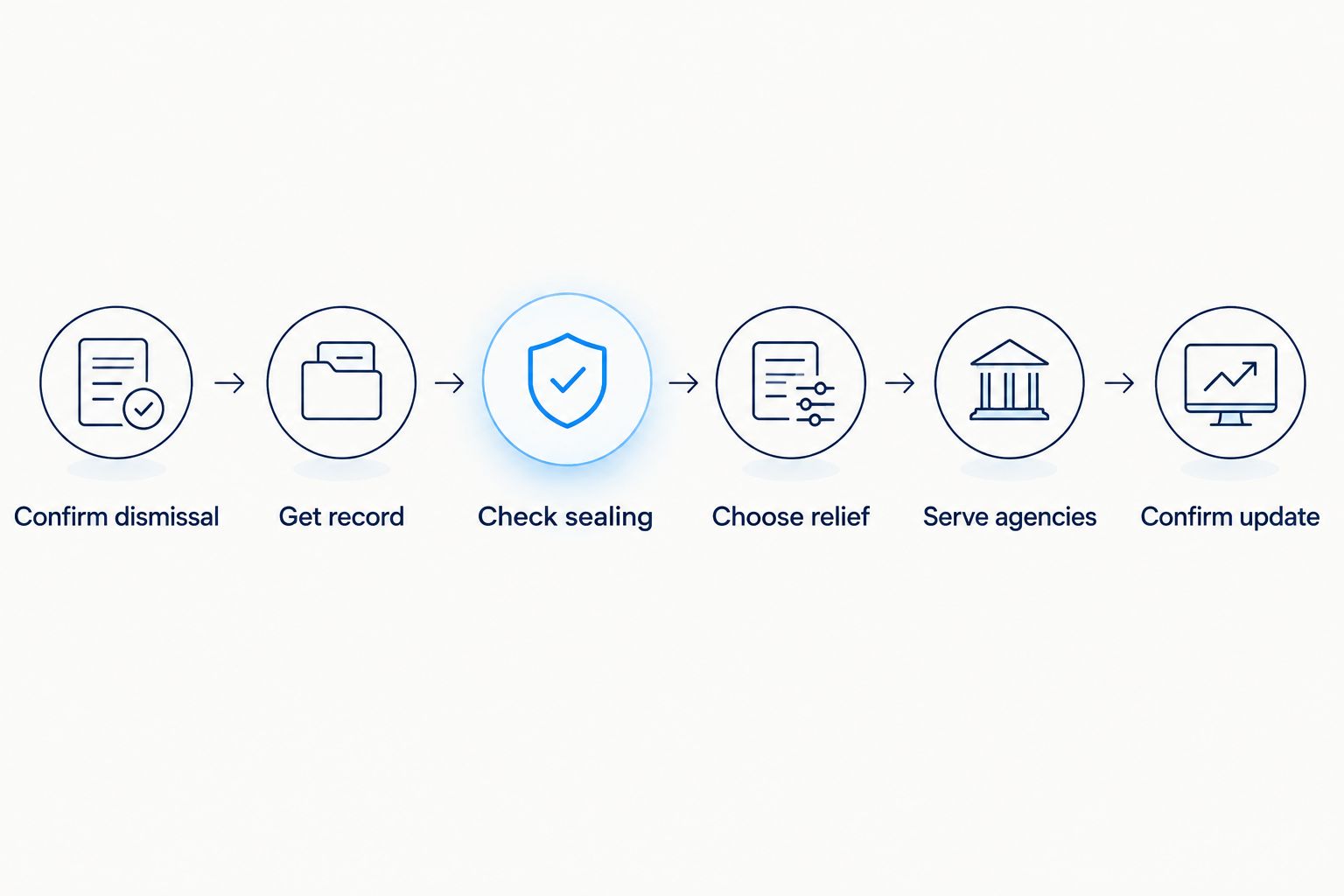
Use this sequence in 2026 to identify and pursue the correct relief:
- Confirm how DEJ ended. Get the court docket, minute order, or disposition showing whether the charge was dismissed after successful completion or whether criminal proceedings resumed.
- Review your California criminal history. Compare the court disposition with the state record. The guide to getting a copy of your California criminal record explains the record-review step.
- Check for automatic sealing. A record that already received automatic relief may not require an additional Penal Code 851.91 petition.
- Choose the correct remedy. Use arrest sealing for an eligible dismissed DEJ record, Penal Code 1203.4 for an eligible conviction, or a record-correction process when the reported disposition is inaccurate.
- File in the correct court. A Penal Code 851.91 petition goes to the court that handled the matter or the court with jurisdiction over the arrest record.
- Serve the required parties. For a Penal Code 851.91 petition, serve the prosecuting attorney and the law enforcement agency that made the arrest at least 15 days before the hearing.
- Respond to opposition or attend the hearing. The prosecutor can contest eligibility or argue that statutory exceptions apply. Follow every hearing instruction issued by the court.
- Confirm implementation of the order. After relief is granted, check that the court, arresting agency, and state record reflect the result before relying on it for a background check.
The controlling question is not whether the case was called DEJ; it is whether the final disposition was a dismissal or a conviction. That answer determines the correct statute and filing.
What records should you check before filing?
Start with the court record and your California Department of Justice criminal history. These records answer different questions:
- Court docket: Shows filed charges, appearances, orders, and the final disposition.
- Dismissal order: Confirms whether the court dismissed the case after successful DEJ completion.
- DOJ criminal history: Shows how California currently reports the arrest and disposition.
- Background report: Identifies what a specific screening company reported, but it does not replace the official court or DOJ record.
If the court shows a dismissal but the DOJ record shows a conviction or pending charge, correct the inconsistency before filing the wrong petition. If both records show dismissal but the arrest remains accessible, evaluate sealing under Penal Code 851.91.
Successfully completed DEJ: seal an eligible arrest record
When you successfully complete DEJ, Penal Code 1000.4 directs dismissal of the charges and generally allows you to state that the arrest did not occur, subject to exceptions in the statute. Because the case did not end in a conviction, Penal Code 1203.4 is usually not the correct remedy.
In 2026, first determine whether automatic sealing already applies. If the record remains unsealed and the arrest did not result in a conviction, Penal Code 851.91 can provide a petition route. California Judicial Council Form CR-409 is the petition used to request sealing of arrest and related records, although local filing requirements still need to be checked.
A complete petition identifies the arrest date, arresting agency, alleged offense, court case number, disposition, and legal basis for relief. It must distinguish between eligibility as a matter of right and relief that requires an interests-of-justice showing.
Best for: A completed DEJ case that was dismissed but still appears as an unsealed arrest.
Advantage: The requested relief addresses the arrest and related records rather than treating the matter as a conviction.
Limitation: Sealing is subject to statutory exceptions and does not make the event unknowable to every government agency in every context.
Unsuccessful DEJ: evaluate Penal Code 1203.4
If DEJ was terminated and the criminal case resumed, review the final docket carefully. A guilty or no-contest plea followed by judgment can leave a conviction even though the case started in a diversion track.
An eligible defendant may seek relief under Penal Code 1203.4 after satisfying the applicable sentence and probation requirements. This process generally withdraws the guilty or no-contest plea, enters a not-guilty plea, and dismisses the accusation, but it does not physically erase or seal the conviction record.
Eligibility depends on the conviction, sentence, probation history, and current case status. If the offense was a felony that can be treated as a misdemeanor, a reduction analysis may also belong before or alongside the expungement request.
Best for: A DEJ case that ended in a conviction rather than a successful diversion dismissal.
Advantage: Penal Code 1203.4 changes the court disposition to a dismissal when relief is granted.
Limitation: The conviction remains visible in the record, and the dismissal does not eliminate every disclosure duty or collateral consequence.
Which DEJ record-clearing path fits your case?
| Case result | Best for | Primary path | Main limitation |
|---|---|---|---|
| DEJ completed and arrest already sealed | Confirming relief | Verify court and DOJ records | Some statutory access can remain |
| DEJ completed but arrest remains unsealed | Clearing an eligible arrest | Penal Code 851.91 petition | Exceptions can affect eligibility or access |
| DEJ terminated and conviction entered | Clearing an eligible conviction | Penal Code 1203.4 petition | Dismissal does not erase or seal the record |
| Court and DOJ dispositions conflict | Fixing inaccurate reporting | Record correction before relief | A petition based on incorrect data can fail |
For records reviewed in 2026, this table is the practical starting point. The label attached to the original program matters less than the final docket and current DOJ entry.
Why the process varies
Several record-specific factors determine the filing and the amount of supporting work required:
- Final disposition: A dismissal, conviction, pending case, and inaccurate entry each require a different response.
- Automatic relief status: The record may already carry automatic sealing, making a new petition unnecessary.
- Record accuracy: A missing dismissal code or unresolved charge can require correction before sealing.
- Multiple charges: One count may have been dismissed through DEJ while another count produced a conviction.
- Multiple cases: Relief granted in one case does not automatically resolve separate arrests or convictions.
- Pattern-based exceptions: Penal Code 851.91 contains special rules for certain repeated arrests, which can change the required showing.
- Local procedure: Courts can use local filing instructions, scheduling practices, and service requirements alongside statewide law.
- Federal consequences: California record relief does not control every federal immigration, licensing, security, or firearms decision.
Do not select a remedy from the arrest description alone. Two records involving the same original charge can require different filings because one ended in successful diversion and the other ended in judgment.
Does deferred entry of judgment show up on a background check?
Yes, a DEJ arrest can still appear on a background check if the record has not been sealed or the reporting source has not been updated. In 2026, compare the screening report with the official court disposition and DOJ criminal history before deciding whether you need sealing or a reporting dispute.
A private background report can also contain stale information. If official records show sealing but a screening company still reports the arrest, the next step can be disputing the report rather than asking the criminal court to grant the same relief again.
Is DEJ the same as expungement in California?
No. Successful DEJ results in dismissal without the standard conviction-expungement process, while Penal Code 1203.4 applies to eligible convictions. For a completed DEJ case, the unresolved issue is usually arrest-record sealing or inaccurate reporting, not expungement of a conviction.
People still search for how to expunge deferred entry of judgment California cases because expungement is used broadly to describe record clearing. The legal filing must match the actual disposition even when the everyday label does not.
How long after completing DEJ can you request sealing?
Penal Code 851.91 does not impose a DEJ-specific waiting period after a qualifying dismissal. You still need a final disposition that satisfies the statute, accurate case information, proper service, and enough time to provide at least 15 days of notice before a scheduled hearing.
The court's processing time is separate from legal eligibility. In 2026, archived files, missing disposition data, or prosecutor opposition can add procedural steps, but those issues do not change which statute controls.
Can a DEJ dismissal affect immigration or licensing?
A California dismissal or sealing order does not decide every federal or administrative consequence. Immigration analysis can depend on the plea, admissions, offense, and program structure rather than the label California gives the final record.
Licensing agencies can also operate under disclosure and access rules that differ from ordinary private employment screening. Review the exact application question and governing agency rules instead of assuming that sealed and dismissed mean the same thing in every setting.
When legal help fits the case
A straightforward, accurately reported dismissal may be manageable without counsel. The downside of filing alone is that using Penal Code 1203.4 instead of 851.91, omitting required service, or relying on an incorrect DOJ entry can delay the result.
Cole Law is best for Californians who need a DEJ record classified before filing, especially when the court record and background report do not match. Cole Law's record-clearing service covers expungements and record sealings, but no attorney can guarantee that a court will grant discretionary relief or that relief will control every federal decision.
That balance is the relevant pro and con: legal review can identify the proper statute and filing sequence, while the outcome remains controlled by the record, the law, and the court.
Get your DEJ case reviewed
Identify whether your record needs sealing, expungement, or correction.
FAQ
How do you expunge a deferred entry of judgment case in California?
Confirm whether DEJ ended in dismissal, check whether the arrest is sealed, and use Penal Code 851.91 if an eligible arrest remains unsealed. Use Penal Code 1203.4 only when the case produced an eligible conviction.
Does successful DEJ count as a conviction in California?
No, successful DEJ completion results in dismissal rather than a conviction under Penal Code 1000.4. Statutory exceptions and federal consequences still require separate analysis.
What is the difference between Penal Code 1000.4 and 851.91?
Penal Code 1000.4 governs dismissal after successful diversion, while Penal Code 851.91 provides a petition process for sealing eligible arrest records. Dismissal and sealing are separate forms of relief.
What form is used to seal a California DEJ arrest?
California Judicial Council Form CR-409 is used to petition for sealing under Penal Code 851.91. Check the filing court's current instructions for required copies, service, and supporting records.
Can DEJ appear on a Live Scan in 2026?
Yes, DEJ information can appear if the arrest remains unsealed, the record contains an error, or an agency has statutory access. Review the official DOJ record to identify which issue applies.
What happens if DEJ was terminated?
Terminated DEJ can lead to resumed criminal proceedings and a conviction. If judgment was entered, evaluate Penal Code 1203.4 eligibility rather than assuming arrest sealing is the correct remedy.
Do you need a lawyer to seal a DEJ record?
No, California does not require you to hire a lawyer to file a Penal Code 851.91 petition. Legal help is useful when the disposition is unclear, multiple cases appear, or eligibility is disputed.
Does sealing a DEJ arrest destroy every record?
No, sealing restricts access under California law but does not mean every record is physically destroyed or unavailable in every statutory context. Government and federal exceptions can still apply.
One last thing
Before filing anything in 2026, compare the court disposition, DOJ criminal history, and the background report that caused concern. If the court says dismissed, DOJ says pending, and the screener says convicted, you have a data problem before you have a petition problem.
Cole Law can assess that sequence as part of a California record-clearing matter. Correct the record first, then request the relief the corrected disposition supports.


