

Successfully finishing a California diversion program doesn't erase your arrest record by itself — you still need a separate court order to seal it, and that filing looks nothing like a standard expungement petition.
- You expunge a diversion program case in California by filing a Penal Code 851.91 petition to seal the arrest, not a Penal Code 1203.4 expungement.
- Diversion completion already dismissed the charge; sealing removes the arrest record itself from most background checks.
- Drug diversion (PC 1000), mental health diversion (PC 1001.36), and military diversion (PC 1001.80) all route into the same sealing petition.
- Cole Law files 851.91 petitions with the court that granted diversion, then follows up with the California DOJ to confirm the record updates.
Why this matters
A dismissed diversion case still shows up on background checks unless the arrest record itself gets sealed. Employers, landlords, and state licensing boards in California often run Live Scan or DOJ-level checks that don't automatically distinguish between a conviction and a dismissed diversion case. The court closing your case is step one. Sealing the arrest at Cole Law or on your own is the step that actually keeps it off most reports people see.
How do you expunge a diversion program case in California?
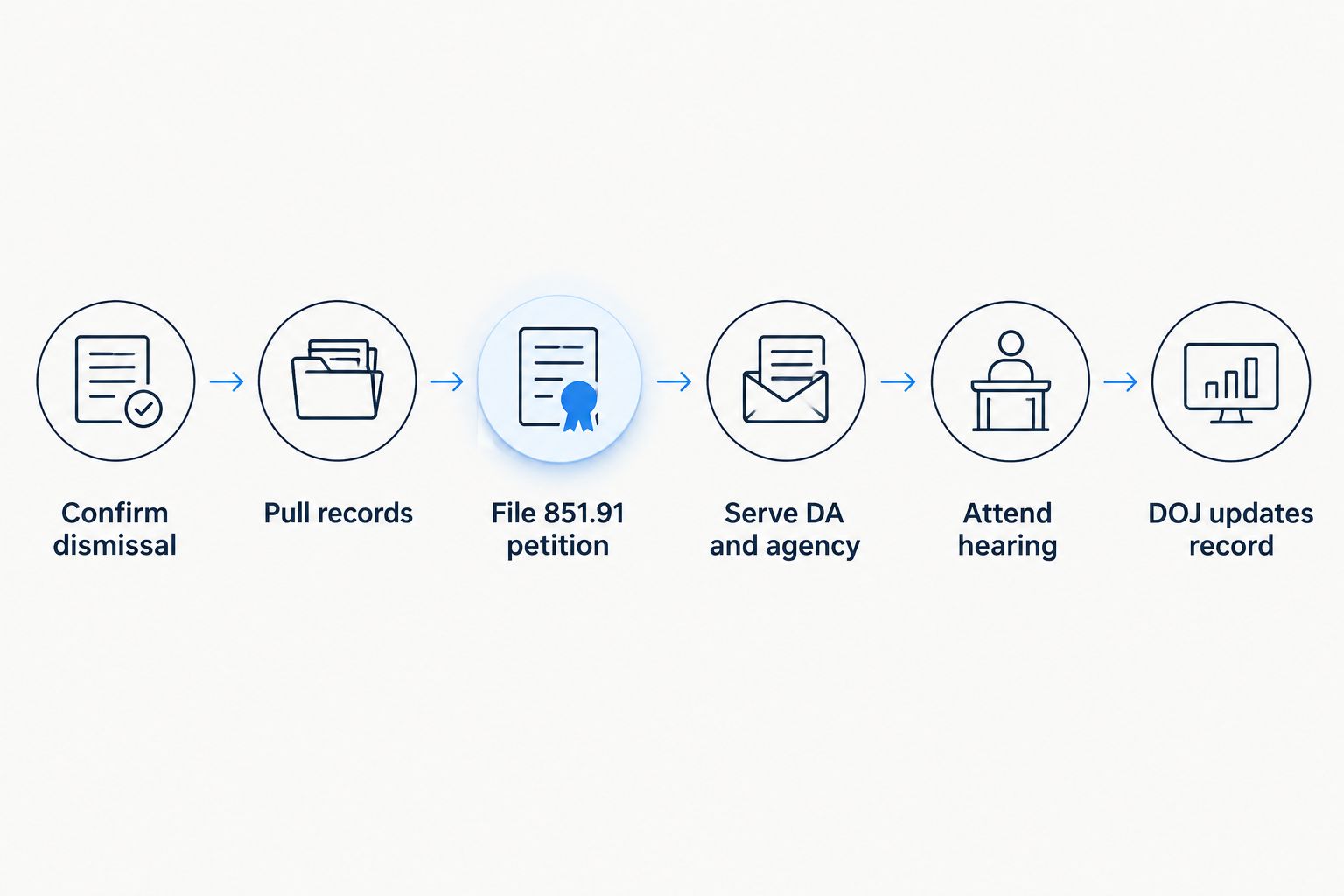
Diversion cases resolve differently than convictions, so the paperwork differs too. Here's the sequence that applies once a diversion program (PC 1000, PC 1001.36, PC 1001.80, or a county pretrial program) has been completed and the underlying charge dismissed:
- Confirm the docket status. The case needs to show "completed" and "dismissed," not "terminated" or "revoked" — a revoked diversion sends the case back for prosecution and sealing isn't available yet.
- Pull the arrest and disposition records. You'll need these to draft the petition; see the expungement eligibility under Penal Code 1203.4 page for how records checks work even though 1203.4 itself doesn't apply here.
- File a Penal Code 851.91 petition to seal the arrest with the same court that granted diversion. This is the correct statute for arrests that never resulted in a conviction.
- Serve the district attorney's office and the arresting agency named on the petition, as required by the court's local rules.
- Attend a hearing only if contested. Most uncontested 851.91 petitions are decided on the paperwork alone.
- Wait for DOJ to update the record. Once the judge signs the sealing order, the court forwards it to the California Department of Justice, which updates the record so Live Scan and most background checks reflect the change.
In my practice at Cole Law, most of the time spent on these files isn't the hearing — it's tracking down the original arrest paperwork from an agency that's slow to respond. That's the part clients underestimate when they try this without help.
Comparing California diversion programs
The statute changes depending on which diversion program you completed, but the sealing mechanism at the end is the same for all of them.
| Diversion Type | Statute | After Completion | Best For |
|---|---|---|---|
| Drug diversion | Penal Code 1000 | Charge dismissed | First-time drug possession charges |
| Mental health diversion | Penal Code 1001.36 | Charge dismissed | Cases connected to a diagnosed mental health condition |
| Military diversion | Penal Code 1001.80 | Charge dismissed | Current or former service members |
| Civil compromise | Specified misdemeanors | Case dismissed after victim compensation | Minor disputes like property damage between private parties |
Drug diversion cases (Penal Code 1000)
PC 1000 diversion covers a defined set of drug possession charges. Completion dismisses the case, and because there's no conviction on record, a 1203.4 expungement doesn't apply — the arrest gets sealed under 851.91 instead. Verdict: seal it, don't try to expunge it under the wrong statute.
Mental health diversion cases (Penal Code 1001.36)
This program covers a broader range of offense types than PC 1000, tied to a diagnosed mental health condition connected to the offense. Completion works the same way — dismissal, then an 851.91 sealing petition. Verdict: same sealing path, regardless of the underlying charge.
Military diversion cases (Penal Code 1001.80)
Available to current or former service members for specified misdemeanor charges connected to service-related conditions. Completion dismisses the charge and the record follows the same 851.91 route. Verdict: file the sealing petition once the court confirms dismissal — don't assume the military status alone clears the record.
Civil compromise cases
Not a formal diversion program under PC 1000 or PC 1001.36, but functionally similar: a specified misdemeanor case gets dismissed once the victim accepts compensation. The case still ends in dismissal without conviction, so sealing under 851.91 is the applicable tool. Verdict: treat it like any other dismissed arrest for sealing purposes.
Why sealing eligibility varies
Not every completed diversion case sails through the same way. A few factors change how straightforward the petition is:
- Which diversion statute applied — PC 1000, PC 1001.36, PC 1001.80, or a county-run pretrial program
- Whether every charge in the case was dismissed, or only some of them
- Whether the district attorney's office or the arresting agency objects to the petition
- Whether a co-defendant's case is still active and tied to the same docket
- Whether DOJ or Live Scan records still show a data-entry lag after the court order
- Whether the sealed record still needs to be disclosed for a specific purpose, like a case dismissed in California situation tied to a licensing application
“A sealed diversion arrest is treated as if the arrest never happened for most background checks — but the court has to say so first.”
Get your diversion case reviewed
Confirm which sealing petition applies to your case before you file.
Is a diversion case treated as a conviction?
No — completing diversion means the case was dismissed and never became a conviction, which is exactly why the correct sealing tool is Penal Code 851.91 instead of the post-conviction relief statute, Penal Code 1203.4.
Can I use a Penal Code 1203.4 expungement for a diversion case instead?
No — Penal Code 1203.4 expungement applies to people who suffered an actual conviction and completed probation. Diversion cases end in dismissal without a conviction ever being entered, so filing under 1203.4 is the wrong statute and the petition will be denied.
How long does sealing a diversion case take in California?
Timing depends on the county, whether the petition is contested, and how quickly the arresting agency responds to service — the how long an expungement takes in California breakdown covers the general court timelines that also apply to 851.91 filings.
FAQ
How do you expunge a diversion program case in California?
You file a Penal Code 851.91 petition to seal the arrest record, not a Penal Code 1203.4 expungement, because diversion completion ends in dismissal without a conviction. The petition goes to the same court that granted diversion.
Does completing diversion automatically clear my record in California?
No, completing diversion only dismisses the case in court. The arrest record stays on file with the California DOJ until a separate sealing petition is granted.
Is PC 1000 diversion the same as PC 1001.36 diversion?
No, PC 1000 covers specified drug possession charges while PC 1001.36 covers a broader set of charges tied to a diagnosed mental health condition. Both end the same way: dismissal followed by an 851.91 sealing petition.
Can an employer see a completed diversion case in California?
An employer can see the arrest on some background checks until the record is sealed under Penal Code 851.91. After sealing, most standard background checks won't show it.
What happens if the district attorney objects to my sealing petition?
A contested Penal Code 851.91 petition moves to a hearing where the judge decides based on the arguments from both sides. Most uncontested petitions never reach that step.
Does military diversion under PC 1001.80 get sealed differently than drug diversion?
No, both PC 1001.80 military diversion and PC 1000 drug diversion end in the same sealing petition under Penal Code 851.91 once the case is dismissed.
Do I need a lawyer to seal a diversion case in California?
You can file a Penal Code 851.91 petition yourself, but the process involves pulling arrest records, drafting the petition, and serving the correct agencies correctly the first time. Cole Law files these petitions directly for clients who want the paperwork handled without delay.
One last thing
The detail most people miss: a completed diversion case and a completed 1203.4 expungement look identical to the person holding the record, but they require different petitions filed under different statutes. Filing the wrong one gets the petition denied and starts the clock over. If you're not sure which category your case falls into, check the disposition on your court docket before filing anything — Cole Law reviews that disposition first, every time, before choosing between an 851.91 sealing petition and a 1203.4 expungement.


