
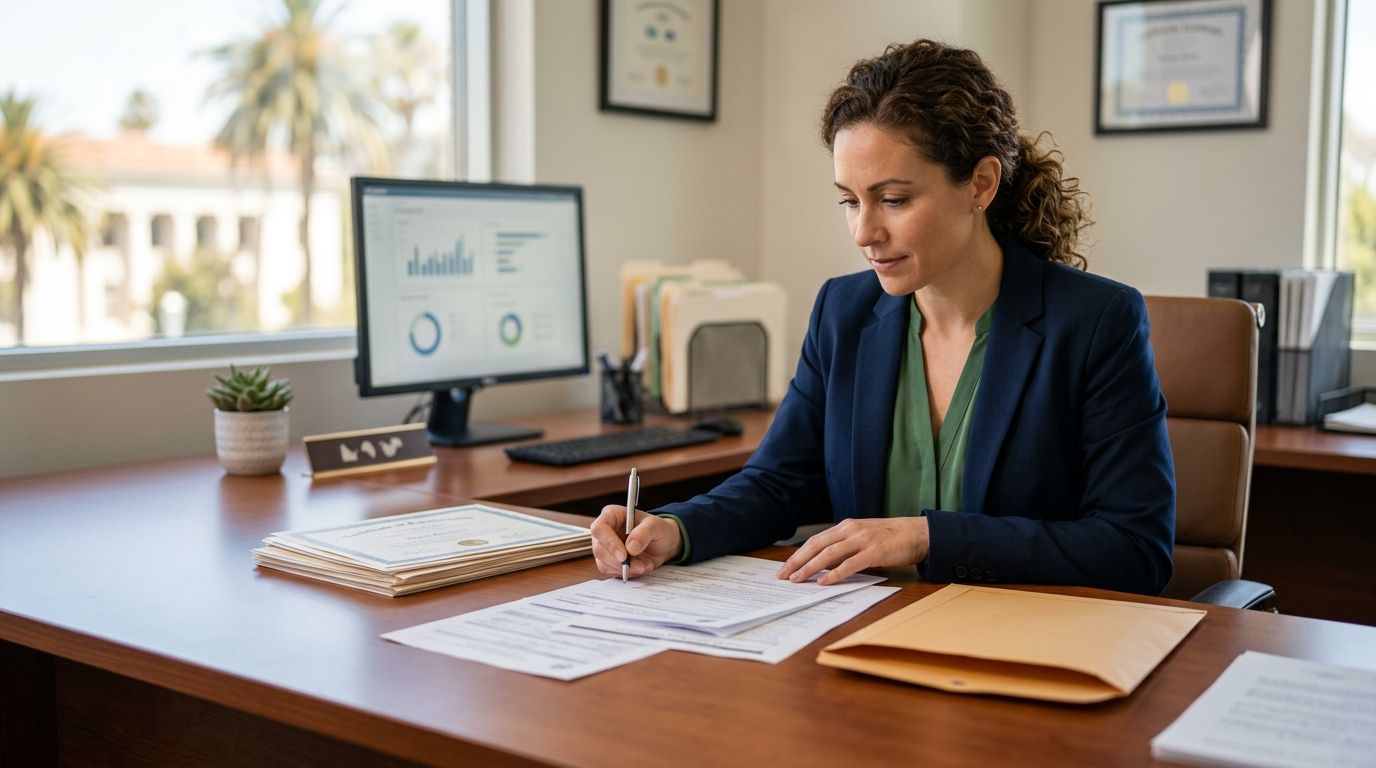
Renewing a professional license after a California expungement means disclosing the original conviction to your board even though Penal Code 1203.4 dismissed the case from court records. The dismissal changes your legal status, not what a licensing board is allowed to ask or see, so the renewal process runs through a disclosure statement, certified court paperwork, and sometimes a hearing before the board signs off.
- Renewing a professional license after a California expungement still requires disclosing the underlying conviction on most board applications.
- Penal Code 1203.4 dismisses a case in court but Business and Professions Code 490 lets boards deny or condition licenses based on convictions substantially related to the work.
- Certified copies of the CR-180 dismissal order and a written explanation carry more weight with a board than the expungement alone.
- A Certificate of Rehabilitation can strengthen a renewal file when a board has already flagged a past conviction.
- Healthcare, real estate, and contractor boards each apply their own disclosure rules on top of the general expungement statute.
Why this matters
Many people assume an expungement makes a conviction disappear from every government form. It doesn't. Cole Law sees this misunderstanding constantly with clients who filed their own Penal Code 1203.4 petition, got the dismissal, then hit a wall on a license renewal application months later in 2026 because they left the conviction box unchecked.
The gap matters because a license renewal denial or delay costs income, not just paperwork time. Getting the disclosure and supporting documents right the first time avoids a notice of intent to deny that can drag on for months while a board investigator reviews the file.
How do you renew a professional license after an expungement in California?
The process follows a consistent sequence regardless of which board issues your license:
- Confirm the dismissal is final. Pull the court's minute order or a certified copy of Form CR-180/CR-181 showing the Penal Code 1203.4 relief was granted.
- Read your board's application language carefully. Most California licensing boards under the Department of Consumer Affairs ask whether you've ever been convicted of a crime, "even if it was later dismissed under Penal Code 1203.4." Answer that question truthfully.
- Attach the certified court documents. A copy of the dismissal order, the original disposition, and any probation completion records go with the renewal packet.
- Write a disclosure statement. A short, factual explanation of the offense, what changed since then, and the expungement outcome does more for your file than silence.
- Respond promptly to any board inquiry. If the board issues a request for additional information or a notice of intent to deny, meet every deadline listed in the notice.
- Consider a Certificate of Rehabilitation if the conviction is still an issue. For applicants with a felony history, this additional court order can carry weight in a board's discretionary review.
How disclosure requirements compare across common California boards
| Board | Disclosure required despite expungement? | What strengthens the renewal file |
|---|---|---|
| Medical Board of California | Yes | Certified CR-180 order, rehabilitation evidence, practice history |
| Board of Registered Nursing | Yes | Certified dismissal order, employer references |
| California Department of Real Estate | Yes | Explanation letter, expungement order, DRE disclosure form |
| Contractors State License Board | Yes | Certified dismissal order, disclosure statement, bond history |
Every board on that list operates under Business and Professions Code 490, which lets a board deny, suspend, or condition a license for a conviction substantially related to the licensed activity, even after a Penal Code 1203.4 dismissal.
Healthcare workers: what the medical and nursing boards require
Healthcare boards run some of the strictest review processes in the state because patient safety sits behind every renewal decision. A dismissed conviction still shows up on background checks tied to licensure, and boards routinely ask applicants to explain the circumstances in writing. Healthcare workers navigating a renewal after expungement typically need more documentation than a single-page disclosure form to satisfy a reviewer.
Real estate agents: DRE disclosure rules
The California Department of Real Estate asks license applicants and renewing agents to disclose criminal history regardless of dismissal status. A clean disclosure paired with the certified expungement order tends to move faster through DRE review than an incomplete answer that gets flagged during a records match. Real estate license applicants with an older conviction generally fare better when the renewal file includes context, not just the bare disclosure checkbox.
Why renewal outcomes vary from one applicant to the next
- Type of license. Health, legal, and financial boards apply stricter substantial-relationship tests than trade or hobbyist licenses.
- Nature of the original offense. A conviction tied directly to the licensed profession (fraud for a financial license, DUI for a commercial driver) draws more scrutiny than an unrelated offense.
- Time since the conviction. Boards weigh how long ago the offense occurred and what the applicant has done since.
- Felony versus misdemeanor status. A felony that was reduced to a misdemeanor before or alongside the expungement often reads differently to a reviewer than an unreduced felony.
- Completeness of the disclosure file. Missing court documents or a vague explanation letter slows review regardless of the underlying facts.
- Whether the board has denied or flagged the applicant before. A prior denial changes the review track and may require a formal hearing.
Confirm What Your Board Requires
Review your disclosure file before you submit a renewal application in 2026.
Does an expunged conviction have to be disclosed on a California license application?
Yes, most California licensing boards require disclosure of a conviction even after a Penal Code 1203.4 dismissal, because the statute changes the conviction's status in court, not what state boards can ask on an application. Skipping the disclosure question when a board record already shows the conviction creates a bigger problem than the original offense.
Can a felony reduction to a misdemeanor help my license renewal?
A felony reduction under Penal Code 17(b) can change how a board classifies the offense during review, and combining it with an expungement often produces a stronger renewal file than either action alone. Applicants weighing this step often start with a state licensing board applicants review before filing anything with the board directly.
How long after an expungement can I apply for a state license in California?
There's no statewide waiting period tied to the expungement itself; boards evaluate the underlying conviction date, the nature of the offense, and rehabilitation evidence rather than a fixed clock after the Penal Code 1203.4 order. Some applicants with older felony convictions strengthen their timing by pursuing a certificate of rehabilitation before the renewal cycle comes up.
FAQ
Do I need to disclose an expunged conviction on a California license application?
Yes, nearly all California licensing boards ask applicants to disclose convictions even when dismissed under Penal Code 1203.4. The application language usually says something close to 'even if dismissed under PC 1203.4,' so leaving the box blank is treated as a false statement, not an omission.
What's the difference between expungement and license renewal disclosure?
Expungement under Penal Code 1203.4 dismisses a case in the courts, while license renewal disclosure is a separate question a state board asks on its own forms. The two processes run on different rules, and clearing one doesn't remove the obligation to answer the other honestly.
Can a Certificate of Rehabilitation help with a license renewal?
A Certificate of Rehabilitation can support a renewal application by giving a board formal court recognition of rehabilitation, particularly for applicants with a felony history. Boards still make the final licensing decision, but the certificate adds documented weight to the file.
Which California boards check for expunged convictions?
Boards under the Department of Consumer Affairs, including medical, nursing, real estate, and contractor boards, all ask about convictions regardless of dismissal status. Each board applies its own version of the substantial-relationship test under Business and Professions Code 490.
How long does board review take after I disclose a conviction?
Review time varies by board and by how complete the disclosure file is when submitted, and a board can extend review by issuing a request for more information. A complete file with certified court documents attached moves faster than one missing paperwork.
Can a felony reduction to a misdemeanor improve my renewal odds?
A felony reduction under Penal Code 17(b) can change how a board classifies the offense on review, and pairing it with an expungement often produces a stronger file than either step alone. The reduction doesn't guarantee approval, but it changes the record a board is reviewing.
What happens if my board denies a renewal because of a past conviction?
A denial typically comes with a written notice explaining the board's reasoning and any appeal rights, and applicants generally have a limited window to request a hearing. Responding within that window matters more than the strength of the original disclosure.
Is a lawyer necessary for a license renewal after expungement?
A lawyer isn't required to submit a renewal application, but a criminal defense attorney familiar with Penal Code 1203.4 and board disclosure rules can catch gaps in a disclosure file before a board flags them. That's often the difference between a routine renewal and a drawn-out review.
One last thing
The detail most applicants miss in 2026 is that a board can see a dismissed conviction through the same background check system used for the original license, so silence on the disclosure question rarely goes unnoticed. Disclose the conviction, attach the certified dismissal order, and write the explanation before the board asks for it — that sequence resolves more renewal delays than any argument made after a denial notice arrives.


