
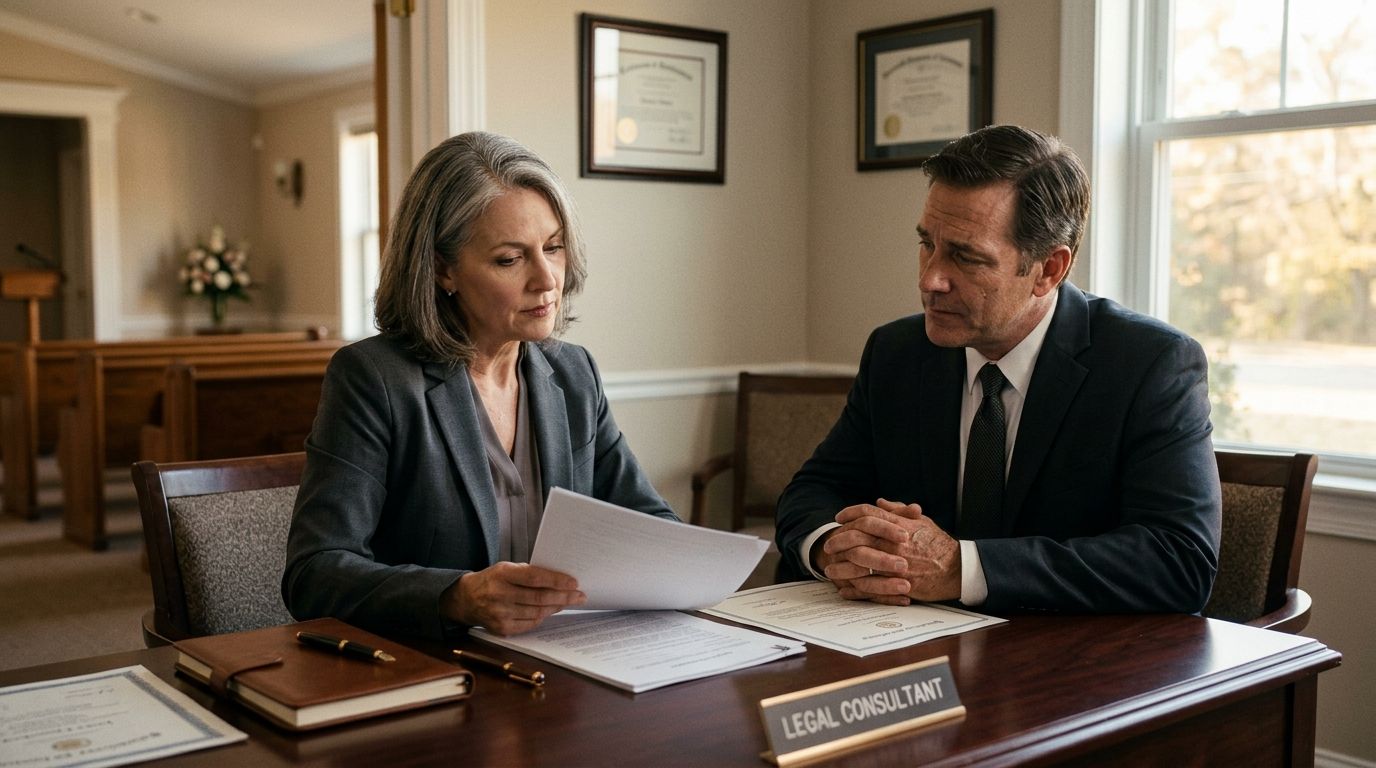
Funeral directors and embalmers with a criminal record face a licensing board that reads background checks line by line, not a hiring manager who might skim a resume. Expungement under Penal Code 1203.4 clears your court record for most employers, but the California Cemetery and Funeral Bureau still requires disclosure of the underlying conviction on a license application. That gap is the single biggest reason funeral professionals get denied, delayed, or blindsided during the licensing process, and it's why this record relief work needs to be handled with the Bureau's specific disclosure rules in mind, not generic advice.
- An expungement lawyer for funeral directors clears the court record under Penal Code 1203.4, but the Cemetery and Funeral Bureau still requires disclosure on license applications.
- Felony convictions tied to theft, fraud, or embezzlement carry extra scrutiny for funeral directors because the role involves handling client trust funds.
- Filing the petition before you submit a license application avoids a mid-review denial that can add months to the process.
- Reducing a wobbler felony to a misdemeanor under Penal Code 17(b) before dismissal often changes how the Bureau weighs the conviction.
- A statement of rehabilitation submitted with the license application matters more than the dismissal paperwork alone.
Why expungement matters for funeral directors and embalmers
The Cemetery and Funeral Bureau licenses funeral directors, embalmers, and apprentices in California, and every applicant goes through a Live Scan fingerprint background check as part of that process. Unlike a private employer running a background check, the Bureau has statutory authority to deny, suspend, or condition a license based on a conviction that's substantially related to the duties of the profession.
Convictions involving theft, fraud, forgery, or financial dishonesty draw the closest scrutiny because funeral directors routinely handle prepaid funeral trust funds and client billing. A conviction that might not raise an eyebrow in a retail job can stall a funeral director application for months if it isn't addressed correctly before the paperwork goes in.
Here's the part most people miss: Penal Code 1203.4 dismisses a conviction for most purposes, but the statute itself carves out an exception for applications to state licensing agencies. You still have to disclose the conviction when the Bureau asks, even after a successful expungement. What changes is how the disclosure reads and what supporting documentation you can attach to it.
How to clear your record before applying for a funeral director or embalmer license
Pull your full criminal history before you file anything
Don't guess what's on your record. Get the actual documentation first.
- Request your California criminal history summary through the Department of Justice
- Pull your Live Scan results if you've already been fingerprinted for a prior license or job
- Get certified court dispositions for every case, not just the conviction that worries you
- Check for out-of-state convictions if you worked in another state before moving into California funeral services
- Confirm whether any case shows as an open or unresolved status that needs cleanup first
Confirm eligibility under Penal Code 1203.4 before you file
Not every conviction qualifies for expungement, and filing a petition that gets denied wastes time you don't have if a license application is pending.
- Misdemeanors and most felonies qualify once probation is completed successfully
- Convictions with prison sentences (as opposed to jail or probation) generally fall outside 1203.4 relief
- Certain sex offenses and some serious felonies are excluded regardless of probation completion
- Outstanding fines, fees, or restitution can block a petition until they're resolved
- A pending new case can complicate or delay a dismissal petition
You can check the specific criteria on how to check expungement eligibility under California Penal Code 1203.4 before you spend time gathering paperwork for a petition that won't qualify.
Reduce a wobbler felony to a misdemeanor first, when it applies
Many theft, fraud, and forgery charges are "wobblers" under California law, meaning they can be charged or sentenced as either a felony or a misdemeanor. If your conviction is a wobbler felony, reducing it to a misdemeanor under Penal Code 17(b) before or alongside the 1203.4 petition changes what the Bureau sees on your record.
- A felony reduced to a misdemeanor reads differently on a license application than an unreduced felony conviction
- Reduction can happen before, during, or after probation depending on the case
- Some felonies are permanently excluded from reduction regardless of the underlying facts
- The reduction petition is a separate filing from the dismissal petition, though they're often done together
File the dismissal petition well before you submit a license application
Timing is where most funeral director applicants get this wrong. Filing the petition after the Bureau has already flagged the conviction during review puts you in a reactive position instead of a prepared one.
- File the 1203.4 petition as soon as probation ends, not when you decide to apply for licensure
- Build in 60 to 90 days of processing time before your target application date
- If you're already mid-review with the Bureau, ask your attorney whether an expedited filing makes sense
- Keep certified copies of the dismissal order for the application packet
Draft a disclosure statement that explains, not just admits
Since the conviction still has to be disclosed to the Cemetery and Funeral Bureau, how you disclose it does the real work.
- State the conviction, the disposition, and the dismissal date factually and without minimizing
- Attach the certified dismissal order as proof the court granted relief
- Include a statement of rehabilitation covering what's changed since the conviction: employment history, education, community involvement
- Reference any completed probation terms, restitution paid, or counseling completed
- Avoid vague language like "resolved" or "handled" that reads as evasive to a licensing reviewer
Track the Bureau's review and respond to requests fast
A slow response to a Bureau request for more documentation is one of the most common reasons a straightforward application drags on for months.
- Respond to any request for additional information within the deadline stated, not after
- Keep a copy of everything submitted, with dates
- If the Bureau schedules an interview or requests a personal appearance, treat it as part of the application, not an afterthought
- Ask your attorney to review any denial letter immediately if one comes back, since appeal windows are short
Comparing your options for record relief before a funeral license application
| Option | Best for | Key limitation |
|---|---|---|
| DIY petition using court self-help forms | Simple misdemeanor cases with no licensing complications | No guidance on Bureau disclosure requirements or wobbler reductions |
| General practice attorney | Straightforward dismissals with no pending license application | May not know Cemetery and Funeral Bureau review standards |
| Criminal record relief attorney with licensing experience | Funeral directors and embalmers with a pending or upcoming application | Requires finding counsel familiar with this specific licensing board |
| Public defender record clearance clinic | Petitioners on a limited budget with a straightforward case | Limited capacity for licensing-specific disclosure strategy |
Verdict: an attorney who understands both Penal Code 1203.4 and Cemetery and Funeral Bureau disclosure rules is the safer path when a license application is on the line, because a generic dismissal filing doesn't address how the Bureau reads the disclosure.
Talk through your funeral license application
Get a clear read on your record before you file with the Bureau.
Common mistakes funeral directors and embalmers make
- Assuming a dismissed conviction doesn't need to be disclosed. Penal Code 1203.4 does not exempt state licensing applications from disclosure, and omitting a dismissed conviction can be treated as a false statement on the application.
- Filing the petition after submitting the license application. Waiting until the Bureau flags the conviction means responding under pressure instead of applying with a clean file already in hand.
- Skipping the wobbler reduction when it's available. A felony theft or fraud conviction that could have been reduced to a misdemeanor sometimes gets left as-is, which weighs more heavily on the Bureau's review.
- Writing a thin disclosure statement. A one-line admission without context or supporting documentation reads worse than a detailed, honest account with proof of rehabilitation attached.
- Not checking for out-of-state convictions. Funeral professionals who trained or worked in another state before relocating sometimes forget a conviction from years earlier still shows up on a California background check.
FAQ
Does an expunged conviction show up on a Cemetery and Funeral Bureau background check?
Yes. The conviction still appears on the criminal history record, but it will show as dismissed under Penal Code 1203.4. The Bureau still requires you to disclose it on the license application despite the dismissal.
Can a felony conviction disqualify you from becoming a licensed funeral director in California?
Not automatically. The Bureau evaluates whether the conviction is substantially related to the duties of a funeral director, with theft, fraud, and financial crimes drawing the closest scrutiny in 2026.
How long does it take to get a conviction expunged before a license application?
A 1203.4 petition typically takes 60 to 90 days to process once filed, though timelines vary by county court. File as soon as probation ends to avoid delaying your license application.
Is it better to hire a lawyer or file for expungement myself?
A self-filed petition can work for a simple misdemeanor case with no licensing complications. Funeral director and embalmer applicants benefit from an attorney familiar with the Bureau's disclosure standards, since the dismissal alone doesn't resolve the disclosure requirement.
What is a wobbler felony and does it matter for a funeral license?
A wobbler is a charge that can be sentenced as either a felony or a misdemeanor under California law. Reducing a wobbler felony to a misdemeanor before or alongside a dismissal petition can change how the Bureau weighs a prior theft or fraud conviction.
Does the Cemetery and Funeral Bureau require an in-person interview for applicants with a record?
Not in every case, but the Bureau can request additional documentation or a personal appearance when a conviction is substantially related to the licensed duties. Responding promptly to any such request keeps the application moving.
Can an out-of-state conviction affect a California funeral director license?
Yes. The Bureau's background check covers convictions from any state, so a conviction from before you moved to California still needs to be addressed and disclosed on the application.
What documents should I include with a disclosure of a dismissed conviction?
Include the certified dismissal order, a factual statement of the conviction and disposition, and a statement of rehabilitation covering employment, education, and any completed probation terms since the conviction.
One last thing
The detail funeral director applicants overlook most often isn't the dismissal itself, it's the statement that goes with it. A certified 1203.4 order with no context reads as a bare admission; the same order paired with a clear rehabilitation statement reads as a completed chapter. In 2026, that distinction is often what separates a routine license approval from a request for a hearing.


